Maintenance & Troubleshooting
To restore cutting efficiency, periodically wipe the serrated blade with a cotton swab dipped in isopropyl alcohol to dissolve adhesive gunk. If the tape begins to drag, check the spindle for fiber accumulation and apply a dry-film lubricant to the rotational points to eliminate friction.
Common Failure Modes
Even the simplest mechanical tools face wear over time, often manifesting as dull blades or loose cores that impede smooth operation.
- Repeated usage can lead to abrasive wear on the cutting teeth; use a small wire brush to clear out debris and sharpen the profile of the serrations.
- The internal spindle may experience bearing wear; inspect the spindle for grooving and replace the core if it no longer spins on a true axis.
- Dropped dispensers often suffer from impact fracture; choose high-impact polystyrene or cast-iron models to better survive accidental falls to hard flooring.
- Over-tightening or forcing large rolls can cause joint loosening; avoid using non-standard roll sizes that exceed the structural tolerances of the spindle arm.
- The rubberized feet on the bottom of the device may undergo elastomer hardening; apply a specialized rubber conditioner or replace the pads with silicone bumpers to restore surface grip.
- Low-quality plastic components are susceptible to stress cracking; pull the tape at a consistent downward angle to minimize lateral torque on the housing.
Environmental Stress Factors
The environment in which you store and use your office supplies can dictate how long the adhesive and hardware stay functional.
- Exposure to a high dust load can contaminate tape and blades; keep your dispenser in a drawer or under a cover when not in use for extended periods.
- Operating in workshops often results in pet hair clogging around the spindle; remove the tape roll monthly to clean hair and fibers from the rotational assembly.
- Metallic blades on specialty dispensers are prone to corrosion; in humid climates, ensure the blade is made of stainless steel or has a protective nickel plating.
- Standard plastic dispensers may suffer from high UV exposure; keep your workstation away from direct afternoon sunlight to prevent the plastic from becoming brittle.
Key Components
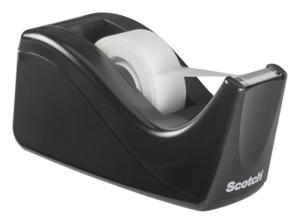
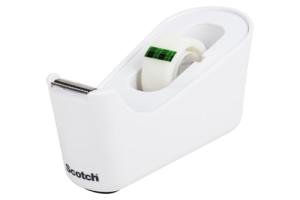
A high-quality dispenser is defined by the precision of its individual parts working together to provide a stable taping experience.
- The structural housing serves as the anchor; heavier sand-filled or cast-metal housings provide superior stability during rapid tape pulls.
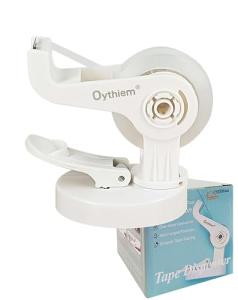
- At the heart of the device is the rotational drive, which must have tight tolerances to prevent the tape roll from wobbling.
- The sharp edge is part of a specialized dispensing mechanism; look for a recessed blade design to protect fingers while maintaining an aggressive cutting angle.
- Many professional models utilize a fastener system to ensure the bottom plate remains attached even if the unit is subjected to heavy vibration.
- The bottom often features an adhesive bond or rubberized coating to prevent the unit from sliding and scratching desk finishes.
If you are researching comprehensive workstation efficiency, you may also want to review the hardware durability expectations for these related office devices: