Maintenance & Troubleshooting
Regularly clearing microscopic debris from the drawer guides prevents the abrasive pitting that eventually seizes the sliding mechanism. Periodically re-seating the unit on a level surface ensures that gravitational stress is distributed evenly across the load-bearing frame, preventing the "racking" that causes drawers to bind.
Common Failure Modes
Even simple desktop organizers can experience mechanical issues over time due to repetitive daily use and material fatigue.
- Repeated opening and closing cycles often lead to sliding track wear; apply a thin layer of dry-film lubricant to the rails annually to maintain a smooth glide.
- Exceeding the recommended weight limit for small compartments can result in overload deformation; distribute heavy tech accessories across lower drawers to prevent the top frame from bowing.
- Lower-quality fasteners may succumb to joint loosening; check and tighten any visible screws or pins every six months to maintain tower stability.
- Frequent rough handling or accidental drops can cause impact fracture; choose high-impact polystyrene (HIPS) or reinforced resins if the unit will be used in high-traffic areas.
- If the unit uses adhesive feet, you might notice adhesive bond failure; clean the desk surface with isopropyl alcohol before re-applying rubberized grips for a permanent bond.
- Over time, clear drawer faces may suffer from surface scratching; use only microfiber cloths for cleaning to prevent the micro-abrasions that cloud the material.
Environmental Stress Factors
The conditions of your office or home environment play a critical role in the longevity of desktop storage materials.
- Accumulated debris in the tracks, known as dust load; use a can of compressed air monthly to blow out the guides and prevent gritty friction.
- Placing your organizer in direct sunlight can lead to high UV exposure; rotate the unit's position away from window sills to prevent the polymer from becoming brittle and snapping.
- In non-climate-controlled spaces, temperature extremes; ensure the drawers are not positioned directly above a heater, as heat cycles can warp the structural housing.
Key Components
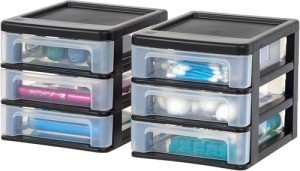
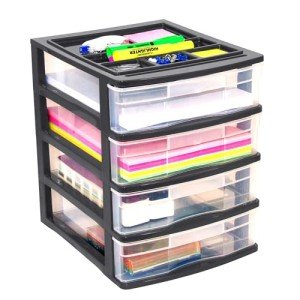
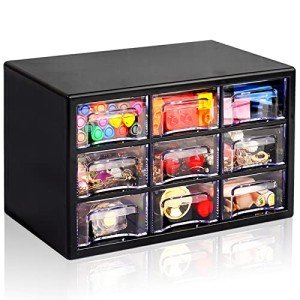
A high-quality mini drawer set relies on several core components to provide a seamless and sturdy user experience.
- The rigid structural housing serves as the external skeleton that maintains the alignment of all internal drawers.
- Smooth operation is facilitated by a precise sliding rail that guides the drawers along their intended path.
- The outer polymer shell provides the primary aesthetic finish and protects internal contents from spills or impacts.
- To prevent the unit from sliding during use, a reliable fastener or rubberized feet are essential for desktop stability.
- For units featuring transparent fronts, the glass panel or high-grade acrylic inserts allow for instant content identification.
Related Categories
If you are researching full-room setups, you may also want to review the failure expectations for these related devices: