Maintenance & Troubleshooting
Regularly clearing debris from the ball-bearing tracks and re-torquing the mounting fasteners prevents the mechanical drift that leads to rail jamming. Periodically checking for moisture-related swelling in wooden drawer boxes ensures the hardware isn't fighting against material expansion during seasonal humidity shifts.
Common Failure Modes
Mechanical sliding systems are subject to specific stresses that can impede their smooth operation over time.
- Prevent overload deformation by distributing heavy cookware toward the rear of the drawer box to reduce leverage-induced bending on the slides.
- Mitigate sliding track wear by applying a dry-film lubricant to the rails annually, which prevents metal-on-metal grinding without attracting dust.
- Address structural warping by installing a reinforced sub-base under the cabinet floor if you plan to store heavy countertop mixers or heavy-duty appliances.
- Fix joint loosening by checking the mounting screws every six months and replacing any stripped fasteners with wider-gauge cabinet screws.
- Solve shaft misalignment stress by using a spirit level during installation to ensure the left and right rails are perfectly parallel and horizontal.
- Reduce cyclic fatigue failure in soft-close mechanisms by avoiding the habit of manually forcing the drawer shut, which overextends the internal tension springs.
- Stop corrosion in its tracks by immediately drying any spills and using stainless-steel ball bearing systems in high-moisture kitchen zones.
Environmental Stress Factors
The kitchen environment presents unique challenges that can degrade the materials used in pull-out storage.
- To counter high humidity acceleration, leave a gap between the drawer box and the cabinet side wall to allow for wood expansion without seizing the mechanism.
- Manage dust load by using a vacuum attachment to pull particles out of the rail grease, especially in cabinets located near the floor or high-traffic areas.
- Avoid cleaner compatibility conflict by keeping degreasers away from the factory-applied rail lubricant, which can be stripped away by harsh kitchen chemicals.
- Deter pest intrusion by sealing the gaps where the rails meet the cabinet back, preventing organic debris from fouling the bearing raceways.
Key Components
Each part of a pull-out system is engineered to manage weight and motion simultaneously.
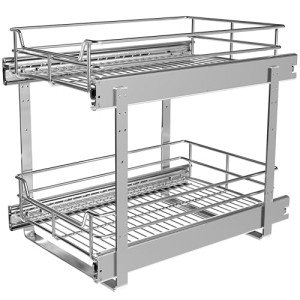
- The sliding rail must be made of high-gauge cold-rolled steel to prevent flexing when the drawer is at its maximum 100% extension.
- The load bearing frame serves as the bridge between the cabinet walls and the drawer, and must be anchored to solid wood rather than thin particle board.
- The bearing system is the heart of the movement; look for high ball-count raceways to distribute weight more evenly across the steel tracks.
- A reliable fastener system includes both vertical and horizontal screws to resist the shear forces created when a loaded drawer is pulled open.
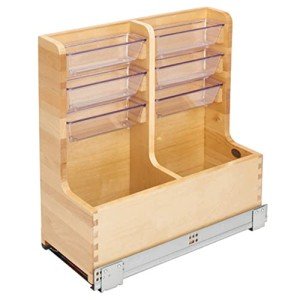
- The structural housing or drawer box should utilize dovetail or reinforced joints to handle the vibration and impact of daily use.
- A spring elastic component manages the final inches of travel, acting as a shock absorber to prevent the weight of the contents from slamming the frame.
Related Categories
If you are researching cabinetry upgrades or full-room storage setups, you may also want to review the failure expectations for these related devices: