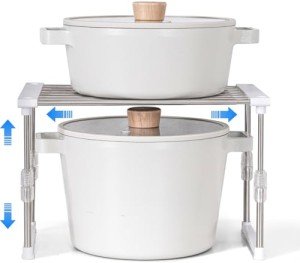
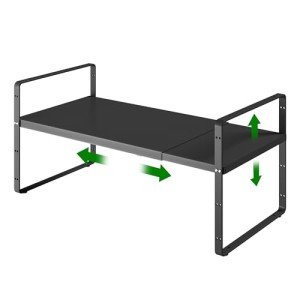
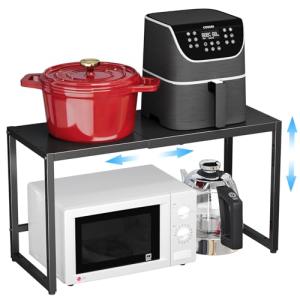
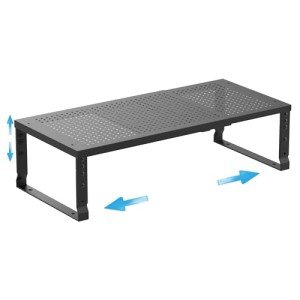
Maintenance & Troubleshooting
Regularly inspecting the tension of expandable joints and checking for micro-fissures in plastic supports prevents small hardware failures from turning into shelf collapses. Maintaining the protective finish on steel frames is the only way to stop oxidation before it eats through the load-bearing substrate.
Common Failure Modes
While built for durability, physical and mechanical stresses can eventually impact the integrity of your adjustable risers.
- To prevent Overload Deformation, always distribute heavy cast iron or ceramic items toward the vertical leg supports rather than the center of the span.
- Address Joint Loosening by performing quarterly tension checks on all adjustable screws using a manual screwdriver to avoid over-stripping the threads.
- Prevent Corrosion by immediately sealing any deep scratches in the powder coating with a food-safe enamel touch-up paint.
- Mitigate Small Hardware Failure by applying a drop of thread-locking fluid to fasteners if the riser is placed on a counter near high-vibration appliances like dishwashers.
- Avoid Creep Deformation in plastic models by rotating heavy inventory monthly, ensuring the material isn't under constant, localized peak pressure.
- Reduce Abrasive Wear by wiping telescoping rails with a dry microfiber cloth before adjusting to remove grit that can score the metal finish.
- Minimize the risk of Impact Fracture by opting for steel or wire-mesh models in high-traffic zones where heavy items are frequently moved at height.
Environmental Stress Factors
The placement of your risers significantly dictates how quickly materials degrade or lose their aesthetic finish.
- In damp areas, combat High Humidity Acceleration by using silica gel desiccant packs in the back of the cabinet to lower the ambient moisture level.
- Manage the Dust Load by using a grease-cutting citrus cleaner once a month to prevent the buildup of acidic residues that can etch the riser's surface.
- Limit High UV Exposure by selecting powder-coated steel over clear acrylic if the unit will be positioned in direct path of a kitchen window.
- Solve Cleaner Compatibility Conflict by testing new disinfectants on the underside of a leg first to ensure the chemical won't cloud or melt the protective finish.
Key Components
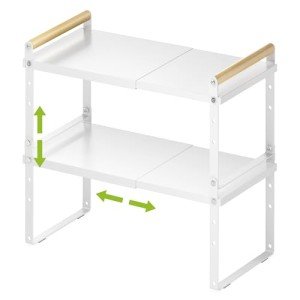
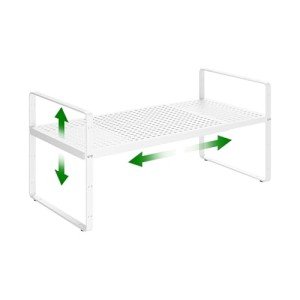
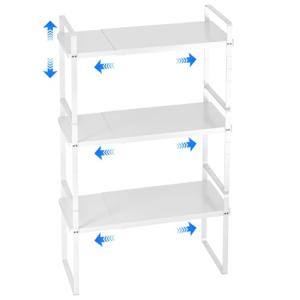
The performance of an adjustable riser depends on several critical parts working in tandem to support your items.
- Inspect the Load Bearing Frame for straightness; any factory-born skew will worsen under weight and lead to instability.
- Keep the Sliding Rail System clear of debris to ensure smooth expansion and prevent the locking mechanism from jamming.
- The Fastener System should be checked for "backing out"; if a screw feels loose, verify the internal threads aren't cross-threaded.
- A high-quality Polymer Shell acts as a chemical barrier; check for bubbling which indicates the bond between the coating and the core is failing.
- Examine the Structural Housing at the weld points, as these are the primary failure locations during a high-weight load event.
- Ensure the Seal Gasket System at the feet remains pliable; dry, cracked rubber will lose its grip and allow the riser to migrate across the shelf.
Related Categories
If you are researching full-room setups, you may also want to review the failure expectations for these related devices: