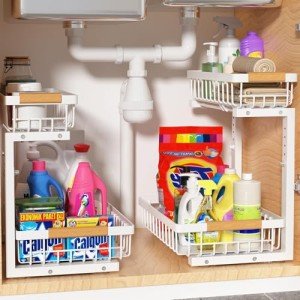
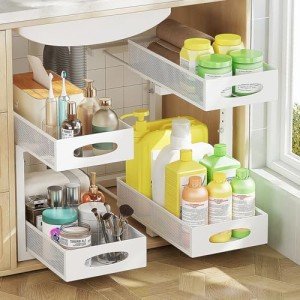
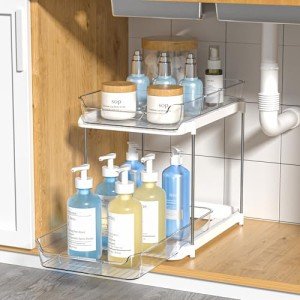
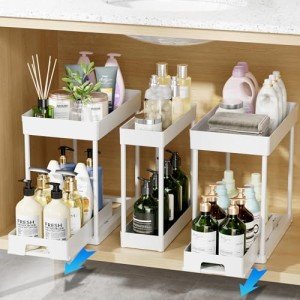
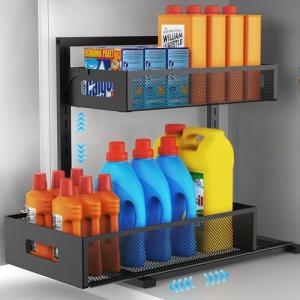
Maintenance & Troubleshooting
Regularly clearing the tracks of grit and verifying that mounting fasteners haven't vibrated loose prevents the asymmetrical loading that leads to catastrophic rail failure. Minor DIY adjustments to the track alignment can stop "drawer creep" and preserve the integrity of the internal ball bearings for decades.
Common Failure Modes
Mechanical fatigue and weight-related stress are the primary drivers of organizer degradation over time.
- Repeated heavy loading beyond rated limits often leads to overload deformation; avoid overpacking rear baskets to prevent the metal frame from bowing permanently.
- The most frequent mechanical issue in pull-out systems is sliding track wear; apply a dry silicone lubricant annually to the rails to maintain low-friction movement.
- In humid environments, metal organizers may suffer from corrosion; ensure under-sink leaks are repaired immediately to prevent rust from pitting the stainless steel or chrome finish.
- Over time, standard screws and bolts may experience joint loosening; check mounting brackets every six months and tighten fasteners to eliminate wobbling or tilting.
- Small mounting parts can succumb to small hardware failure; replace any sheared plastic clips or bent pins immediately to prevent the drawer from detaching from the cabinet.
- Constant daily use subjects the gliding mechanism to abrasive wear; use a vacuum attachment to remove crumbs and grit from the track housing to stop the grinding of internal bearings.
Environmental Stress Factors
The atmosphere surrounding your storage units plays a critical role in their long-term durability and functionality.
- Kitchen and bathroom installations are particularly susceptible to high humidity acceleration; prioritize powder-coated or aluminum frames in high-moisture zones to stall oxidation.
- Internal tracks can become clogged due to dust load; wipe down exposed rails monthly with a microfiber cloth to prevent debris from becoming embedded in the lubricant.
- In homes with animals, pet hair clogging frequently interferes with the rollers; clear the wheel assemblies with a pair of tweezers if you feel resistance during the opening stroke.
Key Components
Each organizer is built from specialized parts designed to handle weight and provide effortless access.
- The core of any pull-out unit is the sliding rail, which functions as the mechanical engine dictating both travel distance and weight capacity.
- A sturdy load bearing frame acts as the primary skeleton, maintaining the geometric square of the basket under heavy vertical pressure.
- To ensure parts stay securely attached to the cabinetry, a high-quality fastener set is essential for distributing the pull-out force across the cabinet walls.
- The outer structural housing provides the containment volume and protects the contents from the moving rail hardware.
- Many modern organizers utilize a bearing system of steel balls or nylon rollers to damp vibration and provide silent operation.
Related Categories
If you are researching a full-room organization setup, you may also want to review the failure expectations for these related devices: