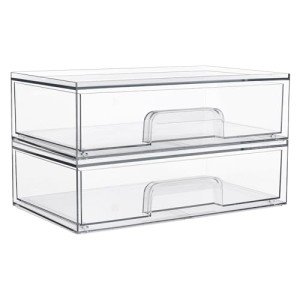
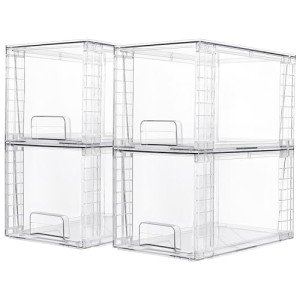
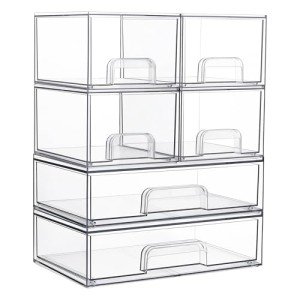
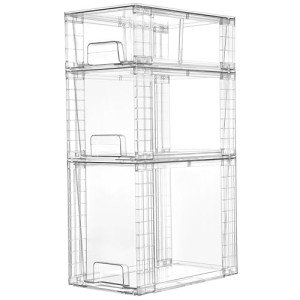
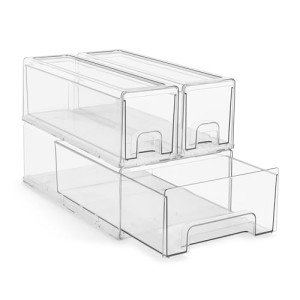
Maintenance & Troubleshooting
Maintaining the glide of a plastic drawer requires a strict weight-limit policy for the top-most units to prevent the frame from bowing into the track. Periodically clearing the sliding rails of abrasive grit will stop the friction-based wear that eventually leads to cracked plastic housing.
Common Failure Modes
Even high-quality plastic storage systems can face mechanical challenges over time due to repeated use and heavy loads.
- Heavy items can lead to structural sagging or permanent overload deformation; place your heaviest items in the bottom drawer of the stack to maintain the center of gravity.
- Repeated opening and closing cycles eventually cause sliding track wear; apply a thin layer of dry silicone lubricant to the rails to reduce friction and noise.
- Dropping a loaded unit or applying sudden pressure often results in an impact fracture; always use two hands to relocate stacked units and avoid sliding them across rough floors.
- Overfilling individual units leads to stress cracking; ensure contents do not press against the sidewalls to relieve tension on the molded corner joints.
- Over time, clear units may experience surface scratching; use a soft microfiber cloth for cleaning and avoid storing sharp, uncontained metal tools.
- Stacking units too high without proper support can cause structural warping; limit towers to five units or less unless they are secured to a wall or internal shelf.
Environmental Stress Factors
The environment in which you place your drawers significantly impacts the long-term durability of the plastic material.
- Placing your storage near windows leads to high UV exposure; use opaque bins or keep clear drawers in shaded areas to prevent the plastic from turning yellow and brittle.
- In garage or attic settings, temperature extremes weaken material; avoid using lightweight polymers in uninsulated spaces where rapid expansion can snap interlocking tabs.
- Using harsh chemical agents for cleaning might lead to a cleaner compatibility conflict; use only mild soap and lukewarm water to preserve the polymer’s factory finish and clarity.
- In workshops or craft rooms, a heavy dust load can grind down the mechanism; use a vacuum attachment to clear the tracks monthly and prevent the sliders from seizing.
Key Components
Every stackable drawer is engineered with specific features designed to manage weight and facilitate ease of use.
- The rigid structural housing acts as the primary load-bearing skeleton, supporting the weight of every unit stacked above it.
- Smooth operation is facilitated by the sliding rail, which prevents the drawer from tilting or falling out when fully extended.
- The outer polymer shell provides the essential chemical and moisture barrier needed to protect contents in humid bathroom or basement environments.
- To prevent units from shifting, many models utilize a fastener system such as clips or grooves that maintain tower alignment during high-momentum drawer pulls.
- Enhanced visibility is provided by glass panel effect clear resins, allowing for visual inventory without disturbing the structural seal of the drawer.
Related Categories
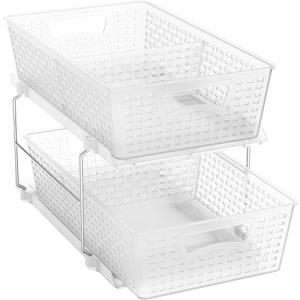
If you are researching a broader organizational setup, you may also want to review the failure expectations for these related storage formats: