Maintenance & Troubleshooting
Preventing catastrophic failure requires a bi-annual torque check of the wall anchors to ensure the unit hasn't pulled away from the drywall due to moisture-related softening. Periodically applying a wax-based sealant to the rungs creates a hydrophobic barrier that prevents water rings from compromising the material's internal bonds.
Common Failure Modes
Over time, bathroom storage units face specific mechanical and material challenges that can compromise their safety and appearance.
- To prevent overload deformation, place heavier glass canisters on the lowest rungs and keep upper shelves for lightweight linens to maintain a low center of gravity.
- Combat corrosion by immediately wiping away condensation and soap splashes, particularly at the joints where water tends to pool and bypass protective finishes.
- Address joint loosening by applying a drop of thread-locker to assembly screws during the initial setup to stop them from backing out during minor wall vibrations.
- Slow down coating peeling by avoiding abrasive scrubbers; use a soft microfiber cloth and pH-neutral cleaners to preserve the integrity of the moisture barrier.
- Prevent stress cracking at anchor points by using heavy-duty toggle bolts rather than standard plastic plugs to distribute the rack's weight across a larger surface area.
- Avoid surface scratching by adding felt or silicone pads to the bottom of ceramic bins before placing them on the ladder rungs.
- To mitigate adhesive bond failure, select units that utilize through-bolt mechanical fasteners rather than those relying solely on industrial glues in high-steam areas.
Environmental Stressors
The bathroom is a high-stress environment that requires materials capable of withstanding constant atmospheric changes.
- Counteract high humidity by running an exhaust fan for at least 20 minutes post-shower to drop the ambient dew point and prevent wood warping.
- Manage the dust load by dusting the top rungs weekly; accumulated dust acts as a sponge, holding moisture against the frame and accelerating rot.
- In coastal areas, prevent galvanic corrosion by ensuring the wall screws and the rack hardware are made of compatible metals, such as high-grade stainless steel.
- Avoid a cleaner compatibility conflict by testing new disinfectants on a hidden underside section to ensure they won't etch the finish or dissolve the sealant.
Key Components
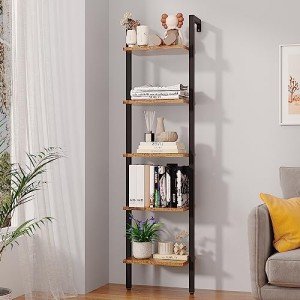
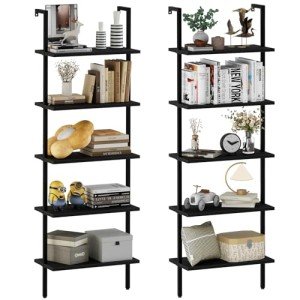
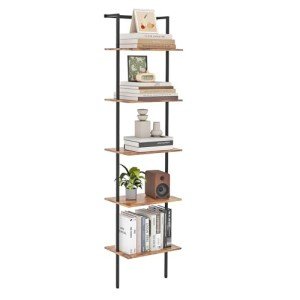
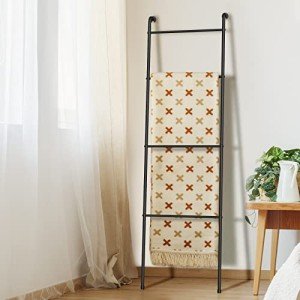
A well-engineered mounted ladder rack relies on several critical parts to maintain its form and function over the toilet.
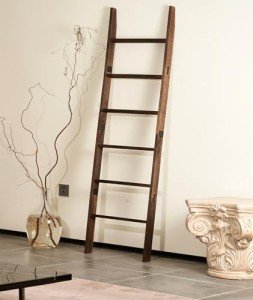
- The load bearing frame is the primary skeleton; look for thicker gauge metal or solid-hardwood rails to ensure the unit does not bow under a full load.
- A reliable fastener system is vital; always use moisture-resistant zinc or stainless steel anchors to prevent the hardware from rusting inside the wall.
- The structural housing defines the ladder's stability; inspect the weld points or joinery for clean lines that indicate a robust assembly.
- Shelves protected by a polymer shell offer superior longevity in damp rooms compared to untreated or lightly stained wood.
- On folding models, the bearing system should be checked for smooth movement to ensure the hinges aren't binding due to mineral buildup.
- Units featuring a glass panel provide a naturally non-porous surface that is immune to the moisture-driven swelling that affects organic materials.
Related Categories
If you are researching full-room setups or alternative storage layouts, you may also want to review the failure expectations for these related devices: