Maintenance & Troubleshooting
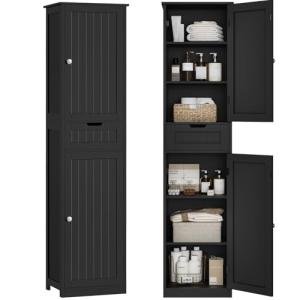
Preventative care for vertical towers focuses on maintaining the torque of the fastener system to counteract the lateral swaying that naturally occurs in narrow furniture. Regularly inspecting the sliding rail system for debris prevents the frictional wear that eventually leads to drawer derailment and structural stress.
Common Failure Modes
Even robust cabinetry faces challenges over time, particularly in high-traffic or humid environments where mechanical and material stresses are constant.
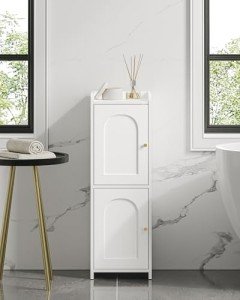
- To counteract hinge fatigue, perform a bi-annual adjustment of the pivot screws to keep the door weight centered and prevent the wood from stripping.
- Minimize structural warping by ensuring the cabinet is leveled with shims and keeping it at least one inch away from damp walls to allow for airflow.
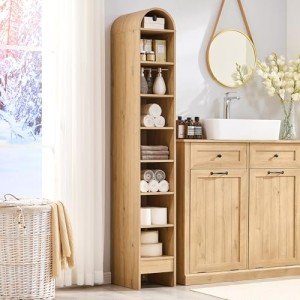
- Prevent overload deformation by placing heavy detergents and spare towels on the bottom-most shelves to maintain a low center of gravity.
- Address corrosion on metal hardware by applying a thin layer of dry silicone lubricant to hinges and handles to block moisture contact.
- Stop coating peeling by immediately drying any water splashes and avoiding the use of abrasive sponges that can create micro-scratches in the finish.
- Resolve joint loosening by checking the tightness of cam locks and internal bolts every six months to ensure the vertical frame remains rigid.
Environmental Stress Factors
The bathroom environment is uniquely harsh, presenting specific challenges that can degrade furniture much faster than in dry living areas.
- Combat high humidity by running an exhaust fan for at least 15 minutes post-shower to drop the ambient dew point and protect the adhesive bonds.
- Inhibit mold growth by cleaning the rear panels with a pH-neutral disinfectant monthly and ensuring towels are completely dry before placing them inside.
- Manage salt exposure in coastal areas by wiping down metallic surfaces with a fresh-water damp cloth weekly to remove abrasive mineral buildup.
Key Components
The longevity of a vertical cabinet depends on the quality of its individual parts and how they interact under daily use.
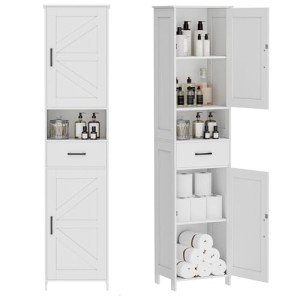
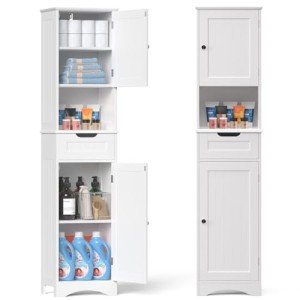
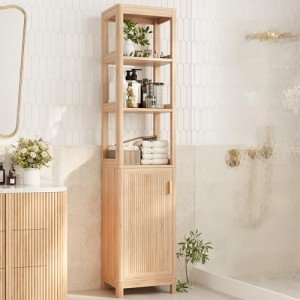
- The structural housing serves as the primary skeleton; look for units with a solid backboard to prevent the tower from "leaning" over time.
- A robust sliding rail is essential for drawers; check that the rails are made of powder-coated steel rather than thin plastic for long-term use.
- The fastener system is what holds the vertical weight; always verify that wall-anchor kits are utilized to secure the cabinet against accidental tipping.
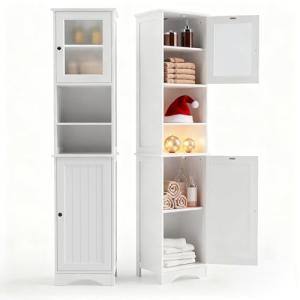
- The hinge pivot assembly should feature adjustable "three-way" hinges, allowing you to fine-tune the door alignment as the materials settle.
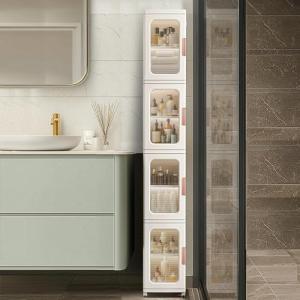
- The polymer shell or laminate finish provides the moisture barrier; inspect the edges of the laminate for a tight seal to prevent steam from reaching the wood core.
Related Categories
If you are researching full-room setups, you may also want to review the failure expectations for these related devices: