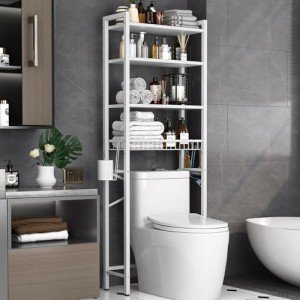
Maintenance & Troubleshooting
Preventing structural collapse starts with a bi-annual torque check of all fasteners to counteract the natural loosening caused by bathroom temperature fluctuations. Periodically applying a thin layer of carnauba wax to the metal frame can provide a secondary hydrophobic barrier that stops moisture from reaching the underlying steel.
Common Failure Modes
Over time, the mechanical integrity of bathroom shelving can be compromised by repeated weight loads and environmental factors.
- To prevent overload deformation, place heavy glass jars and linens near the vertical supports rather than the center of the shelf to reduce horizontal bowing.
- Address joint loosening by checking the stability of the telescoping arms every six months and re-tightening any bolts that have backed out due to vibration.
- Stop coating peeling by avoiding abrasive scrubbers during cleaning; use a soft microfiber cloth to prevent micro-scratches that allow moisture to seep under the paint.
- Minimize small hardware failure by applying a drop of clear thread-locker to screw threads during initial assembly to keep them seated permanently.
- Reduce stress cracking in plastic connectors by using a spirit level during installation; an uneven base puts lopsided pressure on fragile plastic joints.
- Combat corrosion by immediately drying any water splashes on the frame, especially near the floor where moisture tends to pool and eat through the metal.
Environmental Stress Factors
The unique climate of a bathroom presents specific challenges that can accelerate the aging of storage furniture.
- To mitigate high humidity acceleration, ensure your bathroom exhaust fan is rated for the room's square footage and run it for at least 15 minutes after every shower.
- Prevent mold growth by leaving a small gap between the unit and the wall to allow for airflow, and use non-porous silicone shelf liners that won't trap dampness.
- Eliminate hard water buildup by wiping down the frame with a 50/50 water and white vinegar solution monthly to dissolve mineral deposits before they etch the finish.
Key Components
A well-engineered shelving unit relies on several critical parts to ensure it remains upright and capable of supporting your items.
- The load bearing frame is the unit's backbone; look for thicker gauge steel to ensure the vertical posts don't buckle under a full load.
- A high-quality polymer shell on the leveling feet acts as a thermal and moisture break between the wet tile floor and the metal frame.
- The sliding rail system allows for width adjustment; keep these channels free of dust and hair to prevent the internal locking pins from seizing.
- A reliable fastener system should include lock washers or nylon-insert nuts to resist the constant expansion and contraction cycles of a damp bathroom.
- The surface coating, whether powder-coated or chrome-plated, must be checked for chips annually to prevent localized rust from spreading.
Related Categories
If you are researching full-room setups, you may also want to review the failure expectations for these related devices: