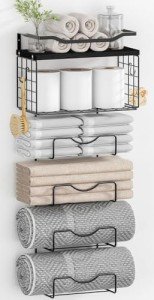
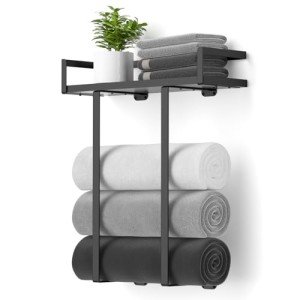
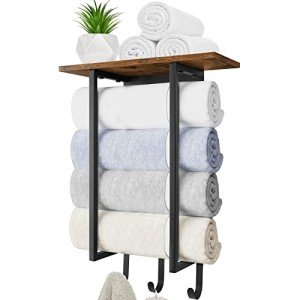
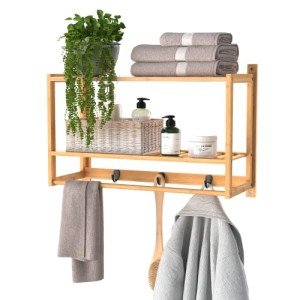
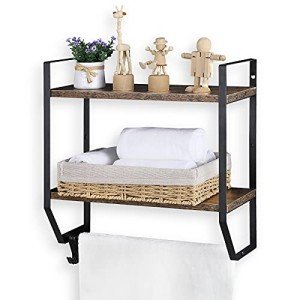
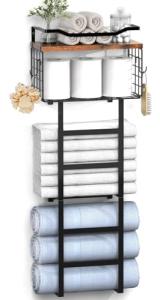
Maintenance & Troubleshooting
Preventative care for wall-mounted shelving centers on a bi-annual torque check of the mounting screws to counteract the vibration-induced loosening caused by daily use. Regularly clearing dust and hair from the wall-contact points prevents the moisture-wicking that typically leads to subsurface corrosion and mold growth.
Common Failure Modes
Over time, mechanical and chemical stresses can compromise the stability and appearance of your towel rack system.
- To prevent overload deformation, distribute the weight of wet linens across multiple bars and avoid hanging heavy robes from a single horizontal rail.
- If you notice coating peeling, sand the affected area and apply a moisture-resistant sealant immediately to stop rust from spreading to the core metal.
- Address corrosion at the joints by wiping down the frame after high-steam showers to ensure water doesn't pool in the welded crevices.
- Eliminate joint loosening by checking the structural alignment quarterly and tightening any bolts that have backed out due to repetitive pulling.
- If you suspect adhesive bond failure on decorative caps, replace the aging glue with a high-strength, waterproof epoxy rated for high-humidity areas.
- Resolve small hardware failure by replacing standard plastic wall plugs with heavy-duty toggle bolts to ensure the rack can handle the weight of damp fabrics.
- Stop galvanic corrosion by ensuring that stainless steel screws are used with compatible metal brackets to prevent the electrochemical reaction that weakens hardware.
Environmental Stress Factors
The bathroom is one of the harshest environments in the home, requiring materials that can withstand constant fluctuations.
- Counteract high humidity by running an exhaust fan for at least 15 minutes post-shower to drop the ambient dew point and protect the unit's finish.
- Prevent mold growth by leaving a small gap between the towels and the wall to facilitate airflow, and clean the rear mounting plate with a mild disinfectant monthly.
- Remove hard water buildup by applying a 50/50 water and vinegar solution to chrome surfaces, which dissolves mineral crusts before they pit the metal.
Key Components
A high-quality towel holder relies on several specialized components to maintain its form and function over time.
- The load bearing frame is the primary skeleton; look for heavy-gauge metal or solid-core bamboo to ensure the rails don't bow under tension.
- Inspect the structural housing for clean, continuous welds, as these provide the necessary rigidity to keep the shelves square against the wall.
- A durable polymer shell or gasket at the mounting base is essential for preventing the rack from vibrating against and cracking delicate tile surfaces.
- The fastener system is the most common point of failure; always verify that the provided screws are made of rust-proof stainless steel.
- Models with a high-performance surface coating like powder-coating offer superior longevity over basic paint by providing a thicker barrier against steam.
- If the unit includes a glass panel, ensure it is tempered and seated in a rubber gasket to prevent it from shattering due to thermal expansion.
Related Categories
If you are researching full-room setups or alternative linen storage, you may also want to review the failure expectations for these related devices: