Maintenance & Troubleshooting
Periodically rotating the riser 180 degrees can help counteract the onset of permanent material bowing caused by off-center monitor stands. Tightening the leg fasteners every quarter prevents the lateral "racking" that eventually snaps metal welds or stripped wood threads.
Common Failure Modes
Desktop risers are subject to constant static loads and repetitive movement that can lead to several mechanical issues over time.
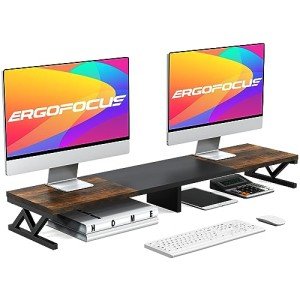
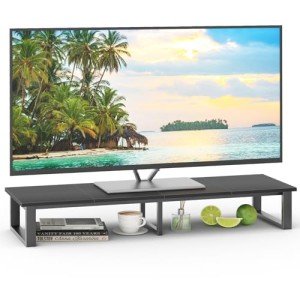
- Heavy hardware placed on unsupported spans often leads to permanent structural warping. Solution: Place monitor stands directly over the vertical support legs rather than in the center of the shelf to minimize leverage.
- Exceeding the manufacturer weight limit for extended periods causes overload deformation. Solution: Calculate the combined weight of your monitor and speakers to ensure you remain at least 20% below the rated maximum capacity.
- Frequent adjustments of modular tiers can result in joint loosening. Solution: Apply a small amount of non-permanent thread-locker to the bolts during assembly to prevent vibration-induced loosening.
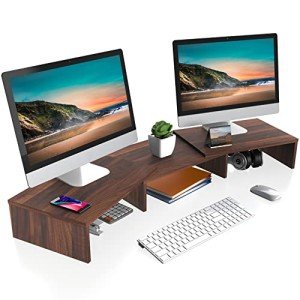
- Repeated assembly and disassembly often lead to small hardware failure. Solution: Avoid over-tightening screws into composite wood; stop turning as soon as the head is flush with the surface to prevent stripping the threads.
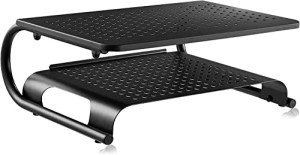
- Powder-coated metal risers used in humid offices may eventually show signs of coating peeling. Solution: Wipe away condensation or spills immediately to prevent moisture from migrating under the powder coat layer.
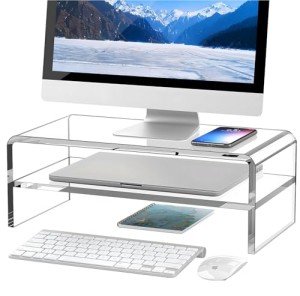
- Acrylic and plastic models are particularly susceptible to surface scratching. Solution: Use a felt or microfiber desk mat on top of the riser to act as a sacrificial barrier against sliding office equipment.
- Impact during office moves can cause stress cracking. Solution: Always remove heavy hardware before moving the riser to prevent the legs from acting as levers that crack the corner joints.
Environmental Stress Factors
The office environment plays a significant role in how well your shelf riser maintains its finish and structural rigidity.
- In basement offices or coastal regions, high humidity acceleration can swell composite wood. Prevention: Seal any exposed or raw particleboard edges with a thin layer of clear wood glue to block moisture ingress.
- Accumulated particles in the workplace create a heavy dust load that can clog adjustable tracks. Prevention: Use compressed air to clear out height-adjustment channels monthly to keep the locking pins moving freely.
- Using harsh chemicals during desk cleaning may result in a cleaner compatibility conflict. Prevention: Stick to pH-neutral cleaners or a simple damp microfiber cloth to avoid dissolving the protective topcoats.
Key Components
Each riser is engineered with specific parts designed to manage weight distribution and surface protection.
- The primary strength of the unit comes from the load bearing frame. Check: Look for steel or solid wood frames rather than hollow plastic if you intend to support dual-monitor setups.
- To prevent the unit from sliding, the bottom often features a specialized polymer shell. Check: Replace worn-out rubber feet with high-friction silicone pads to maintain stability on glass or polished wood desks.
- Premium wood or laminate risers rely on a high-quality adhesive bond layer. Check: Periodically inspect the edge banding for "peel-back" which can catch on clothing and accelerate damage to the core.
- The main deck is often reinforced by a structural housing. Check: Verify that the housing includes a central support rib if the span of the shelf exceeds 20 inches.
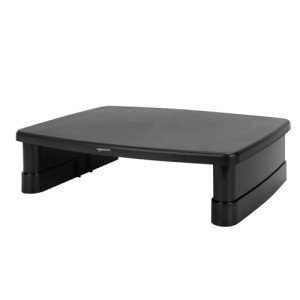
- Height-adjustable models utilize a robust fastener system. Check: Ensure the locking pins are fully seated in their detents before applying weight to prevent a sudden collapse.
- Modern, sleek risers frequently incorporate a tempered glass panel. Check: Inspect the edges of the glass for chips; even a small nick can lead to a complete structural failure of tempered panels under load.
Related Categories
If you are researching full-room setups, you may also want to review the failure expectations for these related devices:
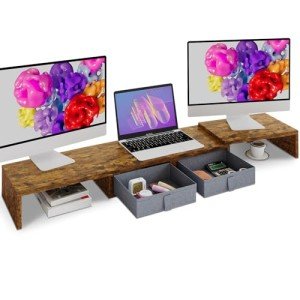
- For complex multi-monitor needs, you may want to compare these against adjustable shelf risers that offer more granular height control.
- Keep your immediate writing area clear with dedicated pen pencil holder cups.
- Maximize the vertical void created by the riser using mini drawer sets to store low-profile office supplies.
- To balance your new screen height with your seating position, consider the benefits of under desk footrests for ergonomic alignment.