Maintenance & Troubleshooting
Periodically rotating the footrest 180 degrees prevents localized foam compression from turning into permanent structural sagging. Tightening the pivot assembly screws every quarter ensures that a minor wobble doesn't escalate into a catastrophic hinge failure under load.
Common Failure Modes
Even the most durable ergonomic tools are subject to mechanical wear and material breakdown over years of daily pressure and movement.
- Repeated weight distribution often leads to Creep Deformation. Prevention: Avoid standing on the footrest and occasionally shift your foot placement to distribute the static load across the entire frame.
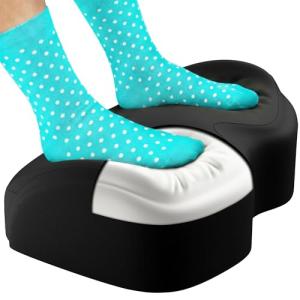
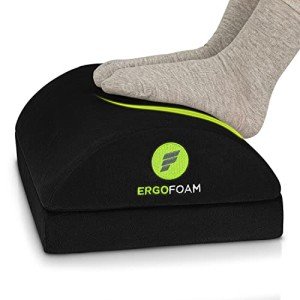
- Constant pressure on the surface can cause foam materials to fail. Prevention: Select high-density memory foam with a higher "indentation load deflection" (ILD) rating to ensure the material returns to its original shape.
- Models with moving parts frequently suffer from Joint Loosening. Solution: Apply a small amount of non-permanent thread-locker to the adjustment bolts to keep them from backing out during rocking motions.
- The friction between the base and the floor often results in Abrasive Wear. Prevention: Use a desk mat beneath the unit to prevent hard floor grit from grinding away the rubberized non-slip feet.
- Internal structural integrity may be compromised by Vibration Crack Propagation. Solution: Inspect plastic seams for hairline white stress marks, which indicate the material is reaching its fatigue limit.
- Over-tightened or stressed connections can lead to Small Hardware Failure. Solution: Use a torque-limited screwdriver during assembly to avoid stripping the internal threads of the plastic housing.
- For plastic-based units, look out for Stress Cracking. Prevention: Ensure the unit is used on a level surface; uneven floors create torsional stress that forces the polymer to flex beyond its design specifications.
Environmental Stress Factors
The office environment significantly impacts the longevity of the fabrics, polymers, and adhesives used in footrest construction.
- An accumulation of Dust Load can penetrate moving joints. Prevention: Vacuum the pivot points monthly to prevent abrasive particles from acting like sandpaper on the internal hinges.
- If used near windows, High UV Exposure can make frames brittle. Prevention: Opt for metal-framed units or use UV-protective fabric sprays if your workstation receives direct afternoon sunlight.
- Standard maintenance using harsh chemicals may cause Cleaner Compatibility Conflict. Prevention: Test all upholstery cleaners on a hidden underside patch to ensure the solvent doesn't dissolve the non-slip adhesive bonds.
- In many home offices, Pet Hair Clogging can interfere with mechanisms. Prevention: Regularly brush or lint-roll hook-and-loop fasteners to maintain the grip strength of removable covers.
Key Components
The performance of an under-desk footrest relies on several critical components working together to support your lower body.
- The primary stability is provided by the Load Bearing Frame. Research Tip: Steel frames offer significantly higher cycle-lives than hollow plastic alternatives for users over 200 lbs.
- Soft-touch models rely on a high-quality Upholstery Fabric. Research Tip: Look for "breathable mesh" or high-denier polyester to minimize heat buildup and prevent premature fabric thinning.
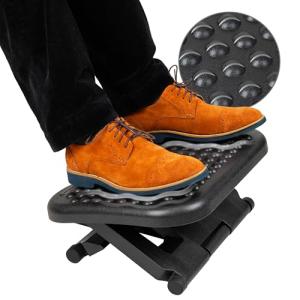
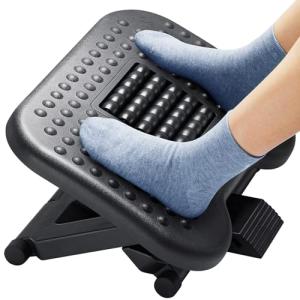
- Rigid adjustable models typically feature a durable Polymer Shell. Research Tip: ABS plastic shells are generally more impact-resistant than generic polypropylene versions.
- Tilt mechanisms are governed by a Hinge Pivot Assembly. Research Tip: Sealed ball-bearing pivots provide smoother motion and less noise than simple friction-based plastic pins.
- To prevent the unit from sliding, a specialized Adhesive Bond Layer secures padding. Research Tip: Check that the base padding is vulcanized or high-tack silicone to avoid the pads peeling off in high-temperature rooms.
- The structural rigidity of many modern footrests is maintained by an internal Structural Housing. Research Tip: Internal ribbing within the housing is a sign of superior engineering that prevents the deck from bowing over time.
Related Categories
If you are researching full-room setups, you may also want to review the failure expectations for these related devices: