Maintenance & Troubleshooting
To prevent fiber snapping, maintain a stable relative humidity between 40% and 60% to keep natural reeds pliable. Periodically vacuuming the weave with a soft brush attachment prevents abrasive dust from eroding the structural stakes from the inside out.
Common Failure Modes
Natural woven materials are durable but subject to specific mechanical and structural degradation over years of consistent use.
- Heavy items can cause permanent sagging or drooping, a condition known as Creep Deformation; avoid this by reinforcing the base with a custom-cut plywood insert to distribute weight evenly.
- Frequent opening and closing of the top can lead to Hinge Fatigue; apply a small amount of leather conditioner or beeswax to the hinge fibers to reduce friction-based snapping.
- The repeated friction of sliding the unit across floors results in Abrasive Wear; attach felt pads or a protective fabric base to the bottom rim to shield the primary weavers.
- Over time, the natural materials may experience Textile Fiber Thinning; mist the basket lightly with water twice a year to rehydrate the fibers and maintain their tensile strength.
- If the lid is forced shut over bulky items, you may notice Structural Warping; ensure contents sit below the rim line to prevent the vertical stakes from bending outward permanently.
- Exposure to direct sunlight often leads to UV Embrittlement; rotate the basket’s position monthly or apply a UV-resistant clear matte spray to block damaging radiation.
- In damp conditions, the organic fibers are susceptible to Mold Growth; improve airflow by placing the basket on a raised stand and using silica gel packets inside to absorb excess moisture.
Environmental Stress Factors
The longevity of woven items is strictly dictated by the atmospheric conditions of the room in which they are placed.
- Excessive moisture in bathrooms can lead to High Humidity Acceleration; prioritize baskets with synthetic "resin wicker" or treated seagrass for these high-moisture zones.
- In very arid climates, Low Humidity Desiccation can be mitigated by moving baskets away from direct heat vents or using a room humidifier.
- Particles settling into the tight weave create a Dust Load; use compressed air to blow out fine particles from deep within the weaving junctions before they cause fiber rot.
- Kitchen placement may result in Cleaner Compatibility Conflict; if grease splashes occur, clean immediately with a pH-neutral soap and dry thoroughly to prevent the fibers from absorbing oils.
Key Components
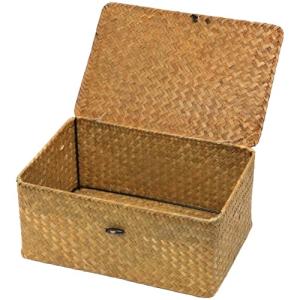
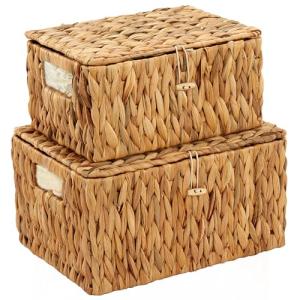
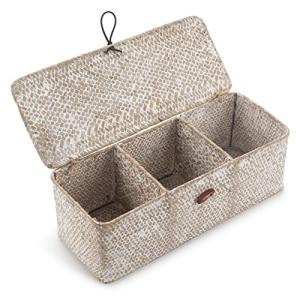
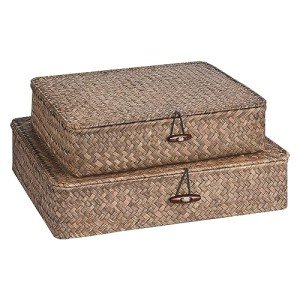
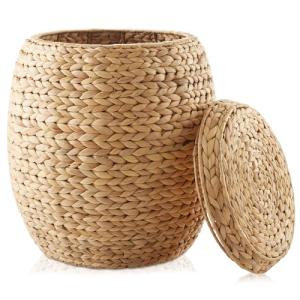
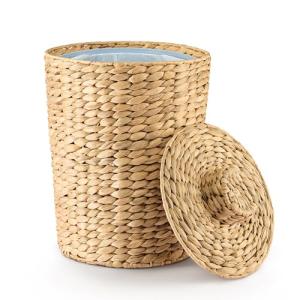
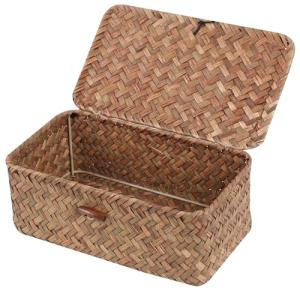
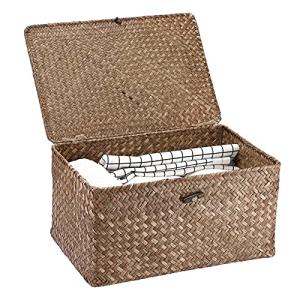
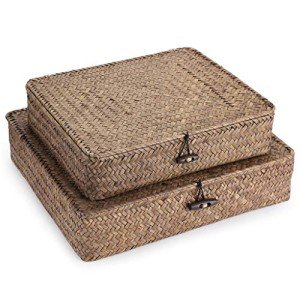
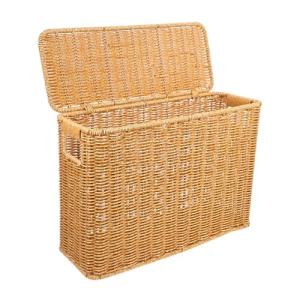
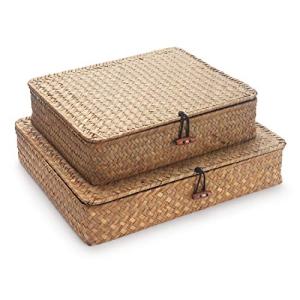
Every lidded basket is engineered with specific structural elements that define its capacity and durability.
- The primary Structural Housing consists of the vertical stakes and horizontal weavers that form the basket's body.
- Many high-end baskets utilize a Load Bearing Frame made of metal or wood to maintain a rigid shape.
- The connection between the lid and the base is managed by a Hinge Pivot Assembly usually crafted from reinforced twine or leather.
- To ensure the lid stays closed securely, a small Fastener System like a toggle or loop is often integrated.
- The protective outer layer might feature a Surface Coating of clear lacquer to repel moisture and prevent snagging.
- Handles and decorative pulls are attached using an Adhesive Bond Layer or reinforced weaving for maximum grip strength.
Related Categories
If you are researching full-room storage setups, you may also want to review the failure expectations for these related devices: