Maintenance & Troubleshooting
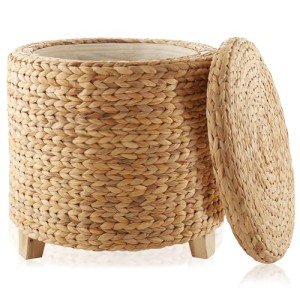
Maximizing the life of a woven ottoman requires maintaining a strict moisture barrier on the fibers and periodically checking the fastener torque on the lid hinges. Preventing localized mold growth is far easier than remediating it once spores have penetrated the deep crevices of the weave.
Common Failure Modes
Even high-quality bathroom furniture faces challenges from frequent use and heavy lids.
- To prevent hinge fatigue, avoid over-extending the lid beyond its designed stop-point and lubricate the metal pivots with a dry-film Teflon spray twice a year.
- Mitigate cushion collapse by choosing high-density closed-cell foams which resist moisture absorption better than standard open-cell upholstery padding.
- Stop mold growth by ensuring at least two inches of clearance between the ottoman and damp walls to allow for total air circulation.
- You can avoid overload deformation by strictly adhering to the internal weight capacity—usually 20-30 lbs—to prevent the base panel from bowing.
- Fix small hardware failure by replacing standard plastic glides with stainless steel or heavy-duty rubber floor protectors that won't degrade in wet conditions.
- Reduce abrasive wear by ensuring the lid is properly aligned; a misaligned top will slowly "saw" through the woven fibers of the base every time it is closed.
Environmental Stress Factors
The bathroom is a punishing environment for furniture, requiring specific material defenses.
- To combat high humidity, use a bathroom exhaust fan with a timer to ensure the room returns to 50% humidity within 20 minutes of shower use.
- Prevent a cleaner compatibility conflict by testing disinfectants on an inconspicuous bottom corner to ensure they don't dissolve the protective UV-inhibitor coating.
- If your bathroom has windows, rotate the unit monthly to prevent UV embrittlement from making one side of the weave more prone to cracking than the other.
- Minimize moisture swelling by selecting ottomans with aluminum or plastic internal frames rather than MDF or particle board which expand and crumble when damp.
Key Components
A durable storage ottoman relies on several critical parts to function as both seating and storage.
- The load bearing frame is the most critical hardware; look for welded metal or solid teak to ensure the unit doesn't wobble over time.
- Verify that the structural housing is fully lined with a moisture-wicking material to keep stored textiles from touching the damp outer shell.
- A high-quality upholstery fabric for the seat should be rated for outdoor use (solution-dyed acrylic) to ensure it can withstand the steam cycles of a bathroom.
- The hinge pivot should ideally be made of stainless steel or powder-coated brass to prevent rust-jacking, which can seize the lid.
- Units featuring a polymer shell are generally superior for bathroom longevity as they provide an impermeable barrier that organic weaving alone cannot offer.
Related Categories
If you are researching full-room setups, you may also want to review the failure expectations for these related hardware categories: