Maintenance & Troubleshooting
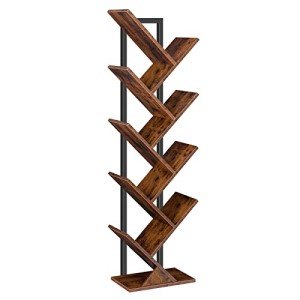
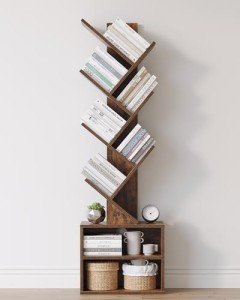
Regularly re-torquing internal cam-locks prevents micro-gaps from forming at the branch intersections, which is the leading cause of audible creaking and structural instability. Balancing your collection by placing heavier hardcovers closest to the central pillar significantly reduces the risk of permanent fiber "set" or limb sagging.
Common Failure Modes
Even the most robust wooden structures are subject to physical laws and material limitations over years of use.
- Uneven weight distribution across the branches can lead to structural warping; prevent this by mirroring the weight load on opposite sides of the trunk to maintain vertical symmetry.
- The repetitive action of adding or removing heavy volumes can result in joint loosening; check the tightness of branch fasteners every six months to eliminate structural play.
- If the base is not properly leveled, the unit may experience overload deformation; use furniture shims under the base plate to ensure the center of mass stays perfectly perpendicular to the floor.
- Constant pressure on the lower "limbs" from heavy encyclopedias often causes creep deformation; rotate your heaviest books to different branches annually to allow wood fibers to recover from static compression.
- The protective finish may suffer from surface scratching; apply thin felt adhesive strips to the top of branches to create a sacrificial barrier against abrasive book covers.
- In rare cases of extreme dryness, the natural grain may develop stress cracking; keep the unit away from direct heat vents to prevent the rapid moisture loss that triggers timber splitting.
- Poorly applied topcoats are susceptible to coating peeling; clean only with a damp microfiber cloth and avoid solvent-based waxes that can dissolve the factory sealant.
Environmental Stress Factors
The environment surrounding your wooden furniture dictates its long-term stability and health.
- Excessive moisture in the air can trigger high humidity acceleration; use a hygrometer to ensure the room stays between 35% and 55% relative humidity to prevent joint swelling.
- Placing your book tree in direct sunlight results in high UV exposure; use UV-filtering window films to stop the photochemical breakdown of the wood's lignin and finish.
- In arid climates, low humidity desiccation can shrink the joinery; apply a high-quality furniture oil twice a year to supplement the wood's internal moisture and maintain flexibility.
- Accumulated particles on the flat surfaces create a dust load; vacuum the branches with a soft brush attachment weekly to remove abrasive grit that can dull the protective topcoat.
Key Components
Each book tree is an engineered system designed to balance aesthetics with gravity-defying support.
- The central pillar acts as the load bearing frame; inspect this core for vertical plumbing during assembly to ensure total system stability.
- Internal screws and hidden cams form the fastener system; always hand-tighten these components to avoid stripping the wood threads associated with power tools.
- The exterior finish serves as a surface coating; re-apply a compatible paste wax annually to maintain the moisture barrier.
- The rigid main body, or structural housing, provides the necessary ballast; ensure the anti-tip wall strap is engaged to prevent forward movement under full load.
- Precision-cut panels, often involving a polymer shell, provide durability; use anti-static cleaners to prevent the build-up of dust on these non-porous surfaces.
- At the base, the adhesive bond layer secures the floor protectors; replace these pads if they flatten out to keep the unit from sliding on hard surfaces.
Related Categories
If you are researching full-room setups, you may also want to review the failure expectations for these related devices:
- If you prefer a more traditional architectural look, our ladder shelves offer tiered storage that leans elegantly against your wall.
- For children's rooms, consider front facing bookshelves to display colorful covers and encourage early reading habits in a safe format.
- Create a custom library wall by mixing your book tree with floating wall shelves for a truly modern, gravity-defying book display.