Maintenance & Troubleshooting
Monitoring the gap between the shelf housing and the wall is the most effective way to catch mounting hardware failure before a total collapse occurs. Regular leveling checks allow you to identify subtle structural sagging caused by material fatigue in the internal rods or loosening wall anchors.
Common Failure Modes
Even the most robust shelving systems can succumb to physical stresses over time if not monitored correctly.
- To prevent cyclic fatigue failure, avoid frequently swapping heavy objects, which places repetitive stress cycles on the internal weld points.
- Mitigate creep deformation by distributing weight toward the wall-side of the shelf rather than the outer edge to reduce the leverage on the core.
- Address joint loosening by checking the set screws underneath the shelf monthly to ensure the housing hasn't backed off the support rods.
- Avoid overload deformation by strictly adhering to the "per stud" weight rating rather than the total shelf length rating.
- Counter structural warping in hollow models by ensuring internal blocking is present where heavy decorative items are placed.
- Minimize surface scratching by applying felt pads to the bottom of ceramics and heavy glass to protect the topcoat integrity.
- Monitor for vibration crack propagation in drywall by installing shelves exclusively into wood or metal studs rather than relying on drywall anchors alone.
Environmental Stress Factors
The atmosphere of your room plays a significant role in the longevity of your wall-mounted shelving.
- Combat high humidity acceleration by sealing any unfinished shelf edges to prevent moisture from swelling the core and compromising the bracket grip.
- Reduce high UV exposure damage by applying a UV-shielding wax to natural wood finishes to prevent brittle fibers and flaking.
- Manage the dust load by wiping the top surface with a dry microfiber cloth weekly, as dust can trap ambient moisture against the finish.
- Avoid a cleaner compatibility conflict by testing new polishes on the hidden back edge of the shelf to ensure the chemicals won't dissolve the factory lacquer.
Key Components
A floating shelf is more than just a piece of wood; it is an integrated system of support and finish.
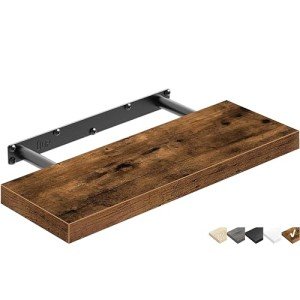
- The load bearing frame is the hidden steel bracket that must be perfectly plumb during installation to maintain a level display.
- A robust fastener system using high-tensile lag bolts is the only way to ensure the bracket doesn't pull away from the wall under load.
- The structural housing provides the shelf volume; look for solid timber or high-density furniture board for better screw retention.
- A polymer shell finish is ideal for high-moisture areas like kitchens, offering a non-porous barrier against steam and oils.
- In premium units, the adhesive bond layer prevents edge-banding from delaminating when the shelf is subjected to seasonal temperature swings.
If you are researching full-wall storage or alternative mounting hardware, you may also want to review the failure expectations for these related devices:
- Analyze the durability of modular systems like pegboard wall grid storage for high-access utility areas.
- If you require higher weight capacities with less wall stress, consider the grounded stability of ladder shelves.
- For protecting delicate collectibles from environmental dust, review the hardware specs for shadow box shelves.
- Review the thin-profile failure modes of wall mounted book ledges when subjected to eccentric loading.