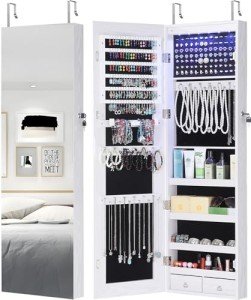
Maintenance & Troubleshooting
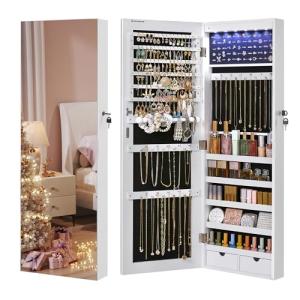
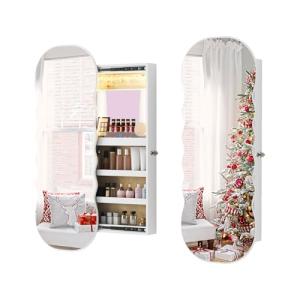
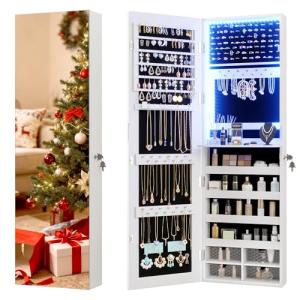
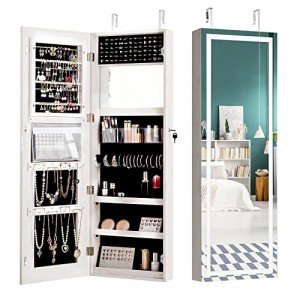
Preserving a wall-mounted armoire requires biannual inspections of the mounting anchors and hinge torque to counteract the effects of gravity on the frame. Identifying early signs of chassis shift prevents permanent door sagging and protects the integrity of the internal jewelry hooks.
Common Failure Modes
Regular use and heavy jewelry loads can lead to specific mechanical issues that compromise the security and functionality of your wall-mounted armoire.
- The weight of the mirrored front frequently leads to hinge fatigue; tighten the pivot screws every six months to prevent the door from dragging against the frame.
- Heavy necklace collections can cause small hardware failure; reinforce internal pegs with a drop of wood glue to stop them from pulling out of the backing.
- Exposure to skin oils often results in coating peeling; clean the exterior with a dry microfiber cloth and avoid ammonia-based cleaners that dissolve protective lacquers.
- Uneven wall surfaces trigger structural warping; utilize shims behind the mounting points to ensure the frame remains perfectly square for easy locking.
- Shifting humidity causes adhesive bond failure; re-secure loose velvet sections with a non-acidic fabric adhesive to protect jewelry from contact with the wood substrate.
- Vibrations from daily use cause joint loosening; check the stability of the door-to-frame assembly annually to ensure magnetic catches remain aligned.
- Contact with jewelry hardware can cause surface scratching; use specialized glass polish and soft-touch wax on wooden surfaces to buff out minor abrasions.
Environmental Stress Factors
The placement of your jewelry cabinet significantly impacts the preservation of both the storage unit and the delicate metals kept inside.
- Bathroom installations lead to high humidity acceleration; place silica gel packets inside the unit to absorb moisture and prevent silver tarnish.
- Direct sunlight results in high UV exposure; keep the cabinet away from windows to prevent the interior lining from becoming brittle and the wood finish from fading.
- Proximity to the ocean facilitates salt exposure; apply a thin layer of protective wax to metal hinges and locks to create a barrier against corrosion.
- The accumulation of a significant dust load abrades soft metals; vacuum the interior ring rolls and earring slots monthly to keep the storage environment clean.
Key Components
Each element of a wall-mounted cabinet is engineered to balance the weight of the mirror with the delicate needs of jewelry organization.
- The structural housing acts as the chassis; look for high-density plywood or solid wood frames that resist twisting better than particle board.
- A functional glass panel must be shatter-resistant; ensure the mirror is silver-backed and securely bonded to the door frame to prevent rattling.
- The upholstery fabric layer serves as a buffer; prioritize anti-tarnish velvet to prevent chemical reactions between the lining and your jewelry.
- A heavy-duty hinge pivot assembly is critical; look for European-style concealed hinges or full-length piano hinges for superior load distribution.
- A robust fastener system is the only thing preventing falls; utilize 3-inch lag screws driven directly into wall studs for a secure mount.
- The polymer shell components offer moisture resistance; high-quality ABS or acrylic organizers are less likely to crack than cheaper plastics in shifting climates.
Related Categories
If you are researching full-room setups or alternative mounting styles, you may also want to review the failure expectations for these related devices: