Maintenance & Troubleshooting
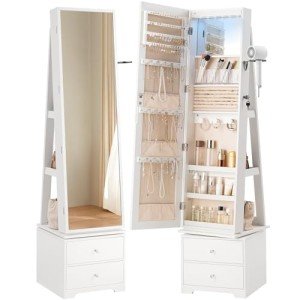
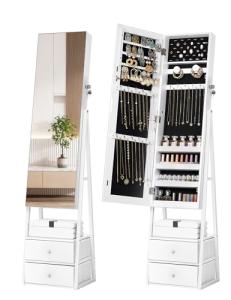
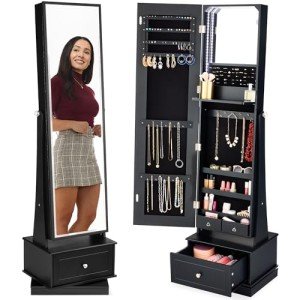
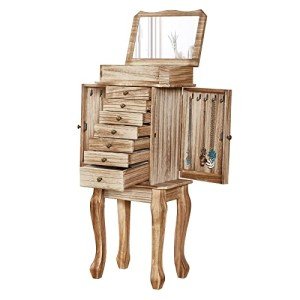
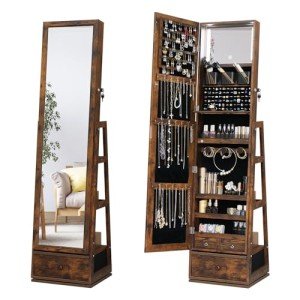
Maintaining a standing armoire requires biannual leveling and hinge tension adjustments to prevent the mirrored door from pulling the frame out of square. Proactive care of the internal fabric bonds is also necessary to stop anti-tarnish linings from delaminating in shifting climates.
Common Failure Modes
Even robust furniture can experience wear over time; recognizing these issues helps you address them before they compromise your jewelry's safety.
- The massive weight of integrated mirrors often causes hinge fatigue; check and tighten the mounting screws every six months to prevent the door from dragging on the base.
- Uneven floor surfaces result in structural warping; use adjustable furniture glides to ensure the cabinet stays perfectly vertical and the door remains balanced.
- Excessive necklace weight leads to small hardware failure; reinforce loose hooks with a drop of wood glue or use shorter screws to re-seat pegs into the internal backing.
- Frequent door operation triggers joint loosening; inspect the cam-locks and structural bolts annually to maintain the rigidity of the standing legs.
- Harsh chemical exposure results in coating peeling; clean the exterior with a dry microfiber cloth and avoid ammonia-based glass cleaners near the wood finish.
- Environmental shifts cause adhesive bond failure; use a non-toxic fabric adhesive to tack down corners of the velvet lining if they begin to pull away from the wood.
Environmental Stress Factors
The environment in your bedroom or dressing area significantly impacts both the armoire and the delicate items stored inside.
- Moist air promotes high humidity acceleration; place silica gel packets inside the cabinet to absorb moisture and protect silver items from rapid tarnish.
- Proximity to windows leads to high UV exposure; keep the armoire in a shaded corner to prevent the exterior lacquer from cracking and sensitive stones like amethyst from fading.
- The accumulation of an internal dust load can abrade soft metals; vacuum the interior velvet with a brush attachment monthly to keep debris away from your jewelry.
Key Components
High-quality construction relies on specialized parts designed to support weight while providing a gentle environment for valuables.
- The structural housing serves as the central chassis; look for high-density fiberboard or solid timber to ensure the frame doesn't twist under the mirror's load.
- The hinge pivot assembly is the most critical moving part; prioritize units with three or more heavy-duty butt hinges for better weight distribution.
- An internal upholstery fabric layer prevents contact scratches; ensure the lining is fully adhered to the backing to avoid sagging over time.
- The glass panel provides utility and protection; look for silver-backed, shatter-resistant mirrors for improved durability and safety.
- The fastener system secures the legs to the cabinet; threaded metal inserts are superior to simple wood screws for preventing base wobble.
Related Categories
If you are researching full-room organization or alternative mounting styles, you may also want to review the failure expectations for these related devices: