Maintenance & Troubleshooting
Preventing mechanical seizure requires a quarterly purge of internal gates to remove abrasive flour and dust buildup that grinds down polymer seals. Regularly inspecting the wall fasteners for "creep" ensures that vertical weight loads don't lead to a catastrophic shear failure of the mounting bracket.
Common Failure Modes
Mechanical fatigue and material degradation can impact the dispensing efficiency and airtightness of your grain storage system over time.
- Address Cyclic Fatigue by lubricating the pivot points with food-grade silicone to reduce the friction-load on internal springs.
- Prevent Overload Deformation by verifying that the mounting surface can support the combined weight of the hardware and the specific density of your stored grains.
- Mitigate Abrasive Wear by wiping the internal sliding gates with a dry microfiber cloth between refills to remove micro-particulates.
- Combat Seal Compression Fatigue by periodically removing the gaskets and allowing them to sit uncompressed to restore their original elastic memory.
- Stop Stress Cracking by using only pH-neutral detergents for cleaning, as ammonia-based sprays can turn polycarbonate brittle.
- Resolve Joint Loosening by tightening the primary frame bolts every six months to counteract the effects of kitchen vibrations.
- Avoid Surface Scratching by cleaning the transparent silos with a soft cloth and non-abrasive cleaners to maintain visibility of inventory levels.
Environmental Stress Factors
The kitchen environment presents unique challenges that can affect the structural integrity and hygiene of wall-mounted dispensers.
- Neutralize High Humidity Acceleration by mounting units away from the stove or dishwasher to prevent condensation from clumping your grains.
- Prevent Pest Intrusion by inspecting the bottom nozzle for a flush seal, ensuring moths and weevils cannot enter the lower dispensing gap.
- Minimize Dust Load by wiping down the top of the lids before opening, preventing ambient kitchen debris from falling into the silo during a refill.
- Block UV Embrittlement by avoiding direct sunlight exposure, which prevents the sun’s rays from yellowing the plastic and weakening the molecular bonds of the housing.
Key Components
Each grain dispenser relies on a precise assembly of parts to ensure portion control and long-term freshness.
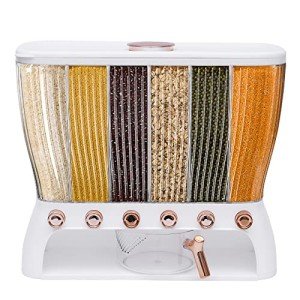
- The Structural Housing serves as the primary skeleton; check it for vertical alignment to ensure the weight is distributed toward the wall studs.
- The Dispensing Mechanism manages the flow; ensure the internal gate closes fully to prevent "slow leaks" of fine grains like quinoa.
- The Seal Gasket must remain pliable; a brittle gasket will allow air exchange that quickly spoils the nutritional content of the grains.
- A Load Bearing Frame anchors the unit; this component should be inspected for any signs of sagging or pulling away from the drywall.
- The Fastener System integrates the internal springs and gears; replace any rusted or stripped hardware immediately to maintain smooth lever action.
- The Polymer Shell provides content visibility; high-grade Tritan or acrylic is preferred for its balance of clarity and impact resistance.
Related Categories
If you are researching full-room setups, you may also want to review the failure expectations for these related devices: