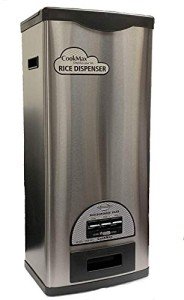
Maintenance & Troubleshooting
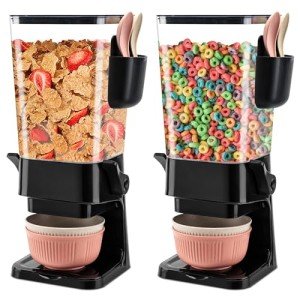
Preventing mechanical seizure requires a strict cleaning schedule to remove sticky glucose buildup before it acts as a grinding paste on internal gears. Regular inspection of the seal gaskets is the only way to ensure the hopper remains a true oxygen barrier for long-term food preservation.
Common Failure Modes
Mechanical precision is vital for consistent portioning; however, several factors can impede the gravity-fed process over time.
- Prevent gear tooth wear by avoiding forced rotations if the mechanism encounters resistance from oversized or clumped food items.
- Stop joint loosening by periodically tightening the mounting bolts on the handle to maintain a tactile, responsive feel during operation.
- Address hinge fatigue by inspecting the lid's pivot points for stress marks and applying a food-grade lubricant to ensure a smooth, airtight closure.
- Counteract spring elasticity loss by not leaving the trigger mechanism in a "half-cocked" or compressed position for extended periods.
- Reduce the risk of impact fracture by ensuring the base is anchored or weighted, as clear acrylic becomes more prone to shattering as it ages.
- Avoid overload deformation by staying within the maximum weight capacity; heavy bulk grains can bow the support frame, leading to gear misalignment.
- Combat abrasive wear by hand-washing internal silicone paddles with warm water to dissolve sugary films that can tear the flexible edges.
Environmental Stress Factors
The surrounding kitchen climate directly impacts both the hardware's longevity and the quality of the stored food.
- Mitigate high humidity acceleration by using desiccant packs in the pantry to prevent grains from sticking together and jamming the dispensing chute.
- Manage dust load by using a compressed air canister to clear out the rotational assembly, preventing fine particles from acting as a physical obstruction.
- Prevent uv embrittlement by installing dispensers away from windows, as ultraviolet light rapidly degrades the molecular bonds of transparent plastic hoppers.
- Stop pest intrusion by wiping down the dispensing nozzle after every use to eliminate food odors that attract pantry moths and weevils.
Key Components
High-quality dispensers rely on integrated systems to manage weight and maintain an airtight environment.
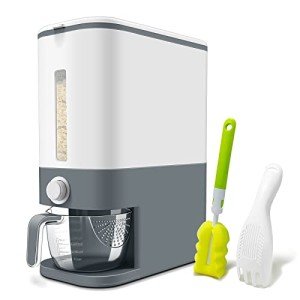
- The dispensing mechanism is the mechanical core; check its paddle-to-wall tolerance to ensure fine grains don't leak through.
- The structural housing must be rigid enough to prevent the hopper from tilting, which can cause the internal drive to bind.
- The seal gasket system requires regular inspection for tackiness or cracking to maintain a hygienic, insect-proof barrier.
- The load bearing frame serves as the anchor; verify that any wall-mount fasteners are secured into studs to prevent catastrophic shear failure.
- The rotational drive assembly manages the torque transfer from the dial to the paddle; keep this area free of sticky debris.
- The fastener system keeps the unit cohesive; tighten any accessible screws if you notice the bin shifting during the dispensing cycle.
Related Categories
If you are researching full-room storage setups, you may also want to review the failure expectations for these related devices: