Maintenance & Troubleshooting
Inspecting the center of the tiers for "blushing" or micro-stress marks every six months allows you to redistribute weight before a permanent structural sag occurs. Keeping the adjustment tracks of expandable models free of grit prevents the friction-based wear that eventually seizes the sliding mechanism.
Common Failure Modes
Tiered risers are subject to constant static pressure, which can lead to specific mechanical and material breakdowns over time.
- To prevent creep deformation, rotate heavier stock to the outer edges of the riser where the vertical supports provide maximum rigidity.
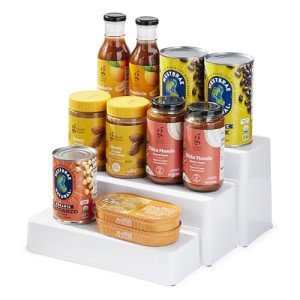
- Avoid overload deformation by strictly adhering to rated weight capacities; if tiers begin to bow, move the heavier soup tins to the bottom shelf level.
- Reduce abrasive wear by placing cans gently rather than sliding them across the surface to preserve non-slip coatings.
- Maintain smooth resizing by clearing debris from the sliding track wear points with a soft brush or compressed air.
- Identify early stress cracking by looking for thin white lines in the plastic near corners; if found, reduce the load immediately to prevent snapping.
- Prevent surface scratching by using only microfiber cloths and mild soaps, as abrasive pads create microscopic grooves that trap food particles.
Environmental Stress Factors
The pantry environment may seem stable, but several external factors can accelerate the degradation of your canned food risers.
- Manage high humidity acceleration by ensuring proper ventilation in pantries located near laundry rooms to prevent metal corrosion or adhesive failure.
- Minimize the dust load by wiping tiers monthly; accumulated grit acts as an abrasive that can degrade both the riser finish and can labels.
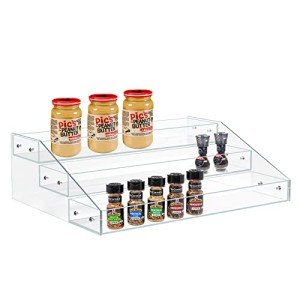
- Solve cleaner compatibility conflict by avoiding ammonia-based sprays on acrylic units, which can cause chemical haxing and structural brittleness.
Key Components
The durability of a tiered riser depends on the quality of its structural elements and the integrity of its surface materials.
- The load bearing frame is the architectural backbone; look for reinforced center ribs to ensure the unit doesn't sag under maximum capacity.
- A high-density polymer shell provides the necessary stiffness to resist warping while remaining easy to sanitize between pantry resets.
- The adhesive bond layer must be heat-resistant to prevent non-slip mats from peeling off when the pantry warms up during cooking cycles.
- A well-engineered structural housing ensures the unit remains square and stable, preventing the entire assembly from rocking on uneven wire shelving.
- The surface coating, often made of rubberized thermoplastic, provides the essential friction needed to keep cans from sliding during cabinet use.
Related Categories
If you are researching full-room setups, you may also want to review the failure expectations for these related devices: