Maintenance & Troubleshooting
Regularly inspecting the alignment of rolling tracks and tightening modular fasteners prevents the structural drift that causes can jams. Keeping the sliding surfaces free of debris ensures consistent gravity-fed operation and prevents the finish degradation that leads to corrosion.
Common Failure Modes
Even heavy-duty pantry organizers face mechanical challenges over time due to constant loading and unloading cycles.
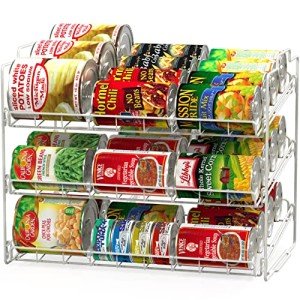
- Prevent overload deformation by strictly adhering to the unit’s maximum weight capacity and placing the heaviest soup tins on the lowest tiers.
- Minimize abrasive wear by periodically wiping the rails with a dry microfiber cloth to remove metal-on-metal friction dust.
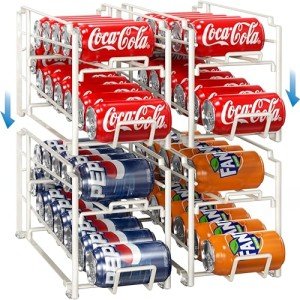
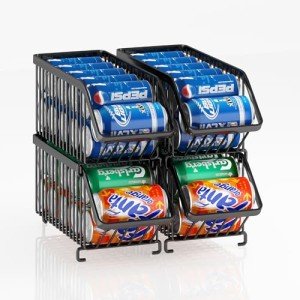
- Stop joint loosening by checking and retightening modular connectors every six months to maintain the stability of stacked units.
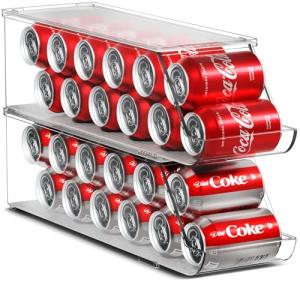
- Avoid an impact fracture by loading cans gently rather than dropping them, as high-velocity impacts can snap rigid plastic guide rails.
- Halt corrosion by applying a thin layer of food-grade mineral oil to any visible scratches in the metal wire to block moisture.
- Reduce creep deformation in polymer models by rotating heavy stock frequently to avoid prolonged, localized pressure on a single shelf point.
Environmental Stress Factors
Where you place your dispensers significantly impacts their long-term durability and the hygiene of your food storage area.
- Counteract high humidity by ensuring your pantry is well-ventilated or using moisture-absorbing packs to prevent rust and finish bubbling.
- Address the dust load by clearing the tracks with compressed air once a month, ensuring that cans roll smoothly without stalling.
- Mitigate temperature extremes by keeping dispensers in climate-controlled areas; extreme cold makes plastic brittle, while heat can cause warping.
Key Components
Modern dispenser systems rely on several critical parts to ensure smooth gravity-fed operation and safe stacking.
- A robust load bearing frame is the essential skeleton that must remain rigid to support the vertical load of a full inventory.
- The sliding rail must be kept perfectly level; any deviation or bowing will cause cans to veer or jam during rotation.
- High-quality structural housing maintains the precise spacing required for standard 12oz or 15oz cans to roll without friction.
- A reliable fastener system is vital for safety, as it prevents upper modules from shifting or tipping during the loading process.
- A durable polymer shell provides a chemical-resistant surface that won't chip or rust like traditional powder-coated wire.
- The dispensing mechanism at the front edge must be checked for metal fatigue to ensure it continues to stop cans safely without bending outward.
Related Categories
If you are researching a full-pantry organization setup, you may also want to review the failure expectations for these related devices: