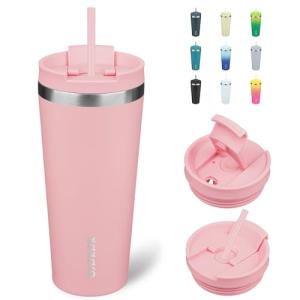
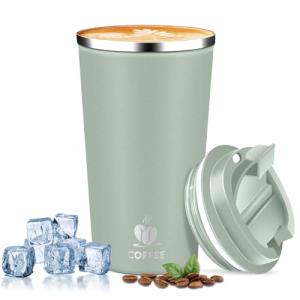
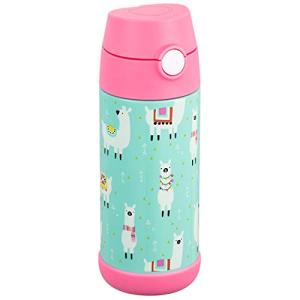
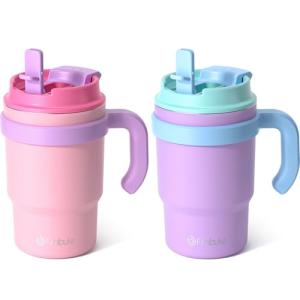
Maintenance & Troubleshooting
Preventing gasket failure requires a strict "hand-wash only" protocol for the lid to stop high-heat dishwasher cycles from causing permanent seal deformation. Regularly soaking the lid assembly in a mild oxygen-based cleaner will prevent organic buildup in the dispensing mechanism without stripping the protective interior finish.
Common Failure Modes
Thermal mugs are subject to mechanical and material stresses that can eventually compromise their ability to hold heat or prevent leaks.
- Repeated washing and heat cycles can lead to Seal Compression Fatigue; periodically remove and massage the silicone rings to restore their original shape and sealing power.
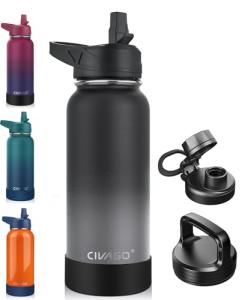
- Accidental drops often result in Impact Fracture; use a protective silicone boot on the base to dampen kinetic energy and protect the vacuum seal.
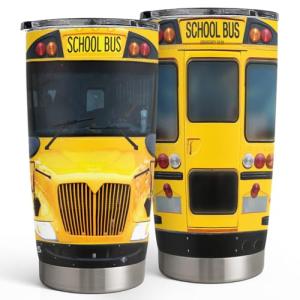
- The decorative outer layers may suffer from Coating Peeling; avoid abrasive scouring pads and stick to soft microfiber cloths to preserve the exterior finish.
- Frequent clicking or sliding of the drinking aperture can lead to Switch Contact Wear; apply a tiny amount of food-grade silicone grease to the hinge to reduce friction and mechanical stress.
- Over-tightening the lid can cause Stress Cracking; stop turning as soon as you feel resistance to prevent the plastic threads from shearing over time.
- Exposure to acidic beverages or harsh salts may trigger Micro-Corrosion Fatigue; rinse the interior with fresh water immediately after finishing coffee or tea to neutralize corrosive residues.
Environmental Stress Factors
The conditions in which you use and store your mug significantly impact its decorative finish and structural longevity.
- Leaving your mug in a hot car leads to Temperature Extremes; always crack the lid slightly when empty to allow internal air pressure to equalize and protect the gaskets.
- Constant outdoor use can result in UV Embrittlement; store the mug in a shaded area or bag when not in use to prevent the lid's plastic from becoming brittle and snapping.
- Using the wrong soap can cause a Cleaner Compatibility Conflict; avoid bleach-based cleaners which can pit the stainless steel and destroy the electropolished finish.
- Storing your mug in damp cabinets can lead to High Humidity Acceleration; store the mug with the lid off to ensure the internal crevices stay dry and free of mold growth.
Key Components
Every thermal mug relies on a specific set of engineered parts to maintain the temperature of your drink and prevent spills.
- The primary barrier against heat transfer is the Insulation, typically consisting of a double-wall vacuum-sealed stainless steel construction.
- To prevent any liquid from escaping, the Seal Gasket uses high-grade silicone to create a watertight union between the lid and body.
- The Structural Housing provides the necessary durability to protect the delicate internal vacuum layers from external dents and physical damage.
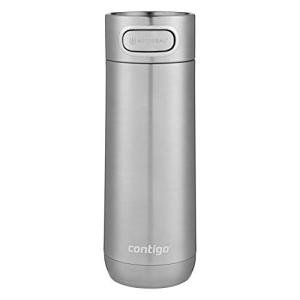
- The drinking interface often features a Dispensing Mechanism, such as a flip-top or button-actuated straw, for convenient one-handed operation.
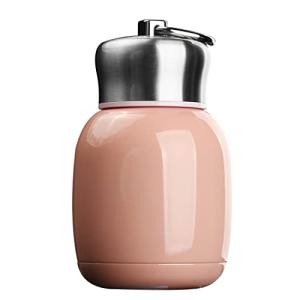
- The exterior of many mugs utilizes a Polymer Shell or powder coating to provide a comfortable, non-slip grip.
If you are researching full-room setups, you may also want to review the failure expectations for these related devices:
- Keep your collection tidy and accessible on your kitchen counter by utilizing Mug Trees & Stand-Alone Racks for efficient vertical storage.
- For those with an extensive collection of travel vessels, Stackable Water Bottle Racks provide a horizontal solution that fits neatly inside most pantry shelves.
- Ensure your mugs are always clean and ready for the next trip by installing Sink Caddies to hold your specialized bottle brushes and drying tools.
- Complete your mobile hydration setup with Stainless Steel Water Bottles, offering a lightweight alternative for non-carbonated cold drinks.