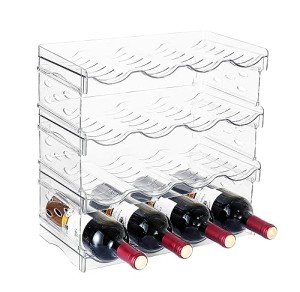
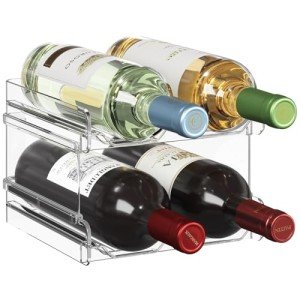
Maintenance & Troubleshooting
Preventative care for bottle racks focuses on monitoring the "bowing" of horizontal tiers and ensuring that moisture from refrigerator condensation does not compromise adhesive bonds. Regularly re-distributing weight across different levels can stop localized stress cracking before it leads to a total shelf failure.
Common Failure Modes
Even the sturdiest organizers are subject to physical stressors that can compromise the safety and stability of your beverage collection over time.
- Heavy glass bottles placed on unsupported plastic tiers can eventually lead to structural warping; mitigate this by placing the heaviest liters on the bottom-most rack to maintain a low center of gravity.
- Repeatedly sliding heavy containers in and out of the units may cause significant abrasive wear; apply a thin layer of food-grade silicone or felt pads to contact points to preserve the surface finish.
- Poorly manufactured acrylic organizers often suffer from stress cracking; inspect the corners of the rack monthly for "spider-web" lines that indicate the polymer is reaching its breaking point.
- Units that rely on glued joints may experience adhesive bond failure; avoid submersing these units in water and use a damp cloth for cleaning to keep the moisture away from internal seams.
- The clarity of your transparent organizers can be permanently marred by surface scratching; use a microfiber cloth during cleaning and avoid dragging metal cans across the plastic base.
- Overloading a stackable system beyond its rated capacity frequently results in overload deformation; verify the manufacturer's maximum weight limit and never stack units higher than the recommended safety threshold.
- Cheaper plastics used in bottle storage are susceptible to UV embrittlement; keep secondary storage units in dark pantries or indoor areas to prevent sunlight from making the plastic brittle and prone to snapping.
Environmental Stress Factors
The location of your beverage storage dictates how external elements interact with the material integrity of your organizers.
- In humid pantry environments, metal organizers are prone to corrosion; prioritize powder-coated steel or aluminum models to prevent rust from weakening the structural welds.
- Using harsh chemicals to clean spills can lead to cleaner compatibility conflict; stick to mild soap and lukewarm water to maintain the chemical bonds and clarity of the housing.
- Stored drinks in a garage or basement are often subjected to temperature extremes; ensure that plastic racks are kept away from direct heat sources to prevent rapid expansion and contraction fractures.
- Kitchen units placed near cooking stations often face a heavy dust load; degrease the sliding tracks quarterly to ensure the "stop" mechanisms remain effective and bottles don't slide out accidentally.
Key Components
A high-quality beverage organizer relies on specific engineering features to handle the unique weight and shape of liquid containers.
- The primary load bearing frame is the unit's backbone; look for reinforced vertical pillars if you intend to stack more than two tiers high.
- To keep units securely in place on slick refrigerator shelves, a durable polymer shell provides the necessary friction; check that the base hasn't become slick with grease to maintain its grip.
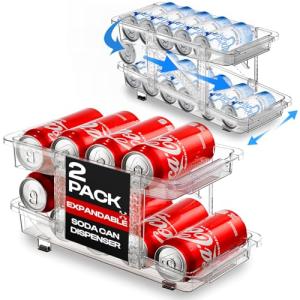
- Stackable models rely on a precise fastener system; ensure the locking tabs are fully engaged and click into place before loading any weight onto the second tier.
- High-end displays may feature a glass panel; verify that the tempered glass is properly seated in its channel to prevent vibration-induced chipping.
- To prevent movement during use, many organizers include a seal gasket; keep these rubberized feet clean and free of sticky residue to ensure the rack doesn't wander across the shelf.
- The overall durability and impact resistance depend heavily on the structural housing; choosing a wrap-around design offers better protection against bottles accidentally falling if the rack is bumped.
Related Categories
If you are researching full-room storage setups, you may also want to review the failure expectations for these related devices: