Maintenance & Troubleshooting
To prevent frame collapse, you must redistribute heavy gallon-sized bottles to the bottom tier to lower the center of gravity and reduce lateral torque on the joints. Regularly clearing lint from the wheel axles with a needle-nose tool is the only way to prevent the friction heat that melts plastic caster housings.
Common Failure Modes
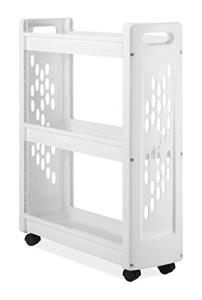
Over time, frequent use and heavy loads can impact the mechanical integrity of your slim rolling cart.
- Repeated movement over uneven floors can lead to Cyclic Fatigue; resolve this by checking joint tightness monthly to prevent the "wobble" that precedes a full structural snap.
- The wheels often experience Bearing Wear & Rotational Friction; apply a dry PTFE lubricant to the axles twice a year to maintain a smooth glide without attracting more lint.
- Storing heavy economy-sized bottles on thin shelves may result in Creep Deformation; use a rigid shelf liner to distribute weight more evenly and prevent permanent tray sagging.
- Excessive weight on the top tier can cause Overload Deformation; always place heavy detergents on the lowest shelf to maintain the unit's vertical balance.
- Frequent impacts against washing machines may cause Paint Microcracking; touch up any visible chips immediately with enamel paint to seal the metal against oxidizing laundry room moisture.
- If handled roughly, you may notice Joint Loosening; switch to nylon-insert lock nuts if your model allows it to permanently resist vibration-induced loosening.
Environmental Stress Factors
The unique atmosphere of a laundry area presents specific challenges to the materials used in slim storage solutions.
- Exposure to steam from dryers creates High Humidity Acceleration; improve room ventilation or wipe down the metal frame weekly to prevent the onset of surface pitting and rust.
- In many utility rooms, a significant Dust Load accumulates in axles; use compressed air to blow out the wheel housings every three months to ensure the bearings spin freely.
- Spilled bleach or surfactants can lead to Cleaner Compatibility Conflict; neutralize spills with a damp cloth immediately to prevent the chemicals from eating through the polymer or powder coating.
Key Components
Each part of a slim rolling cart is designed to balance a narrow profile with high weight capacity.
- The Load Bearing Frame serves as the backbone; look for tubular steel construction over flat-bar designs for superior resistance to twisting under load.
- For mobility, the Bearing System handles the rotational stress; prioritize "sealed" bearings which prevent laundry lint from entering the mechanical assembly.
- High-quality units utilize a specialized Fastener System; ensure bolts are tightened until the shelf and upright are flush to maximize the frame's rigid geometry.
- The Polymer Shell trays are designed for spill containment; check for high-density polyethylene (HDPE) which offers the best resistance to caustic laundry chemicals.
- The exterior Structural Housing must be measured precisely; allow at least a 0.5-inch clearance on either side of the cart to prevent abrasive wear against moving appliances.
Related Categories
If you are researching full-room utility setups, you may also want to review the failure expectations for these related devices: