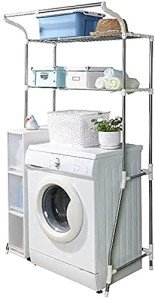
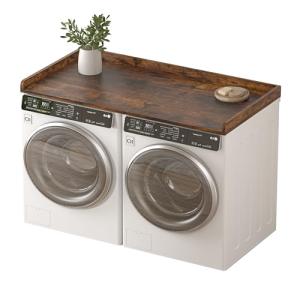
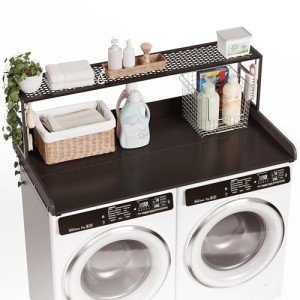
Maintenance & Troubleshooting
Maintenance & Troubleshooting
Preventative care for over-washer hardware requires a semi-annual torque-check of all hex bolts to counteract vibration-induced loosening. Immediately sealing finish scratches with an enamel-based touch-up pen is the only effective way to stop moisture from tunneling under the powder coating and causing sub-surface oxidation.
Common Failure Modes
Over time, mechanical and chemical stresses can compromise the stability and appearance of your vertical storage unit.
- Repeated loading beyond rated capacities results in Overload Deformation; resolve this by adhering strictly to tier limits and placing the heaviest detergent jugs closest to the vertical uprights.
- The high-speed vibrations of a washing machine lead to Joint Loosening; use nylon-insert lock nuts or thread-locking fluid during assembly to permanently dampen the effects of machine oscillation.
- Scratches in the protective finish may trigger Corrosion; improve room ventilation and apply a thin layer of car wax to the frame to create a moisture-repellent barrier.
- Constant exposure to spilled detergents causes Coating Peeling; immediately neutralize chemical spills with a damp cloth to prevent the surfactants from eating through the polymer finish.
- Minor shifts in floor placement cause Stress Cracking; check that all four leveling feet are under equal tension to prevent the weight from concentrating on a single plastic connector.
- In units with integrated hanging bars, excessive weight leads to Cyclic Fatigue; limit the hanging of heavy, sodden garments and spread the load across the entire width of the bar.
- Hardware not seated during setup is prone to Small Hardware Failure; ensure all washers are installed in the correct sequence to provide a flat mating surface for the bolt heads.
Environmental Stress Factors
The laundry room presents a unique set of environmental challenges that can degrade storage materials prematurely.
- The primary threat to metal organizers is High Humidity Acceleration; use a hygrometer to monitor levels and keep the room below 50% humidity to stall the electrochemical process of rusting.
- Accumulated lint and fibers contribute to a heavy Dust Load; wipe down the top of the frame monthly, as damp dust acts as a corrosive poultice that keeps moisture trapped against the paint.
- Accidental spills of bleach create a Cleaner Compatibility Conflict; choose racks with epoxy-based coatings which offer superior chemical resistance compared to standard decorative spray finishes.
Key Components
Each element of the rack is engineered to balance weight distribution with the specific clearances required for appliances.
- The primary Load Bearing Frame provides the essential vertical height; look for square-tubing over round-tubing for higher torsional rigidity when spanning wide machines.
- To keep the structure square, a robust Fastener System is used; prioritize M6 or larger steel bolts to ensure the threads can handle the shear forces of a vibrating load.
- The outer Structural Housing includes cross-bracing; verify that X-braces are tight, as these are the primary defense against the unit swaying and striking the dryer.
- For units featuring pull-out trays, a precision Sliding Rail ensures smooth access; lubricate these tracks with a dry silicone spray to prevent detergent dust from seizing the bearings.
- Protective Polymer Shell coatings prevent frame scratches; check the thickness of the coating at the edges to ensure it hasn't thinned during the manufacturing process.
- Adjustable leveling feet often utilize a Hinge Pivot Assembly to adapt to floors; ensure the pivot is fully threaded into the frame to maximize the surface area of the screw engagement.
Related Categories
If you are researching full-room setups, you may also want to review the failure expectations for these related devices: