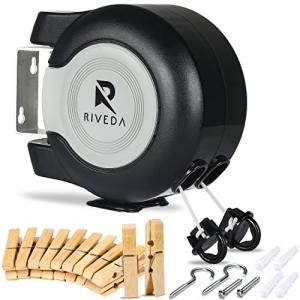
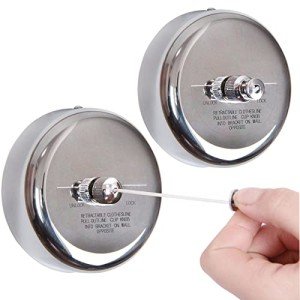
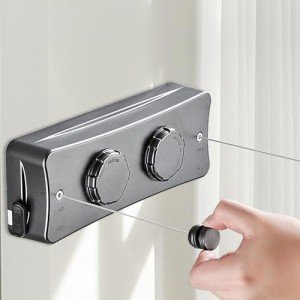
Maintenance & Troubleshooting
Applying a dry silicone lubricant to the line exit point twice a year prevents abrasive friction from shredding the synthetic cord fibers. Periodically resetting the internal tension by fully extending the line without a load helps maintain the spring's memory and prevents internal spool binding.
Common Failure Modes
Mechanical wear and material fatigue are the primary concerns for systems under constant tension.
- Prevent Cyclic Fatigue Failure by guiding the line back into the housing slowly rather than letting it snap back, which preserves the internal coil spring's temper.
- Avoid Creep Deformation by removing dry laundry immediately; leaving static weight on the line for over 24 hours permanently stretches synthetic fibers.
- Mitigate Spring Elasticity Loss by storing the line in its retracted position whenever it is not in use to keep the spring in its neutral state.
- Stop Impact Fracture by marking the maximum safe extension point on the line with a permanent marker to ensure you never yank against the internal plastic stoppers.
- Reduce Overload Deformation by installing the unit into wall studs rather than using drywall anchors, which cannot withstand the leverage of wet textiles.
- Minimize Bearing Wear Rotational Friction by wiping the line with a damp cloth before retracting it to remove dust that grinds down the internal rotational assembly.
- Prevent Small Hardware Failure by checking the locking cleat screws for tightness quarterly, as the vibration from the recoil spring can back them out.
Environmental Stress Factors
Where you install your clothesline significantly impacts its degradation rate and structural safety.
- Combat UV Embrittlement by selecting models with a PVC or polyester-coated core that shields the load-bearing fibers from sun damage.
- Inhibit Corrosion in damp laundry rooms by opting for units with stainless steel internal fasteners or applying a light anti-corrosion spray to the mounting hardware.
- Protect against High UV Exposure by mounting the housing in a shaded area or under an eave to prevent the polymer shell from becoming brittle and cracking.
- Counteract Salt Exposure in coastal environments by rinsing the external housing and the exposed line with fresh water once a month to prevent pitting.
Key Components
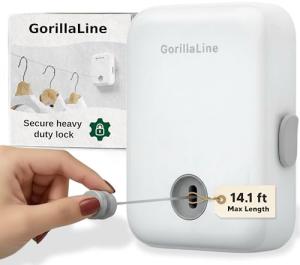
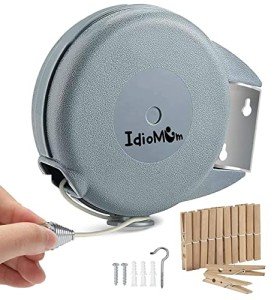
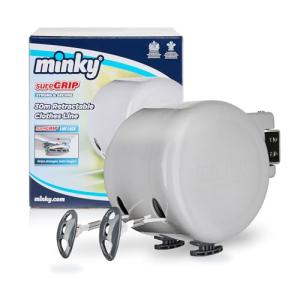
A high-quality retractable system relies on several precision-engineered parts working in harmony.
- The Rotational Drive serves as the mechanical heart of the unit; look for metal gears over plastic for better longevity.
- A high-impact Polymer Shell acts as the first line of defense against impact and moisture ingress for the internal mechanics.
- The Spring Elastic Component provides the necessary tension; high-tensile steel springs offer significantly more "snap-back" cycles than carbon steel alternatives.
- A robust Fastener System is critical for safety, as it prevents the entire pressurized housing from tearing off the wall under load.
- The Bearing System at the mouth of the unit determines how smoothly the line travels; sealed bearings are preferred to keep out grit.
- Rigidity in the Structural Housing prevents the spool from tilting, which is the leading cause of internal line tangling.
If you are researching alternative drying methods or ways to organize your laundry workflow, you may also find these technical guides useful: