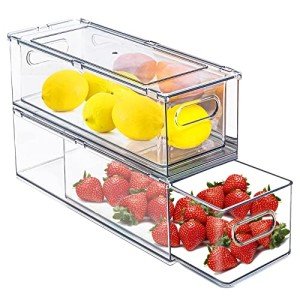
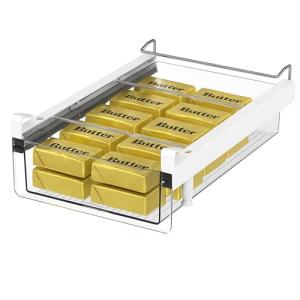
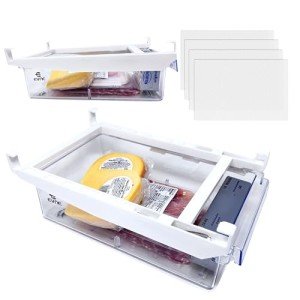
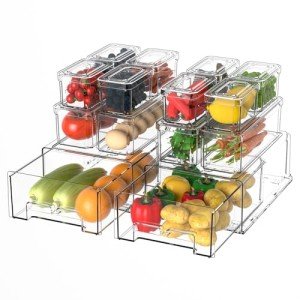
Maintenance & Troubleshooting
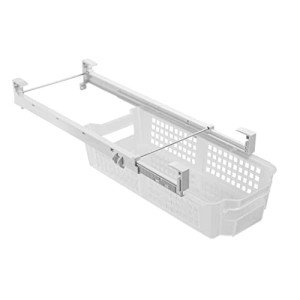
Regularly lubricating the sliding tracks with food-grade silicone prevents the friction-based heat that causes micro-cracking in chilled plastic. Monitoring the alignment of the mounting clips ensures that torque is distributed evenly across the glass shelf, preventing localized stress fractures.
Common Failure Modes
Even high-quality storage solutions face mechanical and chemical challenges over years of daily use in cold environments.
- Repeated heavy loading can eventually lead to sliding track wear; apply a thin layer of food-safe lubricant to the rails every six months to maintain a smooth glide.
- The high-frequency movement of the bins often causes abrasive wear; wipe down the shelf surface and drawer base monthly to remove grit that acts like sandpaper.
- Dropping a frozen container may cause an impact fracture; always allow frozen items to rest on the counter for a minute before placing them into a chilled plastic bin to reduce thermal shock.
- Overstuffing drawers with heavy glass jars often results in overload deformation; distribute weight evenly and avoid exceeding the manufacturer's specified liter capacity.
- Over time, the clarity of the bins may suffer from surface scratching; use only microfiber cloths and non-abrasive liquid soaps during your cleaning routine.
- Aggressive chemical cleaners can lead to stress cracking; avoid ammonia-based glass cleaners which can chemically attack the polymer chains of the drawer walls.
- If the mounting clips are forced into place, small hardware failure can occur; hand-tighten all clips and ensure they are fully seated on the shelf edge before loading.
Environmental Stress Factors
The interior of a refrigerator is a specialized environment that subjects materials to constant thermal and moisture-related stress.
- The constant moisture inside a crisper section can lead to high humidity acceleration; dry the tracks thoroughly after cleaning to prevent the growth of biofilm that can jam the sliders.
- Fluctuating temperatures near the cooling elements create temperature extremes; store drawers away from the back-wall air vent to prevent localized freezing and subsequent plastic brittleness.
- Using non-neutral detergents can trigger a cleaner compatibility conflict; use a simple solution of baking soda and water to maintain clarity without risking chemical fogging.
- In homes with pets, drifting dander often leads to pet hair clogging; use a can of compressed air to blow out the sliding tracks if you notice the drawer beginning to hitch or snag.
Key Components
Each drawer is engineered with specific parts designed to withstand the rigors of cold-chain food storage.
- The primary polymer shell provides visibility; look for PETG or high-density acrylic to ensure the bin doesn't shatter if dropped while cold.
- Smooth operation is facilitated by a robust sliding rail; inspect the teeth of the rail for debris to ensure the drawer remains on its track.
- The structural housing secures the unit to your shelves; check for reinforced mounting arms that wrap completely around the glass for the best stability.
- In some airtight models, a high-quality seal gasket is used; keep this rubber strip clean and lightly coated with a damp cloth to prevent it from drying out and cracking.
- The weight of your groceries is distributed across a load bearing frame; look for metal-reinforced frames if you plan to store heavy liquids or bulk condiments.
Related Categories
If you are researching full-fridge setups, you may also want to review the failure expectations for these related devices: