Maintenance & Troubleshooting
Preserving the structural integrity of low shelving requires a quarterly torque check on all internal fasteners to prevent the wobbling that leads to joint failure. Immediate moisture remediation is critical for composite cores to prevent permanent fiber swelling and laminate delamination.
Common Failure Modes
Even the sturdiest playroom furniture faces challenges from constant movement and heavy weight loads over time.
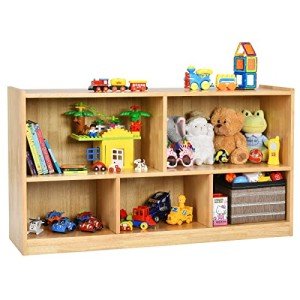
- Repeated loading of heavy books or blocks can eventually lead to structural warping; prevent this by rotating heavy toy rotations to the outer edges of the shelf rather than the center span.
- Active play and climbing may cause joint loosening; check and tighten cam locks or screws every three months to eliminate the micro-movements that strip wood fibers.
- The heavy impact of dropped wooden toys can result in impact fracture; use felt or silicone liners on shelf surfaces to absorb the kinetic energy of falling objects.
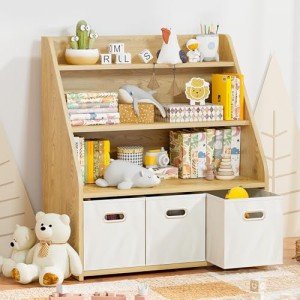
- Frequent dragging of bins across the wood or laminate surfaces often leads to abrasive wear; apply adhesive felt pads to the bottom of all storage bins to protect the shelf's clear coat.
- Overloading a single shelf beyond its rated capacity often triggers overload deformation; verify the manufacturer's weight limit and distribute dense items across multiple lower tiers.
- In modular designs, the small pins and screws often suffer from small hardware failure; avoid over-tightening during assembly to prevent cross-threading the metal inserts.
Environmental Stress Factors
The atmosphere of your home plays a significant role in the long-term integrity of natural and composite materials.
- Placing wooden units near windows can lead to high UV exposure; utilize UV-filtering window films or rotate the furniture seasonally to prevent the finish from becoming brittle and yellowed.
- In damp basements or coastal areas, high humidity acceleration can weaken bonds; maintain a room humidity level between 35% and 55% to prevent the wood from expanding and warping.
- Low-profile furniture near floor vents often accumulates significant dust load; vacuum the undersides and crevices bi-weekly to prevent abrasive particles from being ground into the finish.
- Spilled juice or water left unnoticed on shelves may trigger moisture swelling; seal any exposed edges or fastener holes with a clear wax to provide a temporary liquid barrier.
Key Components
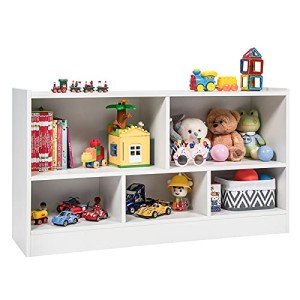
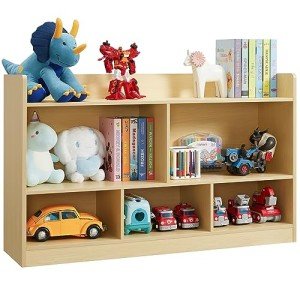
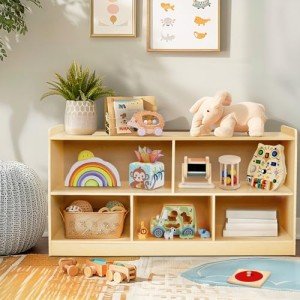
Quality low shelving relies on specific engineering elements to ensure child safety and structural longevity.
- The primary load bearing frame provides the essential skeleton; prioritize solid wood or high-density plywood over low-grade particle board for better screw retention.
- Exterior surfaces often feature a specialized polymer shell or laminate; check that these layers are heat-bonded rather than just glued to prevent peeling at the edges.
- Internal stability is maintained by a high-quality fastener system; look for furniture that utilizes steel-on-metal connections rather than wood screws driven directly into the core.
- The outer structural housing defines the unit's footprint; ensure the back panel is fully recessed and fastened to prevent the unit from "racking" or leaning sideways.
- Many units utilize an adhesive bond layer for edge banding; inspect the seams for any gaps where moisture could enter the substrate and cause it to blow out.
Related Categories
If you are planning a full-room organization system, you may also find it helpful to review the durability and failure expectations for these related furniture types:
- Expand your storage capacity by researching modular toy shelves designed for vertical expansion as needs change.
- Support early literacy by evaluating front facing bookshelves, which place different weight loads on wall-mounting hardware.
- For sorting loose parts, review the structural limits of stackable toy bins and how they interface with open shelving.
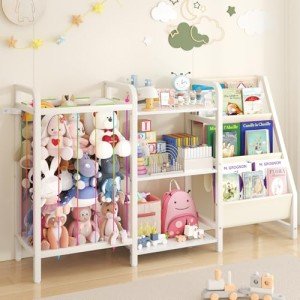
- Manage soft goods by comparing the material longevity of stuffed animal storage baskets versus rigid wooden bins.