Maintenance & Troubleshooting
Preventing permanent pilling requires a low-heat de-fuzzing routine and immediate structural realignment if the internal supports begin to lean. Managing fiber tension through proper weight distribution is the only way to stop the lid hinges from drifting out of alignment.
Common Failure Modes
Felt storage solutions are prone to specific structural and aesthetic degradations over time due to repeated handling and weight distribution.
- Repeated lifting of heavy items can lead to textile fiber thinning; rotate the bin 180 degrees monthly to ensure load stress is not concentrated on a single handle.
- The lid and base may suffer from structural warping; avoid stacking heavy objects on the lids to prevent the internal reinforcement from bowing inward.
- High-friction environments often cause abrasive wear; apply adhesive felt pads to the bottom of the bin to reduce friction when sliding it across wooden or wire shelves.
- If the bin is dropped or crushed, it may experience impact fracture; check internal panels for sharp bends and gently flex them back to a neutral position to prevent permanent creases.
- Overfilling the container leads to overload deformation; maintain a 1-inch clearance from the top of the bin to ensure the lid remains flush and the side walls stay vertical.
- Frequent opening and closing of the top can result in stitch failure; inspect hinge seams quarterly and use a needle and heavy-duty thread to reinforce any loose loops before they unravel.
Environmental Stress Factors
The porous nature of felt makes it particularly sensitive to the surrounding atmosphere and organic debris found in typical homes.
- In damp basements, high humidity acceleration can weaken fibers; place silica gel packets inside the bin to absorb excess moisture and prevent mold colonization.
- Exposure to sunlight near windows often triggers high UV exposure; keep bins in shaded areas or inside closets to prevent the breakdown of synthetic dyes and fiber brittleness.
- The textured surface acts as a magnet for pet hair clogging; use a lint roller or a dedicated fabric vacuum attachment weekly to prevent hair from embedding deep into the felt weave.
Key Components
A high-quality lidded felt bin relies on a combination of textile engineering and hidden structural supports to maintain its premium feel.
- The outer aesthetic and tactile comfort are provided by the upholstery fabric layer; higher gram-per-square-meter (GSM) ratings indicate a denser, more durable exterior.
- Maintaining a crisp silhouette is the job of the structural housing; look for bins that utilize hidden recycled plastic or thick cardboard inserts for rigid wall support.
- For bins that offer a soft, cushioned feel, the foam core provides impact resistance; this layer should be checked for compression sets if the bin is stored under heavy weight for long periods.
- The integrity of the corners is held together by an adhesive bond layer; avoid placing bins near heat sources like radiators, which can cause the glue to soften and panels to delaminate.
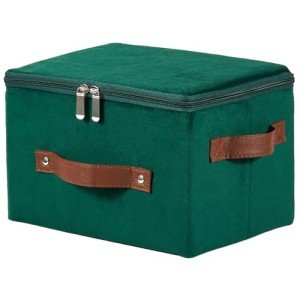
- The lid typically utilizes a specific hinge pivot assembly; ensure the fabric "bridge" is wide enough to allow the lid to fold back 180 degrees without straining the stitches.
Related Categories
If you are researching broader organizational setups or need solutions for different weight classes, you may also want to review the failure expectations for these related categories:
- Organize smaller items inside larger furniture pieces by using closet storage bins to create a tiered organizational system.
- For heavier household items, consider transitioning to heavy duty plastic bins to avoid the weight limits and structural sagging of felt.
- Add a touch of natural texture to your living room with large woven baskets, which often provide better breathability for textiles than lidded felt.
- Maximize your floor space for extra linens by utilizing hard plastic under bed bins for long-term, out-of-sight storage.