Maintenance & Troubleshooting
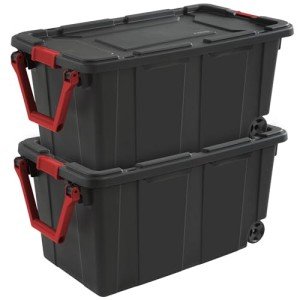
To prevent structural collapse, users should rotate stacked bins annually to move the bottom containers—which endure the highest static pressure—to the top of the stack. Regularly inspecting the base for whitening or "crazing" allows you to identify stress points before a full breach occurs.
Common Failure Modes
Even the toughest plastic containers are subject to mechanical and chemical stresses over time that can compromise their load-bearing capabilities.
- Repeated stacking beyond recommended weight limits often leads to creep deformation; mitigate this by utilizing shelving units to break up vertical stacks and reduce the load on the bottom bin.
- Dropping heavy containers on hard surfaces can cause an immediate impact fracture; bring bins into a climate-controlled area for an hour before handling if they have been stored in sub-freezing temperatures.
- Overloading the base of the bin results in overload deformation; place a rigid piece of plywood or heavy cardboard at the bottom of the bin to distribute the weight of heavy, pointed tools.
- Sharp edges on tools can lead to surface scratching; line the interior with a rubberized mat or foam to prevent deep gouges that act as stress concentrators for future cracks.
- Exposure to harsh industrial solvents can trigger stress cracking; verify that your container material is chemically compatible with any stored liquids to prevent a sudden loss of wall integrity.
- Frequent lid removal during freezing temperatures can result in small hardware failure; apply a silicone-based lubricant to latches and hinges to ensure they move freely in cold weather.
- Extended use in varying temperatures creates heat cycling fatigue; avoid placing bins directly against uninsulated exterior walls where temperature swings are most extreme.
Environmental Stress Factors
The location where you store your bins plays a critical role in maintaining the molecular stability of the heavy-duty polymers.
- Storing plastic bins in direct sunlight leads to high UV exposure; use opaque, dark-colored bins or UV-protective covers if the storage area has windows or skylights.
- Garages and sheds are often prone to temperature extremes; ensure bins are elevated off the concrete floor using pallets to minimize the impact of ground-level temperature shifts.
- In coastal areas, salt exposure can affect metal fasteners; opt for bins with 100% polymer latches and hinges to eliminate the risk of corrosion in salty air.
- Outdoor use subjects the containers to outdoor weathering; look for bins specifically rated with UV-stabilizer additives to prevent the plastic from turning chalky and brittle.
Key Components
The engineering behind a heavy-duty bin involves several critical features that work together to maintain structural stability under load.
- The primary polymer shell serves as the first line of defense against chemical spills and blunt impact during heavy use.
- Reinforced ribbing acts as a structural housing, providing the necessary rigidity to support the weight of multiple units stacked on top.
- Integrity is maintained by the fastener system, which must be tested for thousands of open-close cycles to prevent the lid from becoming unseated.
- To protect sensitive contents from dust, the seal gasket creates a compression barrier that keeps the interior environment stable.
- The ergonomic handles are designed with a load bearing frame strategy, ensuring the weight is carried by the strongest part of the bin's upper rim.
- Lid designs often incorporate a hinge pivot assembly, which should be inspected for stress whitening to ensure the lid doesn't detach during use.
Related Categories
If you are researching full-room setups, you may also want to review the failure expectations for these related devices:
- Organize smaller items inside your bins using plastic drawer organizers to keep hardware and small tools from getting lost.
- For items that need to remain mobile within a warehouse, consider rolling utility carts for easy transport.
- Maximize your vertical space by placing your heavy containers on rolling storage shelves for better accessibility.
- Keep frequently used hand tools within reach on the wall by installing pegboard tool organizers above your workstation.
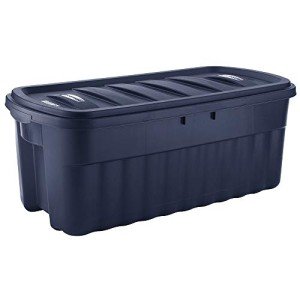
![BLACK & YELLOW®, 5-Gallon Heavy Duty Tough Storage Container & Snap-Tight Lid, (8.6" H x 12.3" W x 16.4" D), Weather-Resistant Design and Stackable Organization Tote [6 Pack]](https://cdn.freshstore.cloud/offer/images/18281/24344/c/black-yellow-5-gallon-heavy-duty-tough-storage-container-snap-tight-lid-8-6-h-x-12-3-w-x-16-4-d-weather-resistant-design-and-stackable-organization-tote-6-pack-24344-small.jpg)
![CX CRAFTSMAN, 5-Gallon Highly Durable Storage Bin & Dual Latching Lid, (10.5”H x 12”W x 18”D), Versatile Stacking Tote and Weather-Resistant Design, American Made [6 Pack]](https://cdn.freshstore.cloud/template/crystal/images/image-placeholder.png)