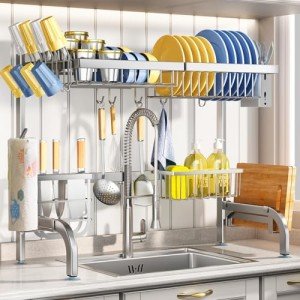
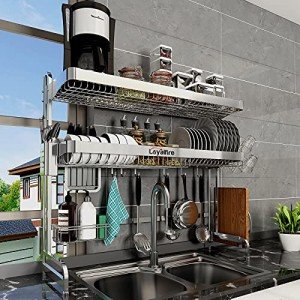
Maintenance & Troubleshooting
Proactive fastener inspection and mineral de-scaling are essential to prevent the structural sagging that leads to catastrophic joint failure. By maintaining the integrity of the protective surface coating, you can block the oxygen-moisture interface that triggers rapid oxidation on internal hardware.
Common Failure Modes
Heavy usage and moisture can lead to specific mechanical and structural issues over time if the rack is not monitored.
- To prevent Overload Deformation, distribute the weight of heavy stoneware evenly across the lower tiers and avoid concentrating mass on the outer edges of the frame.
- Address Joint Loosening by performing a monthly torque check on all assembly bolts to ensure the structure remains rigid against lateral movement.
- Reduce Sliding Track Wear by cleaning the adjustment channels with a damp cloth to remove grit before sliding tiers into new positions.
- Combat Corrosion by rinsing the rack with fresh water after contact with acidic liquids like lemon juice or tomato sauce to protect the chromium oxide layer.
- Avoid Small Hardware Failure by using hand tools rather than power drivers during assembly to prevent stripping the threads of hex bolts and washers.
- Stop Coating Peeling by avoiding abrasive steel wool pads during cleaning, which create micro-scratches that allow moisture to get under the finish.
Environmental Stress Factors
The kitchen environment presents unique challenges that can accelerate the degradation of over-sink organizers.
- Mitigate High Humidity Acceleration by ensuring adequate kitchen ventilation or wiping down the support columns after heavy dishwashing sessions.
- Prevent Hard Water Buildup by applying a thin layer of food-grade mineral oil to the surface, which helps shed water and prevents calcium deposits from bonding.
- Resolve Cleaner Compatibility Conflict by sticking to mild dish soaps and avoiding bleach-based cleaners that can chemically strip protective sealants.
Key Components
High-performance draining racks rely on a combination of specialized parts to maintain their integrity under load.
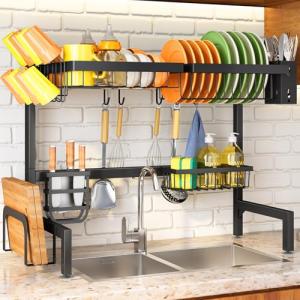
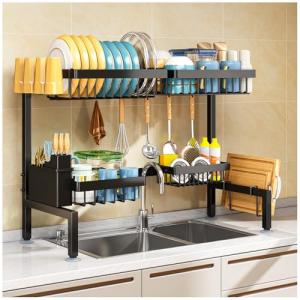
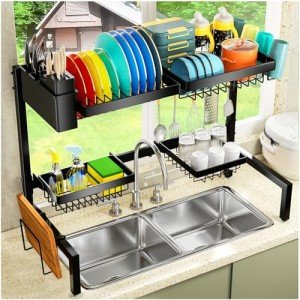
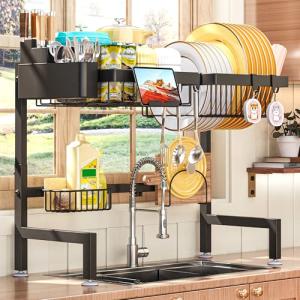
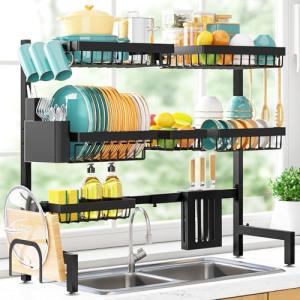
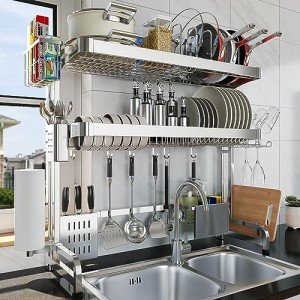
- The Load Bearing Frame acts as the central chassis; inspect it for any signs of bowing which indicates the material has reached its fatigue limit.
- Verify the Structural Housing is free of cracks, particularly where the baskets hook into the main uprights, to ensure items remain securely suspended.
- The Seal Gasket on the feet should be cleaned of grease regularly to maintain the high-friction suction required to keep the rack from sliding into the basin.
- A reliable Fastener System is the glue of the assembly; replace any rusted or stripped screws immediately to maintain overall structural safety.
- Check the Spring Elastic Component on accessory hooks for loss of tension, which can lead to glass or cutlery falling unexpectedly.
Related Categories
If you are researching ways to optimize your sink area, you may also want to review the hardware durability expectations for these related categories: