Maintenance & Troubleshooting
Regularly checking the tension of suspension arms and wiping down mounting surfaces with isopropyl alcohol prevents the grease buildup that causes sudden adhesive detachment. Proactive monitoring of the track alignment ensures that the mechanical "sliding" action doesn't grind down the polymer housing over time.
Common Failure Modes
Over time, the mechanical and chemical bonds of under-shelf systems can succumb to various stresses that compromise their holding power.
- To prevent cyclic fatigue, avoid snapping jars into the holder with excessive force, as repeated high-impact loading weakens the molecular structure of the suspension arms.
- Counteract creep by rotating the position of your heaviest glass jars monthly to distribute the static load more evenly across the frame.
- Address joint loosening by inspecting mounting screws every six months and tightening them to ensure the unit remains flush against the shelf underside.
- Avoid adhesive bond failure by degreasing the cabinet surface thoroughly before installation and allowing the bond to cure for 24 hours before adding weight.
- Minimize sliding track wear by applying a thin layer of food-grade silicone lubricant to the rails if the movement begins to feel gritty.
- Prevent overload deformation by strictly adhering to the specified weight limits; if the plastic begins to whiten or "blush," reduce the jar count immediately.
- Identify stress cracking early by shining a flashlight onto the mounting points; replace the unit if hairline fractures appear around the screw holes.
Environmental Stress Factors
The kitchen environment is a harsh landscape of fluctuating temperatures and airborne particulates that affect material longevity.
- Mitigate high humidity by placing suspended holders at least three feet away from boiling pots or kettles to prevent moisture from seeping into the adhesive layer.
- Reduce the dust load by performing a deep degreasing once a month, as sticky oil particles act as an abrasive that damages the sliding tracks.
- Avoid a cleaner compatibility conflict by avoiding ammonia-based sprays, which can cause micro-cracking and yellowing in clear acrylic holders.
Key Components
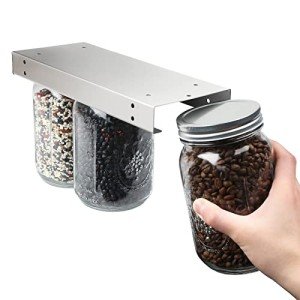
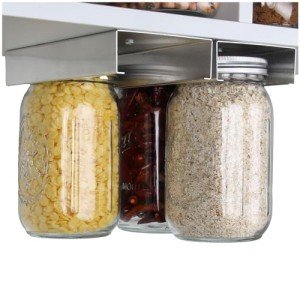
A high-quality jar holder relies on several specialized parts working in tandem to ensure your glass containers remain safely suspended.
- A rigid load bearing frame is essential; look for reinforced ribbing in the design to ensure the unit doesn't bow under the weight of full jars.
- The fastener system, including specialized hollow-wall anchors or wood screws, provides a mechanical failsafe if the primary adhesive fails.
- The structural housing keeps the jars aligned and prevents them from swinging into one another during cabinet use.
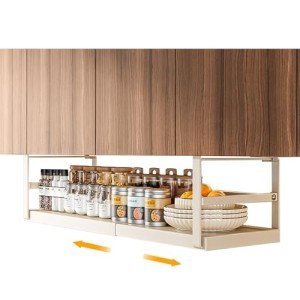
- A high-performance sliding rail allows for deep-cabinet access; verify the rail is made of a friction-resistant polymer to prevent jamming.
- The adhesive bond layer is the most critical link; high-quality VHB (Very High Bond) tapes are required for textured or laminated cabinet surfaces.
Related Categories
If you are researching full-pantry setups, you may also want to review the failure expectations for these related devices: