Maintenance & Troubleshooting
To prevent irreversible frame warping, it is critical to re-torque all assembly cam locks every six months and ensure the base remains isolated from standing water. Periodically clearing debris from the lower corners prevents localized moisture traps that lead to finish delamination.
Common Failure Modes
Daily mechanical stress and heavy loading can lead to specific structural issues over time.
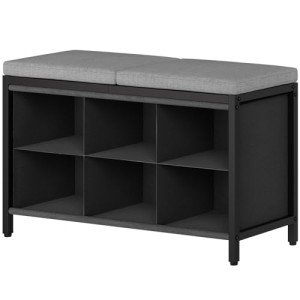
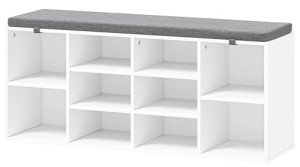
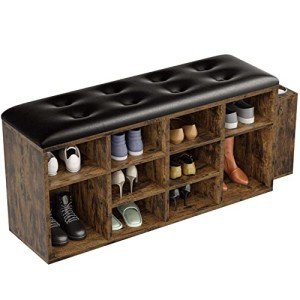
- Repeated weight distribution from sitting can lead to Structural Warping; use a carpenter's square to check vertical divider alignment and avoid sitting on the bench if it begins to lean laterally.
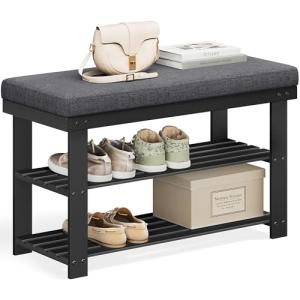
- Excessive force on the top surface may cause Overload Deformation; reinforce the center span with a secondary support leg if you notice any visible bowing in the horizontal seat.
- The fasteners holding the unit together often experience Joint Loosening; apply a drop of wood glue to dowels or threadlocker to screws during assembly to create a more permanent bond.
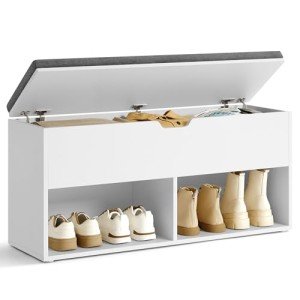
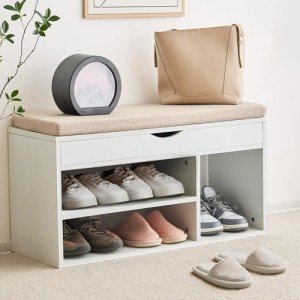
- In units with integrated drawers, debris in the tracks frequently causes Sliding Track Wear; vacuum the glides monthly and apply a dry silicone lubricant to maintain low-friction operation.
- Low-quality finishes may exhibit Coating Peeling; apply a clear polyurethane topcoat to high-friction areas to provide a sacrificial layer against shoe scuffs.
- Over-tightened assembly screws can create internal tension leading to Stress Cracking; stop tightening once the screw head is flush with the surface to prevent fracturing the panel substrate.
- Standard hardware components are susceptible to Small Hardware Failure; replace any snapped cam locks immediately with high-strength steel hardware to restore the unit's structural integrity.
Environmental Stress Factors
The location of your shoe storage exposes it to unique atmospheric and biological challenges.
- Wet footwear brought in from the rain creates High Humidity; use moisture-wicking mats inside the cubbies to isolate damp soles from the wood panels.
- Entryways near windows face High UV Exposure; apply a UV-resistant furniture wax twice a year to prevent the finish from becoming brittle and prone to flaking.
- The accumulation of Dust Load can trap moisture; use a microfiber cloth to clean the interior corners monthly, preventing the growth of mold in stagnant air pockets.
- Materials that are not properly sealed may suffer from Moisture Swelling; seal all exposed or raw edges of composite panels with an exterior-grade wood sealer to prevent water ingress.
Key Components
The longevity of an under-bench system depends on the quality of its fundamental building blocks.
- The primary Load Bearing Frame must utilize thickened vertical members to safely transfer the weight of the sitter to the floor.
- A robust Fastener System, ideally using metal-to-metal connections rather than wood screws, prevents the unit from wobbling over time.
- The external Structural Housing acts as the main chassis, providing the necessary shear strength to resist lateral leaning under load.
- Quality units utilize a Polymer Shell or melamine coating to create a non-porous surface that is immune to water damage from wet shoes.
- High-strength Adhesive Bond Layer technology provides structural redundancy, ensuring the unit remains rigid even if a mechanical fastener begins to fail.
Related Categories
If you are researching full-room setups, you may also want to review the failure expectations for these related devices:
- For larger footwear collections, review the durability of Stackable Closet Shoe Cubbies for bedroom or hallway applications.
- Keep your floors clean during winter months by placing Boot Trays adjacent to your bench to manage heavy dripping.
- Maximize your vertical space by installing Wall Mounted Coat Racks directly above your bench for a coordinated entryway system.
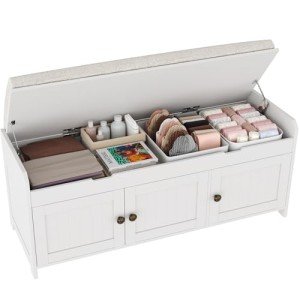
- For a more enclosed look, consider the forensic reliability of Storage Benches with Baskets for hiding footwear from view.