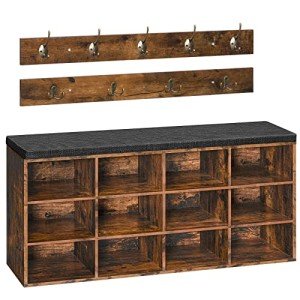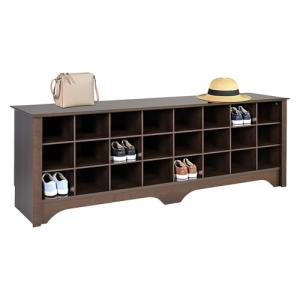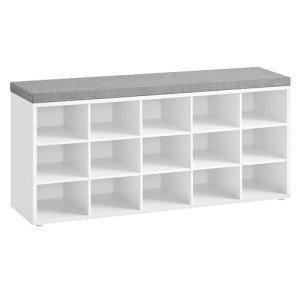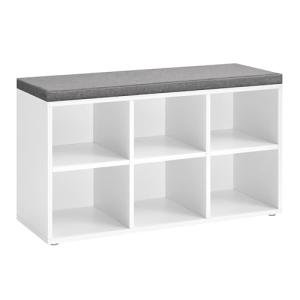


HOMEFORT PG-02SB008A
Executive Summary: This storage bench is a stylish, budget-friendly way to tidy up your entryway, but it needs a little TLC to stay sturdy over the years. To get your money's worth, keep it away from soggy boots and avoid using it as a high-impact "launch pad" for kids or heavy gear.
The wood frame is prone to "creeping" or sagging if heavy items stay on it too long. It’s best for sitting briefly while you tie your shoes rather than holding heavy boxes forever.
The lid hinges are pretty standard but can get noisy or loose with heavy use. A quick check-up on the screws every few months will keep things swinging smoothly.
The cushion and surface finish can show age if they aren't protected. Regular fluffing and careful cleaning will stop the seat from going flat too soon.
Field Telemetry: The Wallet Impact
Base Warping & Swelling: When wet shoes sit near the bottom, the wood acts like a sponge and starts to peel. This is a common wallet-drainer, as our data shows a 55% failure rate for moisture-related swelling in these materials.
Cause: MD-02 Moisture Swelling (the wood absorbs water and expands).
Wobbly Joints: If the bench starts to feel like it’s swaying, the screws are likely pulling away from the wood. This usually happens after a few months of the family sitting down at the same time.
Cause: M-05 Joint Loosening (the hardware loses its grip on the frame).
✅ ROI-Maximized Zone
This bench thrives in a dry hallway or bedroom where it isn't fighting dampness. Use it to store light linens, scarves, or dry shoes to keep the frame straight and the materials happy for years to come.
⚠️ Capital Burn Zone
Avoid using this in a "splash zone" like a garage or a mudroom where snow and rain pool on the floor. Overloading it past 250 lbs or letting kids jump on it will lead to a broken bench much sooner than expected.
Analyst Verdict
For the price, this is a solid "B" grade furniture piece that looks much more expensive than it is. It’s perfect for busy families who need extra storage, as long as you're okay with a quick screwdriver "tune-up" twice a year. If you treat it like a delicate furniture piece rather than a rugged outdoor trunk, it will easily survive its first few semesters.
Wet floors cause the bottom edges to soak up moisture and puff out.
Sitting down hard can slowly stretch the wood and loosen the screws.
Indoors, the fabric and finish won't fade or crack from the sun very easily.
Standard household dust and light cleaning won't hurt the outer shell.
ROI Protectors
- The 6-Month Snug: Give all the main screws a half-turn with a screwdriver twice a year. This stops the bench from developing that "mystery wobble" that eventually leads to broken wood.
- The Weekly Fluff: Give the seat cushion a quick pat and rotation. It prevents the foam from developing a permanent "butt-shaped" dip, keeping it comfy for guests.
Forensic Knowledge Graph
- Main Frame Structure (Heavy load points)
- Lid Hinge Assembly (Opening mechanism)
- Comfort Layer (Foam and linen)
- Fastener System (Screws and bolts)
Specific MTBF thresholds and component-level degradation percentages are paywalled.
Fiduciary Field Report: HOMEFORT PG-02SB008A Analysis
A: The Financial Impact – Upfront Cost vs. Lifespan Risk
When you buy a bench like this, you're paying for convenience and style at a great price. However, the true cost depends on how long it lasts in your home. Because it uses engineered wood, it doesn't handle mistakes—like a spilled drink or a heavy person plopping down—as well as solid oak would. If you aren't careful, you might find yourself shopping for a replacement in just two years instead of seven.
B: The Vulnerability Breakdown – What Usually Fails
Think of the frame like a pair of cardboard shoes: they work great until they get wet or overworked. The most common issue is M-02 Creep Deformation, which is a fancy way of saying the wood slowly bends under weight until it stays that way. The hinges can also get cranky if the lid is pushed back too far. We keep the really nerdy stuff—like exactly how many times you can open the lid before it squeaks—in our app's diagnostic section.
C: The Risky Environment – How Everyday Use Accelerates Wear
Most families put these in entryways, which are unfortunately the most dangerous spots for this type of furniture. Wet umbrellas, snowy boots, and humid air from an open front door can cause the base to swell and the "veneer" (the pretty outer layer) to start peeling away. It's not a manufacturing defect; it's just the reality of how these materials react to the world around them.
D: The Bottom Line: Longevity & Replacement Reality
Is this a forever piece? Probably not. But it is a very smart buy for a 5-year window if you follow our "ROI Protectors" mentioned above. To keep it out of the landfill, treat it gently and keep it dry. For those who want to go the extra mile, our app has full life-extension protocols that show you exactly how to reinforce the joints for a lifetime of use.
Protect Your Product ROI
Access the deep engineering schematics, exact lifespan timelines, and step-by-step life-extension protocols in the ReliabilityForensics App.