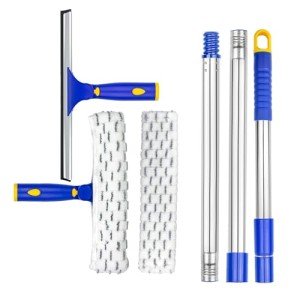
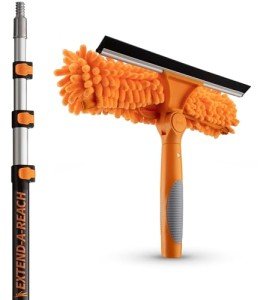
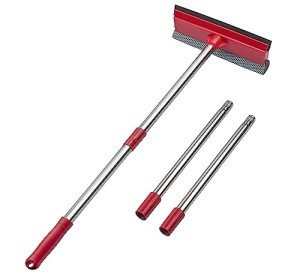
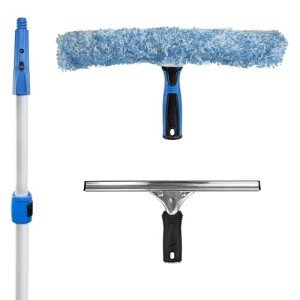
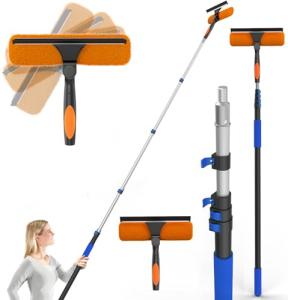
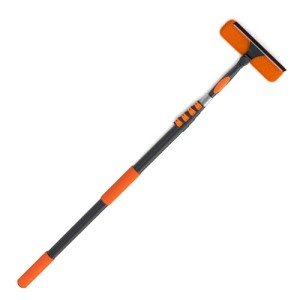
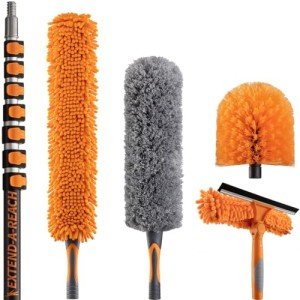
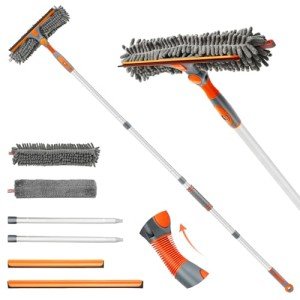
Maintenance & Troubleshooting
Regularly lubricating the internal locking springs with a dry silicone spray prevents seizure and ensures the pole remains stable under high-leverage scrubbing. Inspecting the squeegee edge for nicks after every use is the only way to prevent microscopic debris from being dragged across the glass surface.
Common Failure Modes
Telescopic cleaning tools are subject to unique mechanical stresses during extension and retraction that can lead to operational issues.
- To prevent joint loosening, avoid over-extending the pole past the manufacturer's safety marks to maintain maximum overlap between sections.
- Address abrasive wear by flipping or replacing the rubber blade as soon as the square edge rounds off, ensuring consistent surface tension.
- Minimize overload deformation by reducing the downward pressure applied at full extension; let the weight of the tool and the angle of the head do the work.
- Stop small hardware failure by hand-tightening adjustment collars only until snug, as excessive torque will strip the plastic threads and ruin the locking grip.
- Combat corrosion by wiping the inner shafts dry before retracting the pole, which prevents stagnant moisture from being trapped inside the joints.
- Delay elastomer hardening by storing blades in a cool, dark place and avoiding petroleum-based cleaning solutions that leach plasticizers from the rubber.
- Reduce switch contact wear by depressing the pivot release fully before rotating the head, preventing the internal locking teeth from grinding down over time.
Environmental Stress Factors
External conditions significantly impact the material integrity and functional efficiency of your window cleaning equipment.
- Mitigate high UV exposure by keeping the kit out of direct sunlight when not in use to prevent the polymer collars from becoming brittle and prone to snapping.
- Prevent hard water buildup by rinsing the scrubber sleeve in distilled water or a mild vinegar solution to keep the fibers soft and absorbent.
- Neutralize dust load by cleaning the sliding sections with a damp cloth before retraction to stop grit from scratching the inner finish of the pole.
- Account for temperature extremes by allowing the tool to reach ambient temperature before use, as cold-soaked plastic becomes significantly more fragile under stress.
Key Components
A high-quality telescopic kit relies on specialized components designed for ergonomic handling and efficient debris removal.
- The load bearing frame determines the flex of the system; aluminum offers a balance of weight and cost, while carbon fiber provides maximum rigidity at height.
- The sliding rail must be free of burrs and perfectly concentric to allow for smooth, one-handed height adjustments without binding.
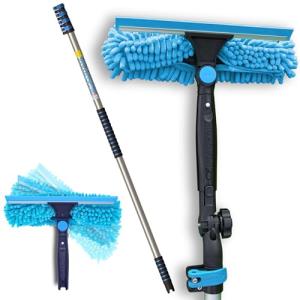
- A robust hinge pivot assembly is vital for cleaning dormer windows and solar panels where the angle of attack changes frequently.
- The seal gasket keeps the squeegee rubber under uniform compression, which is the secret to a streak-free pull across the entire width of the blade.
- A high-tension fastener system ensures that the cleaning head doesn't wobble or spin during high-reach maneuvers, which could cause the tool to drop.
- The polymer shell around the grip and head adds impact resistance, protecting the more delicate internal locking mechanisms from accidental drops.
Related Categories
If you are researching a full-elevation glass maintenance plan, you may also want to review the failure expectations for these related devices: