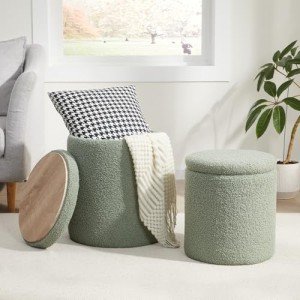
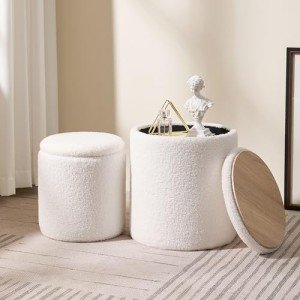
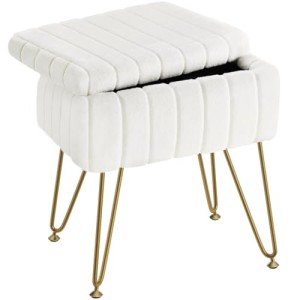
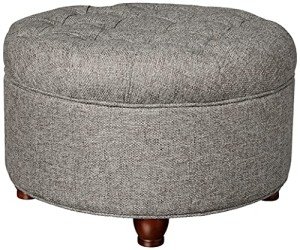
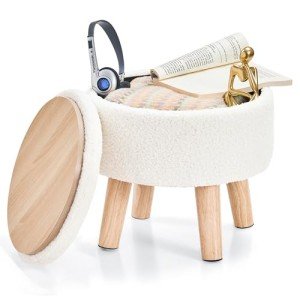
Maintenance & Troubleshooting
Proactive maintenance for an ottoman requires quarterly inspections of the hinge alignment and fastener tightness to prevent localized stress from snapping the internal frame. Identifying early signs of material thinning or mechanical "play" allows you to perform low-cost hardware adjustments before a complete structural collapse occurs.
Common Failure Modes
Heavy daily use and mechanical movements can lead to specific structural issues over time if the unit is not properly maintained.
- To combat hinge fatigue, apply a silicone-based lubricant to the pivot points every six months and ensure the lid is never hyper-extended during use.
- Prevent creep deformation by avoiding the storage of heavy, dense objects on the lid for weeks at a time, which permanently bows the internal core.
- If you experience cushion collapse, consider adding a high-density poly-foam insert to restore the loft and support of the seating surface.
- Avoid overload deformation by strictly adhering to the weight capacity of the internal base, especially when stacking heavy blankets or books inside.
- Address stitch failure early by using a heavy-duty upholstery needle and nylon thread to reinforce high-tension corners before the seam opens completely.
- Research why foam materials fail to recover to understand that rotating your seating position daily can prevent the formation of permanent "sinkholes" in the padding.
Environmental Stress Factors
The placement of your ottoman within your home's microclimate significantly impacts the durability of its materials and finishes.
- To halt high humidity acceleration, place the unit at least three inches away from external walls to facilitate airflow and prevent wood rot.
- Guard against UV embrittlement by treating synthetic fabrics with a UV-protectant spray and keeping the unit out of the direct path of south-facing windows.
- Manage pet hair clogging by vacuuming the hinge assembly monthly; hair buildup acts as an abrasive that grinds down metal pivot points.
Key Components
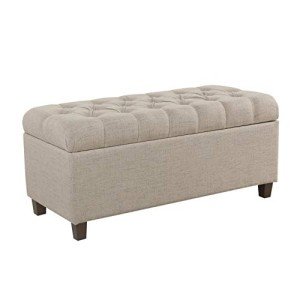
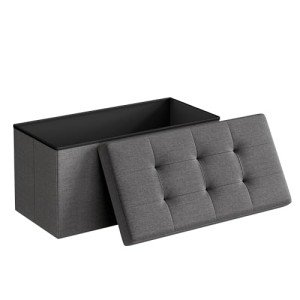
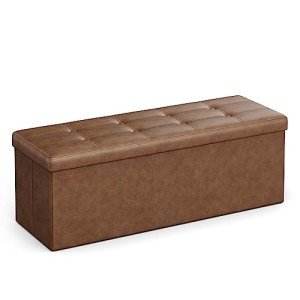
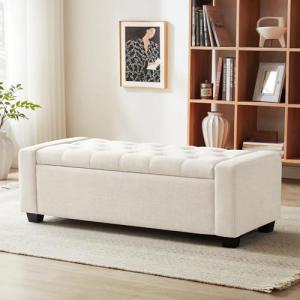
Each storage ottoman is engineered with specific hardware and structural layers to provide both utility and aesthetic appeal.
- The load bearing frame is the unit's chassis; prioritize solid wood or metal frames over particle board for long-term weight support.
- A precision-machined hinge pivot assembly is critical for safety, especially in units that feature soft-close gas struts to prevent finger pinching.
- The upholstery fabric acts as the primary barrier against wear; look for high "double rub" counts to ensure the material survives frequent friction.
- The fastener system connects the legs to the frame; check these monthly to ensure they haven't loosened, which can cause the legs to shear off.
- The structural housing defines the interior storage volume and must be reinforced at the bottom to prevent the storage floor from falling out.
If you are researching full-room organization or alternative furniture durability, you may also want to review the failure expectations for these related devices:
- For broader seating options with high-capacity storage, review the hardware specs for storage benches.
- If you prefer lightweight, non-mechanical organization, large woven baskets offer a simpler solution with no moving parts to fail.
- To maximize bedroom efficiency without floor-level clutter, evaluate the utility of rolling under bed toy drawers.
- For integrated bedroom systems, consider the maintenance requirements of a headboard with storage.