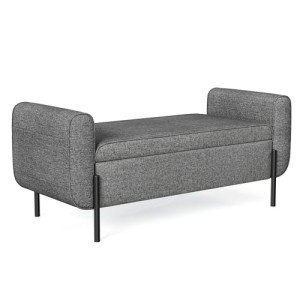
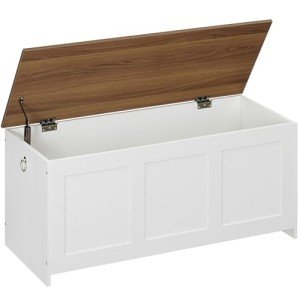
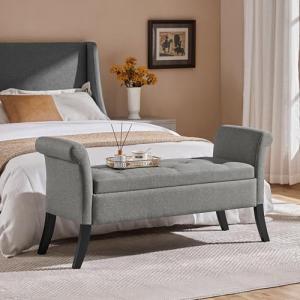
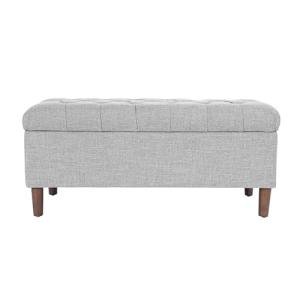
Maintenance & Troubleshooting
To preserve the bench's lifespan, you must periodically tighten the internal fastener system to prevent the "play" that leads to frame twisting. Regularly treating the upholstery fabric layer and lubricating the hinges ensures the mechanical parts move smoothly without straining the wood or composite housing.
Common Failure Modes
Over time, repetitive use and heavy loads can lead to specific mechanical and structural issues that compromise the bench's utility.
- To prevent cushion collapse, rotate your seating position frequently and avoid placing localized, heavy weights on the edges of the foam for extended periods.
- Mitigate structural warping by ensuring the bench is placed on a perfectly level floor to avoid uneven distribution of the storage load across the wooden panels.
- Address hinge fatigue by applying a silicone-based lubricant twice a year to the pivot points, ensuring the lid opens and closes without mechanical resistance.
- Guard against stitch failure by avoiding the "sliding" motion across the seat, which places lateral shear stress on the high-tension seams and corners.
- Prevent overload deformation by strictly adhering to the static weight limits and avoiding sudden "drop-seating" that can snap the base or legs.
- Stop delamination by maintaining a stable indoor temperature, as extreme heat can dry out the bonding agents that hold veneers to the core material.
- Eliminate mold growth by placing a desiccant pack inside the storage area and ensuring damp shoes or textiles are completely dry before being stowed.
Environmental Stress Factors
The placement of your bench significantly impacts its lifespan, as indoor climates and biological factors dictate material health.
- Reduce moisture swelling in high-humidity areas like mudrooms by choosing a bench with a moisture-resistant finish or applying a fresh coat of sealant to the underside.
- Block high UV exposure damage by using window films or rotating the bench's position to prevent sunlight from embrittling wood fibers and fading the fabric.
- Prevent pet hair clogging by vacuuming the hinge tracks and drawer slides weekly, as accumulated fur acts as an abrasive that grinds down moving metal parts.
Key Components
A high-quality storage bench relies on several integrated systems to provide both stable seating and accessible storage volume.
- The load bearing frame is the primary skeleton; prioritize solid wood or metal joints over staples and glue for maximum user weight support.
- A durable upholstery fabric should feature a high Martindale or Wyzenbeek rub count to withstand the friction of daily entry and exit.
- The hinge pivot assembly is the most critical moving part; look for soft-close mechanisms that reduce the impact force on the frame when the lid shuts.
- A robust fastener system using lag bolts or T-nuts is essential for preventing the legs and lid from becoming unstable over time.
- The structural housing defines the interior capacity; ensure the bottom panel is reinforced to prevent it from sagging under the weight of stored goods.
If you are researching entryway organization and heavy-duty furniture, you may also want to review the failure expectations for these related devices:
- For specialized footwear management with fewer mechanical moving parts, explore the durability of shoe storage cabinets.
- If you require a smaller footprint for occasional seating and storage, consider the maintenance needs of storage ottomans.
- Maximize your vertical storage by pairing your unit with wall mounted coat racks to keep weights off the floor-level furniture.