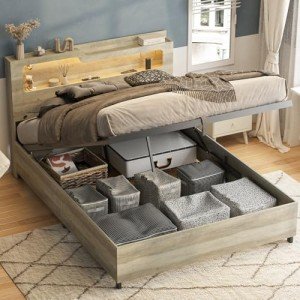
Maintenance & Troubleshooting
Regularly lubricating the pivot points of the lifting mechanism prevents the metal-on-metal friction that leads to premature hinge fatigue. Monitoring the moisture levels within the enclosed base is also vital to prevent wood-frame desiccation or mold growth on stored textiles.
Common Failure Modes
Storage beds are complex structural systems that can experience specific mechanical and material breakdowns over time due to repeated use and heavy loads.
- To prevent Hinge Fatigue, apply a dry PTFE lubricant to the pivot pins every six months to ensure the lid aligns correctly without stressing the mounting brackets.
- Avoid Overload Deformation by placing heavier items at the perimeter of the base rather than the center to minimize the bowing of support slats.
- Address Cushion Collapse by regularly rotating your entry point into the bed, which prevents the foam padding in upholstered rails from compressing in a single high-traffic spot.
- Reduce Sliding Track Wear by vacuuming the metal rails monthly to remove grit that can grind down the nylon wheels on drawer assemblies.
- Mitigate Structural Warping by ensuring the frame is perfectly level during assembly, as an uneven floor forces the wood to twist under the weight of the mattress.
- When you notice Spring Elasticity Loss, replace the gas struts immediately in pairs to ensure even pressure distribution and prevent the lid from crashing down.
- Combat Joint Loosening by retightening all hex bolts 30 days after initial assembly and annually thereafter to eliminate the vibrations that cause noise.
Environmental Stress Factors
The atmosphere of your bedroom plays a significant role in the longevity and hygiene of your storage-integrated furniture.
- To counter High Humidity Acceleration, leave the storage compartment open for one hour a week to allow trapped air to circulate and refresh the internal environment.
- Prevent Mold Growth by placing charcoal moisture absorbers inside the wooden bins, especially if the bed is positioned against a cold exterior wall.
- Avoid Low Humidity Desiccation by maintaining room humidity between 40-50%, which keeps solid wood components and leather upholstery from becoming brittle and cracking.
Key Components
A high-performance storage bed relies on several specialized parts to balance weight distribution with accessible utility.
- The Load Bearing Frame acts as the chassis; look for steel-reinforced corners to ensure it can handle the combined weight of the mattress and occupants.
- A high-quality Sliding Rail should feature ball-bearing glides rather than simple plastic tracks for consistent, long-term drawer operation.
- The Hinge Pivot Assembly is the engine of an ottoman bed; ensure the mounting plates are bolted through the frame rather than just screwed into the surface.
- The Upholstery Fabric Layer provides the finish; check the Rub Count (Martindale) to gauge how well the material will resist fraying at the high-friction corners.
- Robust Structural Housing within the base protects your belongings from dust while providing lateral stability to the entire bed frame.
- A secure Fastener System using locking washers or nylon-insert nuts is essential to prevent the lift struts from vibrating loose during daily use.
If you are researching full-room setups or seeking alternative hidden storage, you may also want to review the failure expectations for these related devices: