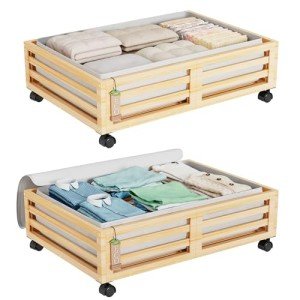
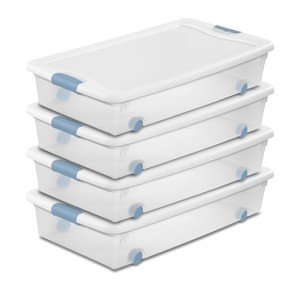
Maintenance & Troubleshooting
To prevent irreversible wheel seizure, you must physically inspect the caster axles every six months to remove fiber buildup and debris. Regularly redistributing internal weight toward the center of the unit prevents the perimeter stress that leads to lid-alignment failure.
Common Failure Modes
Even heavy-duty plastic storage can succumb to physical stresses over time if handled improperly or overloaded beyond rated capacities.
- Prevent Overload Deformation by avoiding the storage of dense metal items; use a rigid base insert to help distribute weight evenly across the polymer floor.
- Mitigate Abrasive Wear by clearing your floor of grit before sliding the unit, as small particulates act like sandpaper on the plastic wheel surface.
- Stop Stress Cracking by lifting the drawer slightly when navigating over carpet transitions rather than forcing the unit through the resistance.
- Avoid an Impact Fracture by ensuring the path is clear of bed posts; cold plastic is particularly susceptible to shattering upon sudden contact.
- Reduce Sliding Track Wear by applying a thin layer of dry silicone lubricant to the integrated grooves to minimize plastic-on-plastic friction.
- Counteract Structural Warping by storing the unit in a climate-controlled room; extreme attic or basement heat will cause the lid-seat to bow permanently.
- Address Small Hardware Failure by tightening loose axle pins immediately; a wobbly wheel creates an uneven load that eventually snaps the plastic housing.
Environmental Stress Factors
The conditions beneath your bed are not as inert as they seem; airflow and light play a massive role in material longevity.
- Manage the Dust Load by using a vacuum attachment to clear the underside of the unit monthly to keep debris out of the moving parts.
- Prevent Pet Hair Clogging by selecting casters with enclosed housings or manually clearing the axles with tweezers to maintain a smooth roll.
- Inhibit UV Embrittlement by using a bed skirt to shield the plastic from window light, preserving the flexible chemical bonds of the polymer.
- Stop Mold Growth by ensuring all items are 100% dry before storage and maintaining at least two inches of clearance above the unit for airflow.
Key Components
A high-quality rolling drawer is more than just a box; it is a system of parts designed for mobility and protection.
- The Polymer Shell acts as the primary chassis; look for high-density polyethylene (HDPE) for the best balance of weight and impact resistance.
- The Rotational Drive is the most vulnerable point; prioritize wide-diameter wheels which handle floor imperfections better than small casters.
- An effective Seal Gasket is necessary for long-term preservation; test the seal by ensuring the lid requires a firm press to engage the latches.
- Reinforced Structural Housing at the wheel mounts is critical; avoid models where the wheel pins pass through thin, unreinforced plastic.
- A reliable Fastener System should utilize mechanical "click-lock" latches rather than simple friction fits to ensure the lid stays on during transit.
If you are researching alternative dimensions or different mobility needs for your storage setup, you may also want to review the hardware expectations for these related devices: