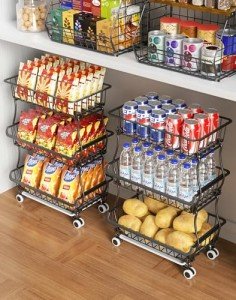
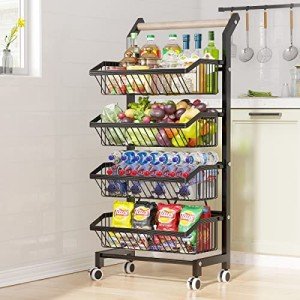
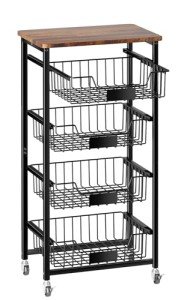
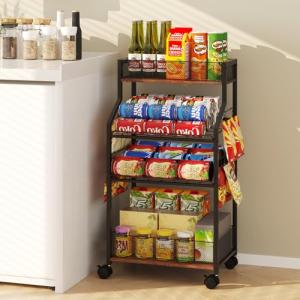
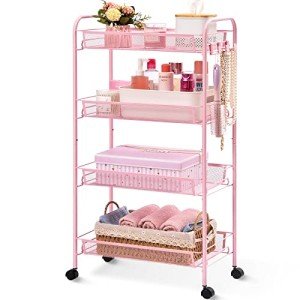
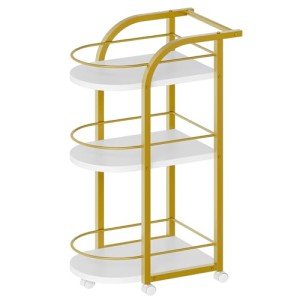
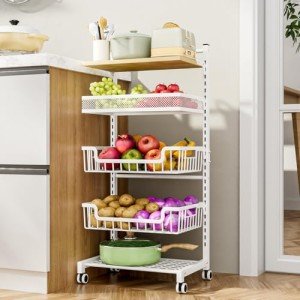
Maintenance & Troubleshooting
To prevent caster seizure, you must regularly clear hair and grit from the wheel axles using a stiff brush or compressed air. Periodically checking and tightening the frame fasteners ensures that minor vibrations don't escalate into permanent structural misalignment.
Common Failure Modes
Heavy usage and improper loading can lead to several mechanical issues that compromise the cart's stability and movement.
- To prevent cyclic fatigue, avoid rolling the cart over high thresholds or thick rugs, which places repetitive shock stress on the metal joints.
- Maintain overload deformation resistance by placing heavier items on the bottom shelf to keep the center of gravity low and the frame straight.
- Reduce bearing wear and rotational friction by applying a dry silicone lubricant to the wheel axles every six months to repel dust.
- Counteract joint loosening by using a hex key to re-torque all assembly screws after the first month of use and annually thereafter.
- Avoid creep deformation by clearing the cart of heavy items during long periods of storage to prevent plastic trays from sagging permanently.
- Solve shaft misalignment stress by ensuring the floor surface is level and checking that each caster is fully seated in its mounting socket.
- Mitigate abrasive wear by selecting carts with rubberized or TPU wheel treads if you plan to move the unit frequently across tile or concrete.
Environmental Stress Factors
Where you store and use your snack cart significantly impacts the degradation rate of its materials and finishes.
- In greasy kitchen environments, clear the dust load weekly from the frame to prevent the buildup of a sticky residue that attracts more debris into the bearings.
- Prevent high humidity acceleration by wiping down the metal frame after any spill and ensuring the cart is stored in a well-ventilated area to stop rust.
- Address pet hair clogging by using a pair of tweezers to remove entangled fibers from the casters before they migrate into the ball bearings.
- Avoid a cleaner compatibility conflict by testing new detergents on a hidden spot of the frame to ensure they won't strip the powder coating or anti-corrosive finish.
Key Components
The reliability of a mobile snack station depends on the quality and integration of its core structural elements.
- The load bearing frame is the critical skeleton; look for powder-coated steel with reinforced weld points for maximum weight support.
- A robust rotational drive assembly is necessary for the swivel casters to pivot smoothly without binding under a full load.
- The bearing system determines the cart's "push-effort"; sealed bearings are preferable for preventing the ingress of kitchen grime.
- Lid or tray stability is provided by the fastener; look for lock washers that resist backing out during transport vibrations.
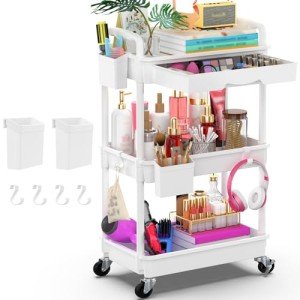
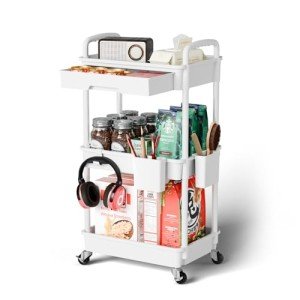
- A high-quality sliding rail is essential for drawers, ensuring they stay on track even when fully extended with heavy contents.
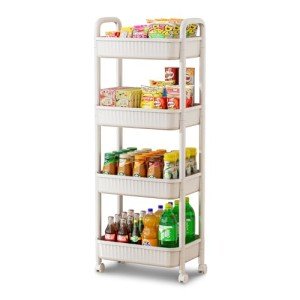
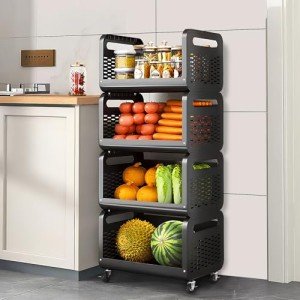
- The structural housing refers to the trays or baskets themselves, which should be made of impact-resistant polymers or mesh steel.
If you are researching mobile organization or full-room storage setups, you may also want to review the failure expectations for these related devices: