Maintenance & Troubleshooting
Maintaining a leak-free reservoir requires a strict "no-overfill" policy to prevent excessive backpressure on the internal gaskets. Regularly flushing the dispensing channel with warm water is the only effective way to stop the soap-solidification cycle that eventually cracks the silicone pump button.
Common Failure Modes
Even the sturdiest cleaning tools face wear from daily mechanical stress and chemical interactions within the kitchen sink environment.
- Repeated pressure during heavy scrubbing leads to cyclic fatigue failure; avoid applying extreme lateral force to the neck to prevent the plastic from snapping.
- Internal soap delivery gaskets experience seal compression fatigue; periodically apply a thin coat of food-safe silicone grease to the ring to maintain a watertight seal.
- Over-tightening the head can result in joint loosening; stop rotating immediately once resistance is felt to preserve the integrity of the plastic threads.
- Constant moisture exposure leads to adhesive bond failure; always store the brush bristles-up or hanging to ensure the base remains dry and the tufts stay secure.
- Rough surfaces like cast iron accelerate abrasive wear; use a dedicated heavy-duty scraper for burnt-on bits to save the synthetic bristles from premature fraying.
- Dropping the reservoir may cause an impact fracture; check the tank for hairline cracks after any fall to prevent detergent from leaking into the handle.
Environmental Stress Factors
The kitchen environment is surprisingly harsh, subjecting your refillable tools to moisture, minerals, and chemical reactions.
- Wet countertops create a high-risk zone for mold growth; soak the empty reservoir in a diluted vinegar solution once a month to sanitize the internal channels.
- In many regions, hard water buildup can clog nozzles; use a fine pin to clear mineral deposits from the dispensing hole if soap flow becomes restricted.
- Leaving your brush near a window leads to UV embrittlement; store the tool in a shaded area of the sink to prevent the clear plastic from yellowing and cracking.
Key Components
A high-performance dish brush relies on several specialized parts working in harmony to deliver soap and agitation.
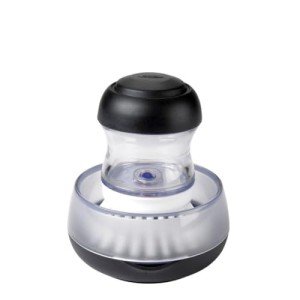
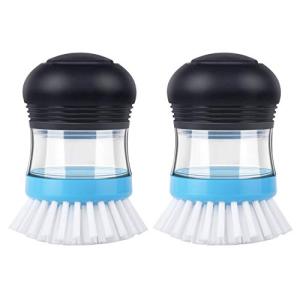
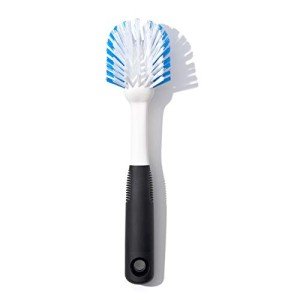
- The structural housing acts as the primary tank; look for models with textured grips to reduce the chance of drop-related fractures.
- The dispensing mechanism relies on an elastic button; check that the material is high-grade silicone, which resists chemical degradation better than standard rubber.
- An internal seal gasket system prevents leaks; ensure this part is seated perfectly flat after every refill to maintain the vacuum.
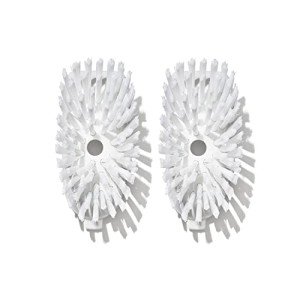
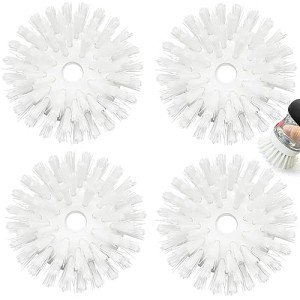
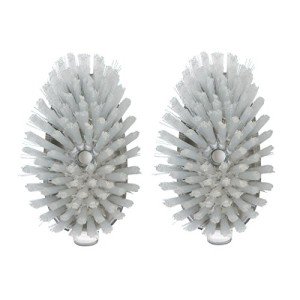
- The polymer shell of the head supports the bristles; higher-density polymers prevent the tuft holes from widening and shedding bristles.
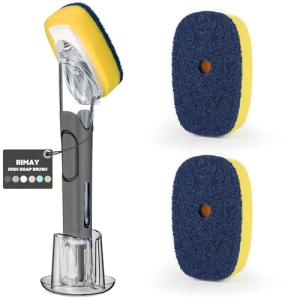
- Modern designs utilize a fastener system; keep the locking tracks clear of food debris to ensure the replaceable head clicks in securely every time.
Related Categories
If you are researching a more durable kitchen setup, you may also want to review the failure expectations for these related storage and organization solutions: