Friction is the silent killer of overhead pulley systems, where abrasive wear on lifting cords and internal bearing fatigue can turn a simple hoist into a structural hazard. When a heavy kayak or bicycle is suspended, the mechanical load shifts from the rope to the ceiling fasteners, placing immense shear stress on the mounting hardware. These systems rely on a delicate balance of rotational synchronization; a single misaligned pulley shaft can cause a rope to jump its track, leading to a catastrophic drop. Real-world durability depends less on the advertised weight capacity and more on how the internal bearing systems withstand the dust and high humidity common in unconditioned garage rafters. Understanding these forensic failure points is the only way to ensure your overhead storage remains a convenience rather than a liability.
Pulley storage lifts
Maximize your space with smart and stylish pulley storage lifts for easy organization
Product List
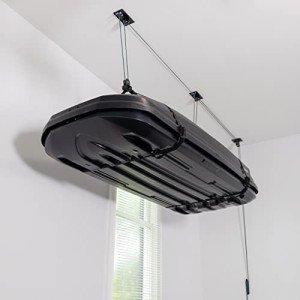
Teal Triangle Garage Hoist
Teal Triangle
Product Review Score
4.64 out of 5 stars
198 reviews$69.99
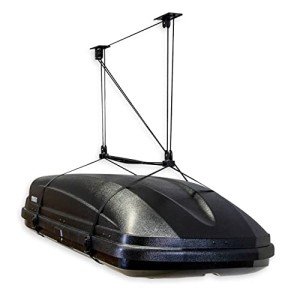
Ceiling Cargo Storage Hoist
Storeyourboard
Product Review Score
4.26 out of 5 stars
205 reviews$59.99 $49.99
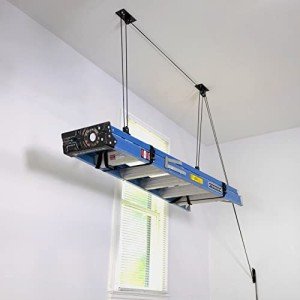
Ceiling Ladder Storage Hoist
Storeyourboard
Product Review Score
4.88 out of 5 stars
91 reviews$49.99
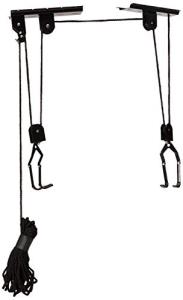
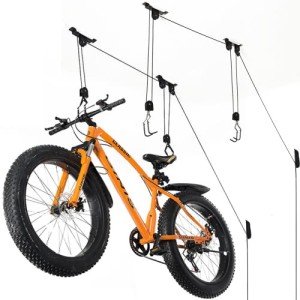
Garage Bike Lift Hoist
Rad Cycle Products
Product Review Score
4.52 out of 5 stars
87 reviews$59.96

Maintenance & Troubleshooting
Inspecting the lifting line for fraying and lubricating the pulley axles every six months is the only way to prevent heat-induced rope failure. Monitoring for hardware loosening after seasonal temperature swings ensures the mounting brackets remain flush against the ceiling joists.
Common Failure Modes
Heavy-duty lifting systems are subject to specific mechanical stresses that can compromise safety if left unmonitored.
- Repeated lifting cycles can lead to Cyclic Fatigue Failure; perform a visual inspection of all metal hooks and brackets for hairline fractures every quarter.
- The internal moving parts are susceptible to Bearing Wear & Rotational Friction; apply a dry silicone lubricant to the pulley axles to prevent metal-on-metal grinding.
- Misusing the hoist by exceeding weight limits frequently causes Overload Deformation; always verify the weight of your gear against the manufacturer's limit to prevent the frame from bending.
- If the lift stays in one position for months, the rope or cable may experience Creep Deformation; cycle the hoist up and down periodically to redistribute tension across the cord fibers.
- Incorrect installation or uneven weight distribution often leads to Shaft Misalignment Stress; use a plumb line during installation to ensure the ceiling brackets are perfectly parallel.
- Constant friction between the lifting line and the pulley wheel results in Abrasive Wear; replace any rope immediately if you notice "fuzzing" or broken strands to prevent a snap.
Environmental Stress Factors
External conditions in garages and sheds can significantly impact the longevity of your overhead storage hardware.
- In uninsulated spaces, High Humidity Acceleration can oxidize metal; prioritize zinc-plated or stainless steel hardware for humid environments.
- The accumulation of a heavy Dust Load can gum up lubricants; use compressed air to blow out the pulley housings twice a year.
- Exposure to Temperature Extremes causes mounting hardware to loosen; re-torque all lag bolts at the start of summer and winter.
- Nearby windows or open garage doors allow High UV Exposure to reach ropes; replace standard nylon cords with UV-resistant polyester if the lift is exposed to direct sunlight.
Key Components
The reliability of a pulley lift depends on the quality and synchronization of its core mechanical assemblies.
- The Load Bearing Frame must be anchored across at least two ceiling joists to safely distribute the hanging mass.
- Efficient movement is dictated by the Rotational Drive Assembly, which should ideally include an auto-locking brake to prevent uncontrolled descents.
- Smooth, quiet operation is facilitated by a high-quality Bearing System; sealed ball bearings offer better protection against garage dust than simple bushings.
- The safety of the system relies on a robust Fastener System consisting of high-grade lag bolts that penetrate at least 2 inches into solid wood.
- The external Structural Housing prevents the rope from slipping off the pulley wheel and jamming the mechanism.
Related Categories
If you are researching full-room storage setups, you may also want to review the maintenance and failure expectations for these related categories:
- For heavy items that don't require a pulley system, you might consider Ceiling Mounted Racks for static overhead shelving.
- Protect your bicycle frame and tires by reviewing the durability of Wall Hooks for Bikes for secondary storage.
- Organize smaller handheld tools and accessories using Pegboard Tool Organizers on your vertical wall surfaces.