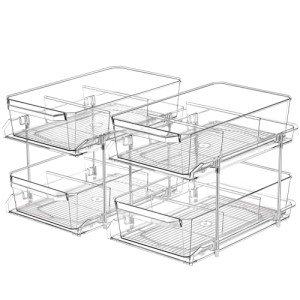
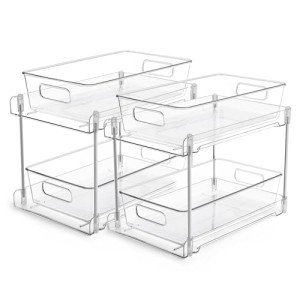
Maintenance & Troubleshooting
Regularly clearing debris from the ball-bearing tracks and re-torquing the mounting screws prevents the lateral drift that leads to rail seizing. Applying a lithium-based grease to the glides every six months ensures that heavy-duty pantry loads don't induce the abrasive wear that strips factory finishes.
Common Failure Modes
Heavy canned goods exert constant pressure on moving parts, leading to specific mechanical issues over time.
- Prevent sliding track wear by cleaning the rails monthly with a dry cloth to remove grit that acts as an industrial abrasive during drawer movement.
- Avoid overload deformation by strictly adhering to the drawer's maximum weight rating; redistribute heavy bulk soup tins to the rear of the tray to reduce leverage on the glides.
- Identify cyclic fatigue failure early by checking for hairline cracks in the mounting brackets, which can occur after thousands of open-close cycles.
- Stop structural warping by ensuring the drawer is loaded evenly across its width, preventing the frame from twisting and catching on the cabinet face.
- Minimize abrasive wear by applying a food-safe lubricant to the bearing tracks, which maintains the smooth motion required for heavy-duty storage.
- Fix small hardware failure by replacing stripped mounting screws with slightly larger, high-torque fasteners to regain a secure grip in the cabinet wood.
- Correct shaft misalignment stress by using a level during installation to ensure both rails are perfectly parallel, preventing uneven pressure on the bearings.
Environmental Stress Factors
The kitchen environment presents unique challenges that can degrade the materials of your organizers.
- Mitigate high humidity acceleration by ensuring proper ventilation near dishwashers to prevent the oxidation and rust that seizes non-stainless drawer glides.
- Reduce the dust load by wiping the interior tracks of the slide mechanism, as dust bonded with kitchen grease creates a thick sludge that stalls the drawer.
- Prevent cleaner compatibility conflict by avoiding ammonia-based sprays on chrome-plated baskets, which can strip protective coatings and trigger rapid corrosion.
Key Components
Precision-engineered parts work in harmony to support the weight of a full pantry inventory.
- The load bearing frame serves as the primary skeleton; look for thick-gauge steel to ensure the base doesn't bow under the weight of glass or metal tins.
- A high-performance sliding rail is the most critical mechanical part; full-extension ball-bearing slides are necessary for heavy-duty pantry access.
- The fastener system must be rated for high torque; ensure the screws reach into the cabinet studs or side-walls for maximum stability.
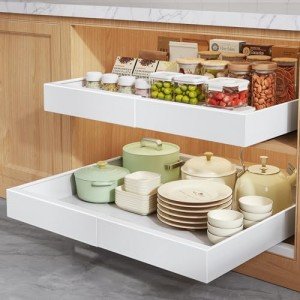
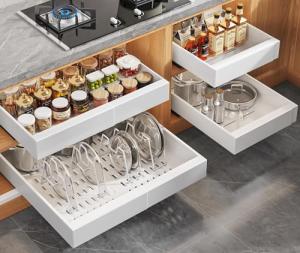
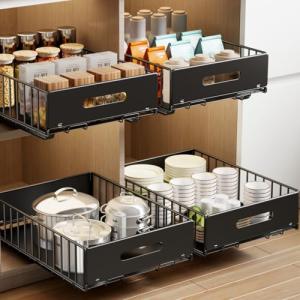
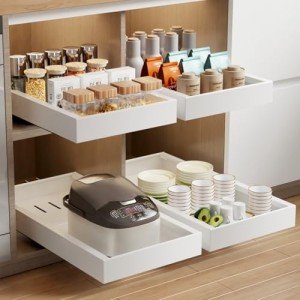
- A durable polymer shell or wire basket provides the container boundaries; inspect it for weld-point integrity where the cage meets the frame.
- The structural housing maintains the vertical alignment of the unit; it must be installed square to the cabinet floor to prevent the drawer from self-opening.
Related Categories
If you are researching a complete cabinetry overhaul, you may also want to review the failure expectations for these related devices: