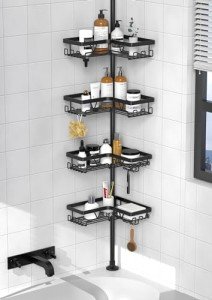
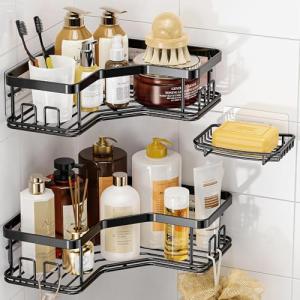
Maintenance & Troubleshooting
To prevent finish degradation, you must physically dry the contact points between the caddy and the shower pipe at least once a month. Regularly clearing mineral deposits from the drainage slats ensures that standing water doesn't sit against the protective coating, which is the primary catalyst for deep-seated corrosion.
Common Failure Modes
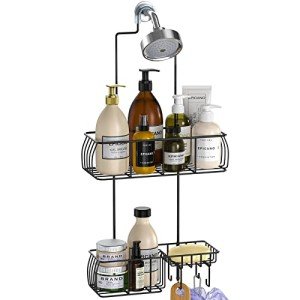
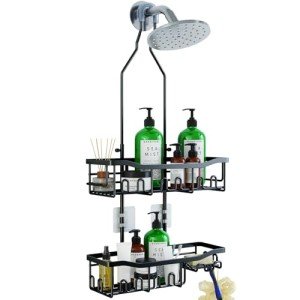
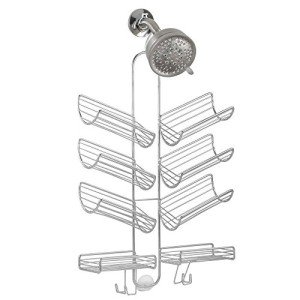
Even the sturdiest shower organizers face challenges from constant weight and moisture exposure.
- To avoid overload deformation, distribute heavy bottles across multiple tiers rather than centering them on a single wire shelf to preserve the frame's geometry.
- Stop corrosion from taking hold by applying a thin layer of car wax to the metal finish, creating an extra hydrophobic barrier against daily water contact.
- Prevent galvanic corrosion by ensuring the rubber or plastic gasket on the hanging hook is completely intact, as this prevents the two different metals from touching.
- You can mitigate coating peeling by avoiding abrasive sponges during cleaning; use only soft microfiber cloths to keep the protective bond sealed.
- Address joint loosening by checking the stability of the vertical spine every few weeks and tightening any adjustable screws that may have vibrated loose from water pressure.
- Monitor for micro corrosion fatigue by inspecting the underside of shelf joints for tiny orange flecks, which signal that the internal metal structure is beginning to fail.
- Eliminate surface scratching by placing a piece of electrical tape over the shower arm before installation to act as a buffer against the metal hook.
Environmental Stress Factors
The bathroom is a harsh environment that tests the limits of any storage material.
- Counteract high humidity acceleration by leaving the bathroom door or window open for twenty minutes after a shower to allow the hardware to reach a bone-dry state.
- Remove hard water buildup with a mild vinegar soak every quarter, which dissolves calcium deposits before they can trap moisture against the metal.
- Prevent a cleaner compatibility conflict by staying away from bleach-based sprays, which aggressively eat through the chrome and nickel plating used on bath accessories.
- If your shower has a window, protect against high UV exposure by choosing silicone-based grips rather than standard rubber, as silicone remains flexible much longer under direct sunlight.
Key Components
Each part of a hanging caddy is engineered to balance weight distribution and moisture resistance.
- A thick-gauge load bearing frame is essential; thin wires will bounce and sag as you use pump-top bottles, eventually leading to structural snaps.
- The quality of the surface coating is paramount; look for "e-coated" or powder-coated finishes which offer superior wrap-around protection compared to simple sprays.
- The fastener system usually consists of a rubberized collar at the top; ensure this is made of a high-friction material to prevent the caddy from sliding down the pipe.
- Opting for a unit with a polymer shell for the baskets can extend the unit's life significantly, as plastic cannot rust and is far easier to sanitize.
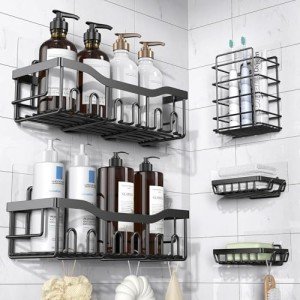
- A reliable adhesive bond layer or suction cup at the base is necessary to keep the center of gravity stable, preventing the unit from swinging and scratching your tiles.
Related Categories
If you are researching full-room setups, you may also want to review the failure expectations for these related devices: