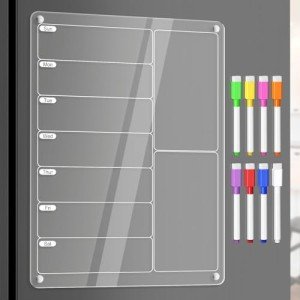
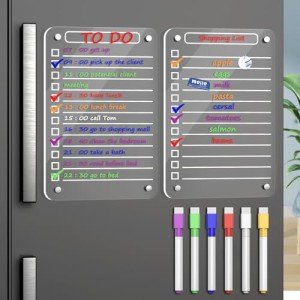
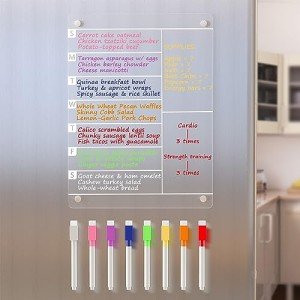
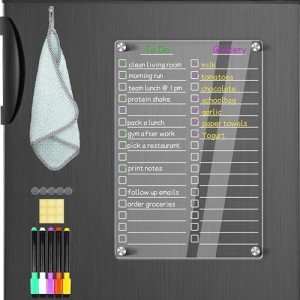
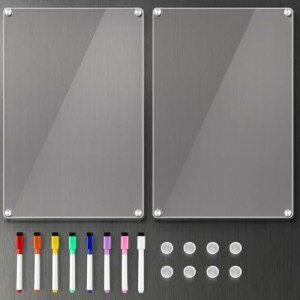
Maintenance & Troubleshooting
Preventative surface conditioning with specialized dry-erase cleaners is the only way to stop pigment from leaching into the polymer substrate. Regularly inspecting the rear mounting adhesive prevents sudden bracket separation caused by the cumulative weight of magnetic accessories.
Common Failure Modes
Even the most durable organizational boards can experience performance issues over time due to repeated use and chemical exposure.
- Repeated writing and erasing cycles can eventually lead to surface scratching; use only high-density microfiber cloths to avoid creating the micro-grooves that cause permanent staining.
- Exposure to harsh cleaning chemicals often results in coating peeling; avoid ammonia-based glass cleaners which strip the top-layer clear coat and ruin erasability.
- Low-quality mounting strips may suffer from adhesive bond failure; clean the wall surface with isopropyl alcohol before installation to ensure the chemical bond can support the board’s weight.
- Frequent movement of magnetic accessories can cause abrasive wear; apply felt backing to the underside of magnets to prevent the metal-on-laminate friction that dulls the board's finish.
- In humid environments, the internal metal plate may undergo corrosion; select boards with sealed edge-frames to prevent moisture from reaching the ferromagnetic core and causing surface bubbling.
- Prolonged exposure to direct sunlight can cause UV embrittlement; install the board away from south-facing windows to prevent the surface from becoming porous and prone to cracking.
Environmental Stress Factors
The longevity of your magnetic board is heavily influenced by the specific conditions of the room where it is installed.
- Excessive moisture in kitchens can lead to high humidity acceleration; ensure the room is properly ventilated to stop steam from weakening the adhesive layers.
- In workshops or high-traffic areas, a significant dust load can settle on the board; always wipe the surface with a dry cloth before writing to prevent grit from acting as an abrasive under the marker nib.
- Placing your board near windows exposes it to high UV exposure; use UV-resistant window films to prevent the white surface from yellowing and the grid lines from fading.
Key Components
Each board is engineered with specific materials to ensure magnetic strength and a smooth writing experience.
- The rigid structural housing provides the necessary tension to keep the writing surface perfectly flat and easy to use.
- A specialized polymer shell acts as the primary dry-erase interface, engineered for high contrast and effortless cleaning.
- The internal fastener system ensures that mounting brackets stay securely attached to the frame during daily interaction.
- High-strength adhesive bond layer is used to fuse the magnetic substrate to the decorative outer face of the board.
- The quality of the surface coating determines how well the board resists ghosting from high-pigment whiteboard markers.
Related Categories
If you are researching full-room organizational setups, you may also want to review the failure expectations for these related devices: