Maintenance & Troubleshooting
Maintaining magnetic efficiency requires a debris-free contact zone; even microscopic dust layers create an air gap that exponentially reduces flux density. Periodically inspecting the polymer backing for thinning is the only way to prevent permanent gouging on stainless steel appliances caused by exposed metal edges.
Common Failure Modes
Mechanical and magnetic degradation can compromise the safety and reliability of your hanging storage solutions over time.
- Repeated moisture exposure leads to internal oxidation which causes significant corrosion; wipe down the magnetic face after cleaning to prevent rust from expanding and cracking the outer shell.
- The protective outer layers can suffer from surface coating degradation; replace units immediately if the nickel or chrome plating flakes to avoid scratching your mounting surface.
- Frequent movement across metal panels can lead to abrasive wear; apply a thin layer of electrical tape or a dedicated rubber pad to restore the friction needed to stop sliding.
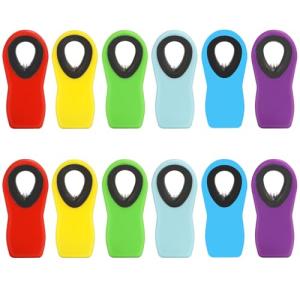
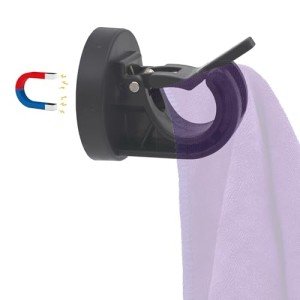
- Spring-loaded clips eventually experience spring elasticity loss; avoid over-extending the jaws beyond their rated gap to maintain long-term gripping tension.
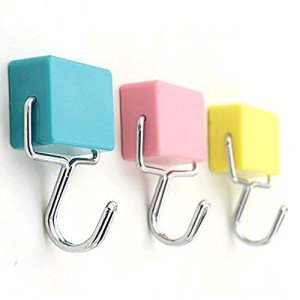
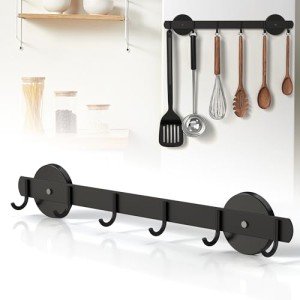
- Small screws and rivets in complex hook assemblies are prone to small hardware failure; check the pivot pins for lateral play to ensure the hook doesn't detach unexpectedly under load.
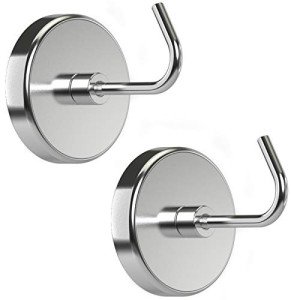
- Excessive weight beyond the rated capacity causes overload deformation; use multiple hooks for a single heavy item to distribute the torque and prevent the metal from bending.
- In high-traffic areas, constant micro-movements can result in joint loosening; tighten any visible fasteners quarterly to ensure the hanging element remains stable.
Environmental Stress Factors
External conditions play a critical role in how well a magnetic bond holds and how long the materials last.
- Placing magnets near ovens or heaters can lead to temperature extremes; keep neodymium magnets below 80°C (176°F) to prevent permanent loss of magnetic pull force.
- In laundry rooms or kitchens, high humidity acceleration ruins internal cores; choose fully-encapsulated plastic models for wet zones to seal out moisture.
- The accumulation of fine debris creates a dust load; clean both the magnet and the wall with a dry microfiber cloth weekly to eliminate the air gap that weakens the bond.
- Using harsh chemicals for cleaning can cause a cleaner compatibility conflict; use only mild soap and water to prevent the plastic housings from becoming brittle and snapping.
Key Components
Each part of a magnetic hook or clip is designed to balance grip strength with user-friendly functionality.
- The primary structural housing acts as a shock absorber; prioritize steel housings over plastic if the unit will be used in a workshop where impacts are likely.
- Internal mechanisms often rely on a spring elastic component; look for stainless steel springs to ensure the clip doesn't lose its bite due to internal rust.
- The outer polymer shell is your first line of defense; ensure this coating is intact to maintain the high friction coefficient required for vertical holding.
- High-performance models utilize a specialized adhesive bond layer; check that the magnet hasn't shifted within its casing, which can cause uneven weight distribution.
- The pivot point of a heavy-duty clip depends on a sturdy fastener system; choosing models with recessed rivets helps prevent the hardware from catching on items being clipped.
Related Categories
If you are researching full-room storage setups, you may also want to review the failure expectations for these related devices: