Maintenance & Troubleshooting
Verifying that the magnetic housing remains hermetically sealed is the only way to prevent internal oxidation from destroying the flux density. Regularly clearing ferrous micro-debris from the surface prevents the "lifting" effect that reduces the effective grip on your heavier tools.
Common Failure Modes
Even the strongest magnets can face performance issues over time due to mechanical stress or chemical changes.
- Repeated heavy impacts from slamming tools onto the bar can lead to Impact Fracture; place tools with a rolling motion rather than a direct strike to preserve the brittle core.
- Exposure to iron filings and shop debris causes Abrasive Wear; wipe the strip weekly with a microfiber cloth to prevent grit from scratching the protective finish.
- The structural integrity of the mounting points is compromised by Joint Loosening; install rubber washers between the bracket and the wall to dampen tool-removal vibrations.
- Overloading the magnetic capacity beyond its rated limit results in Overload Deformation; verify tool weights and distribute heavy items across the full length of the bar to avoid housing stress.
- If the protective layer is breached, moisture leads to Corrosion; apply a thin layer of paste wax to any surface scratches to seal out moisture and oxygen.
- Small screws and mounting brackets are often the first to fail due to Small Hardware Failure; replace factory-grade screws with stainless steel #8 fasteners for a more secure wall anchor.
- The chemical bond holding the magnet can suffer from Adhesive Bond Failure; keep strips away from heat sources like stoves or heaters to prevent the internal glue from softening.
Environmental Stress Factors
The environment in which you mount your magnetic strip dictates its total service life and grip stability.
- In damp garages or kitchens, High Humidity Acceleration promotes oxidation; ensure the room is properly ventilated to prevent "bubbling" beneath the surface coating.
- Workshops with heavy machinery create a high Dust Load; use a vacuum attachment to clear the bar daily so that fine particles don't create a physical gap between the magnet and the tool.
- Exposure to extreme seasonal variations causes Temperature Extremes; avoid mounting strips on uninsulated exterior walls where rapid expansion can crack the magnetic material.
- Using harsh industrial degreasers on the strip may lead to Cleaner Compatibility Conflict; use only mild soap and water to clean the bar, as solvents can dissolve the protective polymer shell.
Key Components
Each part of a magnetic organizer is engineered to balance weight, attraction force, and durability.
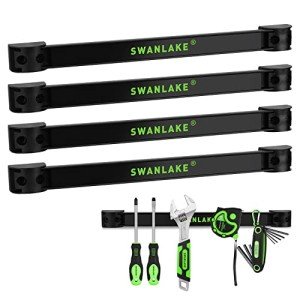
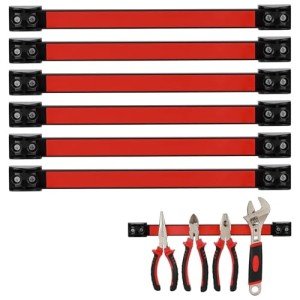
- The primary Structural Housing must be rigid; check for bowing in the center of the bar, which indicates the housing is too thin for the weight of your inventory.
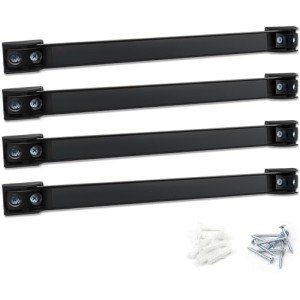
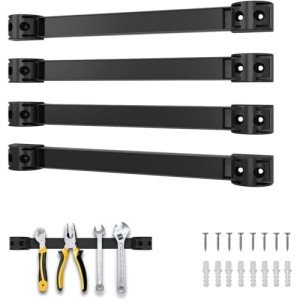
- Stability is maintained by the Fastener System; always drive screws directly into studs or use heavy-duty toggle bolts to counteract the constant pull-force of tool removal.
- A durable Polymer Shell acts as a shock absorber; inspect this shell for cracks that could expose the inner magnets to corrosive air.
- To ensure the magnet remains seated within its frame, a high-strength Adhesive Bond Layer is used; check for rattling sounds which signal that the internal bond has failed.
- The aesthetic and rust-proof properties are maintained by a specialized Surface Coating; if the coating begins to peel, the magnet underneath will begin to oxidize and lose strength.
Related Categories
If you are researching vertical tool storage or kitchen organization, you may also want to review the failure expectations for these related categories:
- For small metal parts and frequently used bits, Magnetic Clips and Hooks offer versatile secondary storage options.
- In the culinary space, professional-grade Magnetic Knife Strips provide specialized protection for high-carbon steel blades.
- For non-metallic hand tools, a comprehensive Pegboard Tool Organizers system allows for custom-configured hanging storage.
- In the kitchen, Magnetic Fridge Shelves utilize the same magnetic principles to create storage on appliance surfaces.