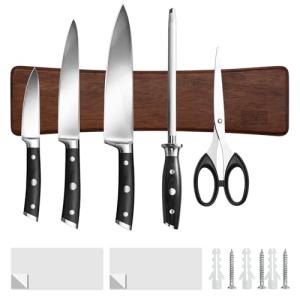
Maintenance & Troubleshooting
Preventing catastrophic tool drops requires monitoring the "pull-force" consistency and inspecting the mounting points for micro-gaps every six months. Understanding the chemical compatibility between your cleaning agents and the strip’s surface coating is essential to prevent micro-abrasions that harbor bacteria and compromise grip.
Common Failure Modes
Even the strongest magnetic systems can experience performance drops due to mechanical and chemical degradation over time.
- Repeated removal and snapping of heavy blades can lead to impact fracture; mitigate this by rolling the knife onto its spine before pulling it away to reduce direct shock.
- Exposure to cleaning chemicals may cause coating peeling; avoid acidic cleaners and stick to pH-neutral soaps to preserve the protective barrier.
- If the mounting hardware is insufficient for the weight of the knives, joint loosening can occur; always use wall anchors rated for double the weight of your heaviest cutlery collection.
- Metal-on-metal contact over several years often results in surface scratching; choose wood-veneer or silicone-wrapped models to provide a soft landing for high-carbon steel.
- In humid kitchen environments, inferior stainless steel backings might suffer from corrosion; wipe the strip dry immediately after cleaning to prevent moisture from seeping into the magnet housing.
- The high-bond tapes used in drill-free models can experience adhesive bond failure; ensure the wall is de-greased with isopropyl alcohol before installation for maximum suction.
- Constant weight bearing on plastic-encased models may eventually lead to stress cracking; inspect the area around the screw holes for hairline fractures that indicate structural fatigue.
Environmental Stress Factors
Kitchens are harsh environments where heat, moisture, and airborne particles can impact magnetic efficiency and cleanliness.
- Steam from stovetops creates high humidity acceleration; install your strip away from direct rising steam to protect internal ferrous components from rust.
- In poorly ventilated kitchens, a heavy dust load mixed with grease creates a slick surface; perform a monthly deep-clean with a degreaser to maintain high-friction contact.
- Using harsh degreasers can lead to cleaner compatibility conflict; test new cleaning products on the underside of the strip first to ensure they don't dissolve the factory finish.
- Proximity to ovens subjects the magnets to temperature extremes; keep strips at least 12 inches away from high-heat sources to avoid permanent demagnetization of neodymium cores.
Key Components
The reliability of a magnetic knife strip depends on the quality of its internal magnetic core and external housing.
- The structural housing serves as the primary shield against moisture; look for seamless designs that prevent liquid ingress.
- The internal load bearing frame prevents the strip from bowing; a full-length steel backplate is superior to individual plastic brackets.
- A high-quality adhesive bond layer holds the magnets against the faceplate; check for "dead spots" which indicate an internal shift in the bonding agent.
- The fastener system determines the safety of the installation; use toggle bolts for drywall installs rather than standard plastic plugs.
- A durable surface coating reduces the risk of blade chipping; check that the finish is thick enough to withstand thousands of "clack" cycles.
Related Categories
If you are researching full-room setups, you may also want to review the failure expectations for these related devices: