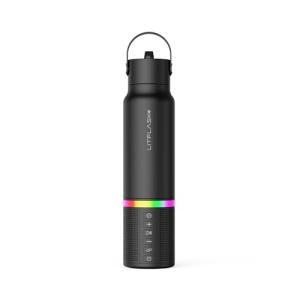
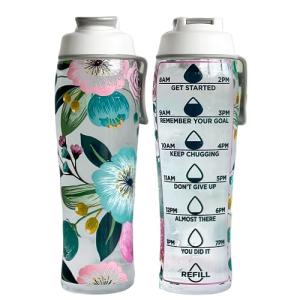
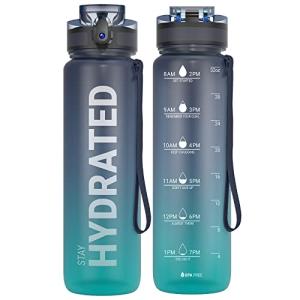
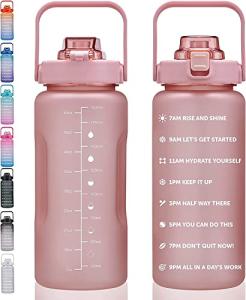
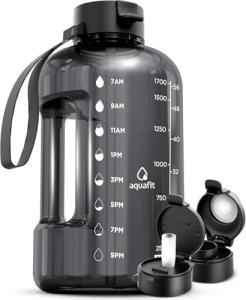
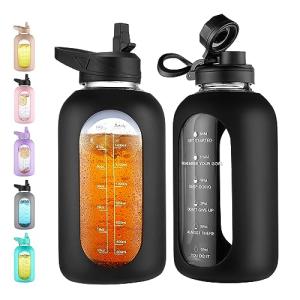
Maintenance & Troubleshooting
Preventative care for smart bottles centers on preserving the elasticity of the main seals and protecting the charging interface from moisture-induced corrosion. Routine sensor recalibration and careful monitoring of charging cycles are the most effective ways to ensure the tracking data remains accurate over the life of the battery.
Common Failure Modes
Smart bottles are complex devices that can experience technical or physical setbacks over time due to frequent use and electronic aging.
- Repeated washing and temperature shifts can lead to Seal Compression Fatigue; inspect gaskets monthly for flattening and apply food-grade silicone lubricant to maintain a water-tight bond.
- The accuracy of intake tracking may diminish over several months due to Sensor Drift; perform a manual zero-point recalibration through the companion app if volume readings seem inconsistent.
- Internal electronics are susceptible to Voltage Sensitivity; only use the manufacturer-recommended charging cable to prevent erratic notification light behavior or Bluetooth sync errors.
- Frequent lid movement can result in Hinge Fatigue; avoid over-extending the flip-top beyond its natural stopping point to prevent the spring mechanism from snapping.
- If the bottle is dropped, the delicate internal connections may suffer from Solder Joint Crack; test all alert functions immediately after an impact to confirm the notification wiring remains intact.
- Over time, the rechargeable power cell may experience Battery Fade; maximize lifespan by keeping the charge between 20% and 80% rather than allowing it to drain completely.
Environmental Stress Factors
The external environment plays a significant role in how well the electronic and physical components of your bottle hold up.
- Exposure to tap water with high mineral content often leads to Hard Water Buildup; soak the sensor areas in a diluted vinegar solution once a month to dissolve deposits that interfere with volume detection.
- Storing your bottle in a hot car can cause Temperature Extremes; always bring the device indoors to prevent the lithium-ion battery from swelling and warping the plastic housing.
- Leaving the bottle on a windowsill exposes the exterior to High UV Exposure; use an opaque sleeve or store the bottle in a bag when outdoors to prevent the polymer from becoming brittle and prone to cracking.
- Frequent use in humid gym environments can create High Humidity Acceleration; thoroughly dry the external metallic charging pins after every workout to stop localized oxidation before it blocks power delivery.
Key Components
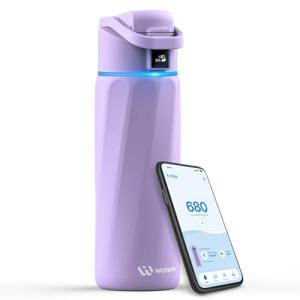
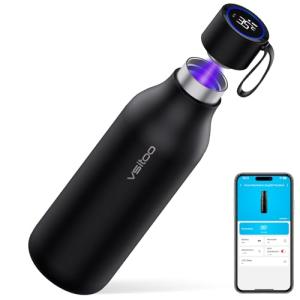
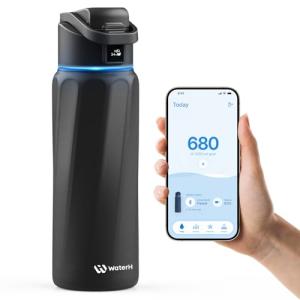
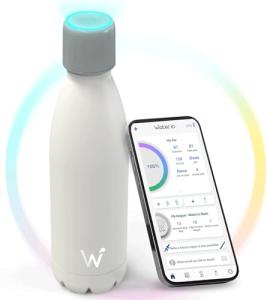
The sophisticated hardware inside a reminder bottle works in harmony to track your progress and notify you when it is time to drink.
- The brain of the device is the Electronic Control Board, which requires a stable environment free from moisture ingress to process volume data.
- To detect changes in water weight or level, a high-precision Sensor is integrated into the base, making the bottom of the bottle the most sensitive area during an impact.
- A long-lasting Battery provides the necessary portable power and should be kept away from extreme cold to maintain its discharge capacity.
- The external durability is provided by a rugged Polymer Shell, though users should check for hairline fractures after any drop to ensure the water-tight seal is still intact.
- Safe and consistent power delivery is managed through a dedicated Charger Circuit, which can be protected by using high-quality surge protectors during the charging cycle.
Related Categories
If you are researching ways to organize your fitness gear or manage your daily wellness routine, you may also want to review these related categories: